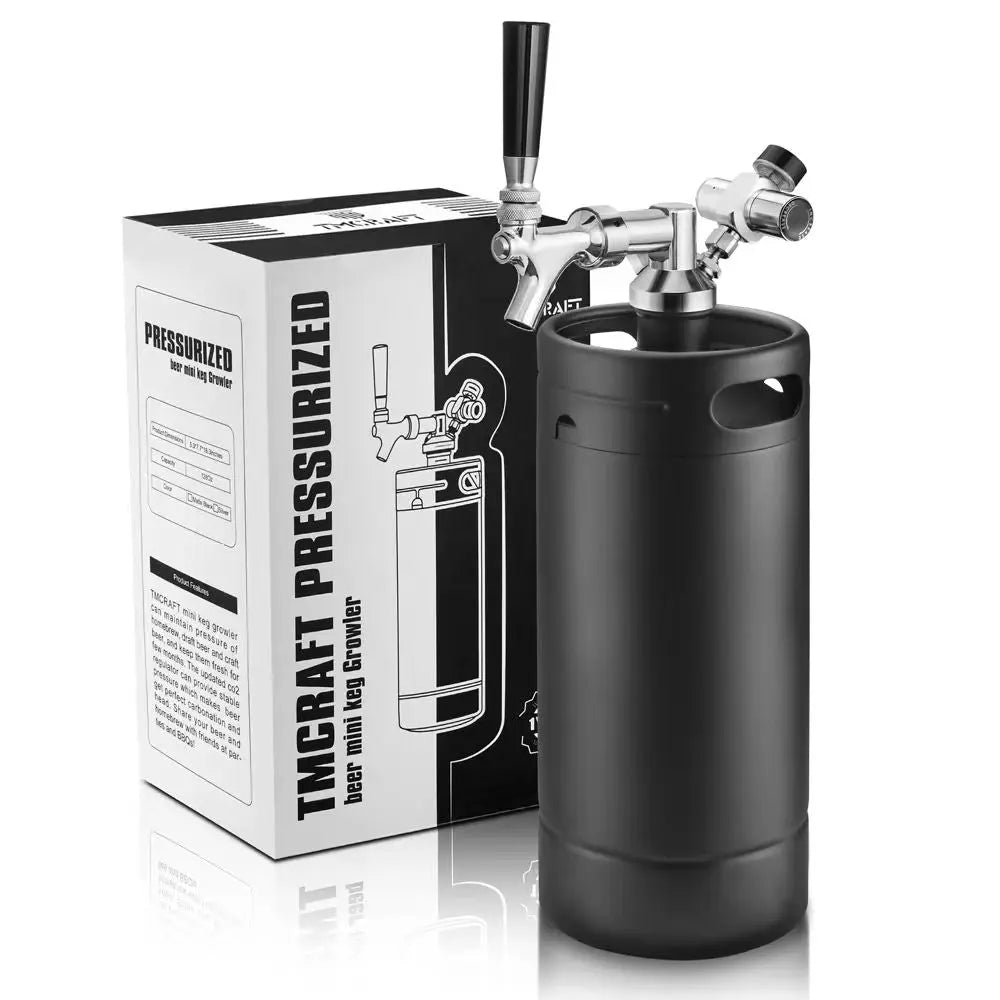


Why Homebrewers Choose Ball Lock Kegs: Stability, Pressure, and Long-Term Reliability Explained
Primary SEO Keywords
Ball Lock Keg, Homebrew Kegging System, TMCRAFT Ball Lock Kegs
Secondary SEO Keywords
Draft beer system, CO₂ pressure control, homebrewing equipment, kegging beer, stainless steel keg, beer carbonation
Introduction: The Hidden Reason Ball Lock Kegs Dominate Home Kegging
Most homebrewers don’t switch to kegging because they want more equipment—they switch because they want consistency.
Bottling works, but it introduces variability: uneven carbonation, oxygen exposure, and flavor decline over time. Even among kegging systems, not all designs deliver the same level of reliability. Over years of real-world use, one format has emerged as the clear standard for homebrewers: the ball lock keg.
Ball lock kegs aren’t popular by accident. They solve three core challenges that matter deeply to brewers who care about quality:
- Pressure stability
- Carbonation control
- Long-term system reliability
In this article, we’ll explain why ball lock kegs perform so well, how they support consistent draft systems, and why TMCRAFT Ball Lock Kegs are engineered for brewers who want dependable results batch after batch.
What Is a Ball Lock Keg?
A ball lock keg is a stainless steel, pressure-rated keg that uses quick-disconnect ball lock posts to attach gas and liquid lines. Originally developed for soda dispensing, this design was later adopted by homebrewers because of its precision, safety, and modularity.
Core Characteristics of a Ball Lock Keg
- Separate gas-in and liquid-out posts
- Spring-loaded ball bearings for secure connections
- Food-grade stainless steel construction
- Lid with pressure relief valve (PRV)
- Compatibility with standard CO₂ regulators
TMCRAFT Ball Lock Kegs are manufactured with tight post tolerances and reinforced welds, ensuring pressure consistency over long periods of use.
Why Ball Lock Kegs Became the Homebrewing Standard
There are multiple keg designs available, but ball lock kegs consistently outperform alternatives in real homebrew environments.
1. Superior Pressure Stability
Pressure stability is the foundation of a reliable draft beer system. Fluctuations in pressure lead to:
- Foamy pours
- Inconsistent carbonation
- CO₂ waste
Ball lock kegs are designed to maintain steady internal pressure, even with frequent disconnects and reconnects. This stability allows brewers to dial in carbonation once—and trust it to stay consistent.
2. Precision Carbonation Control
With bottles, carbonation depends on yeast activity and sugar distribution. With a ball lock keg, carbonation is controlled mechanically using a regulated CO₂ system.
This allows brewers to:
- Match carbonation levels to beer style
- Adjust carbonation without opening the vessel
- Correct under- or over-carbonation
Typical carbonation ranges fall between 10–14 PSI, depending on temperature and desired CO₂ volumes. Ball lock kegs respond predictably to these adjustments, making them ideal for brewers who value repeatability.
3. Modular System Design
Ball lock kegs integrate seamlessly into modular draft systems. This means brewers can:
- Add more kegs
- Expand CO₂ capacity
- Upgrade regulators or taps
- Build multi-tap setups
TMCRAFT Ball Lock Kegs are designed to work with industry-standard fittings, ensuring compatibility as systems evolve.
Ball Lock Kegs vs Other Keg Designs
While pin lock and specialty kegs still exist, ball lock kegs dominate modern homebrew systems for several practical reasons.
| Feature | Ball Lock Keg | Other Designs |
|---|---|---|
| Part Availability | Widely available | Limited |
| Compatibility | Universal | Often proprietary |
| Pressure Reliability | High | Variable |
| Ease of Maintenance | High | Moderate |
| System Scalability | Excellent | Limited |
For brewers planning long-term use, ball lock kegs offer the most future-proof solution.
How Ball Lock Kegs Improve Beer Freshness
Oxygen Control Through Closed Systems
Oxygen exposure is one of the most damaging factors in finished beer. Ball lock kegs allow brewers to:
- Purge oxygen with CO₂ before filling
- Transfer beer in closed systems
- Dispense without introducing air
This protects hop aroma, malt character, and overall flavor stability—especially important for IPAs and other aroma-forward styles.
Carbonation Without Secondary Fermentation
Bottle conditioning relies on yeast activity, which can vary from bottle to bottle. Ball lock kegs eliminate this variability by carbonating beer directly under pressure.
The result:
- Even carbonation throughout the batch
- Cleaner flavor profile
- Less sediment in the glass
Anatomy of a Ball Lock Keg (Why Each Part Matters)
Understanding the design explains why ball lock kegs are so reliable.
Keg Body
The stainless steel vessel must withstand sustained pressure without deformation. TMCRAFT uses food-grade stainless steel that resists corrosion and flavor carryover.
Posts and Poppets
Ball lock posts create a mechanical seal that prevents gas leaks while allowing quick disconnection.
Dip Tubes
- Gas dip tube directs CO₂ into headspace
- Liquid dip tube draws beer from the bottom
Precision alignment ensures smooth flow and consistent dispensing.
Lid and PRV
The lid forms the primary seal, while the pressure relief valve provides safety and controlled depressurization.
CO₂ Systems and Ball Lock Keg Performance
Ball lock kegs are designed to work hand-in-hand with CO₂ systems.
Typical Pressure Zones
- Carbonation: 10–14 PSI
- Serving: 8–12 PSI
- Cold crashing or force carbonation: temporarily higher
Because ball lock kegs respond predictably to pressure changes, brewers can fine-tune performance without constant troubleshooting.
Using Ball Lock Kegs Beyond Serving
Many experienced homebrewers use ball lock kegs for more than just dispensing.
Pressure Fermentation
Ball lock kegs can be used for controlled pressure fermentation, offering:
- Reduced ester production
- Faster fermentation timelines
- Natural carbonation development
Closed Transfers
Ball lock connections enable oxygen-free transfers from fermenter to keg, preserving freshness.
TMCRAFT Ball Lock Kegs are pressure-rated to support these advanced workflows when used properly.
Maintenance and Longevity: Why Ball Lock Kegs Last for Years
A well-maintained ball lock keg can last decades.
Best Practices
- Clean immediately after use
- Disassemble posts periodically
- Replace O-rings as needed
- Sanitize before every fill
TMCRAFT Ball Lock Kegs feature smooth internal finishes and replaceable components, ensuring long-term serviceability.
Common Problems (and Why Ball Lock Kegs Reduce Them)
Gas Leaks
Precision post machining reduces leak points.
Foamy Beer
Stable pressure and predictable flow simplify balancing.
Inconsistent Carbonation
Direct CO₂ control eliminates bottle-to-bottle variation.
These advantages are why ball lock kegs are trusted by brewers who prioritize reliability.
Why TMCRAFT Ball Lock Kegs Are Built for Serious Homebrewers
TMCRAFT Ball Lock Kegs are engineered for real-world brewing conditions—not disposable or novelty use.
TMCRAFT Design Advantages
- Food-grade stainless steel construction
- Precision ball lock posts
- Reinforced weld seams
- Pressure-stable lid design
- Compatibility with standard draft hardware
These features support both beginner and advanced brewing setups.
Who Should Choose a Ball Lock Keg?
Ball lock kegs are ideal for:
- Homebrewers upgrading from bottles
- Brewers building kegerators or keezers
- Small-batch and full-batch brewers
- Anyone seeking consistent draft quality
They offer a balance of control, durability, and scalability unmatched by other keg designs.
Conclusion: Reliability Is Why Ball Lock Kegs Endure
Ball lock kegs didn’t become the homebrewing standard because they were trendy—they earned that role by delivering stable pressure, predictable carbonation, and long-term reliability.
For brewers who want their draft system to work the same way every time, a TMCRAFT Ball Lock Keg provides the dependable foundation that modern homebrewing demands.
Consistency isn’t accidental—it’s engineered.
Link to: Ball Lock Keg Mastery: How to Build a Reliable Homebrew Kegging System