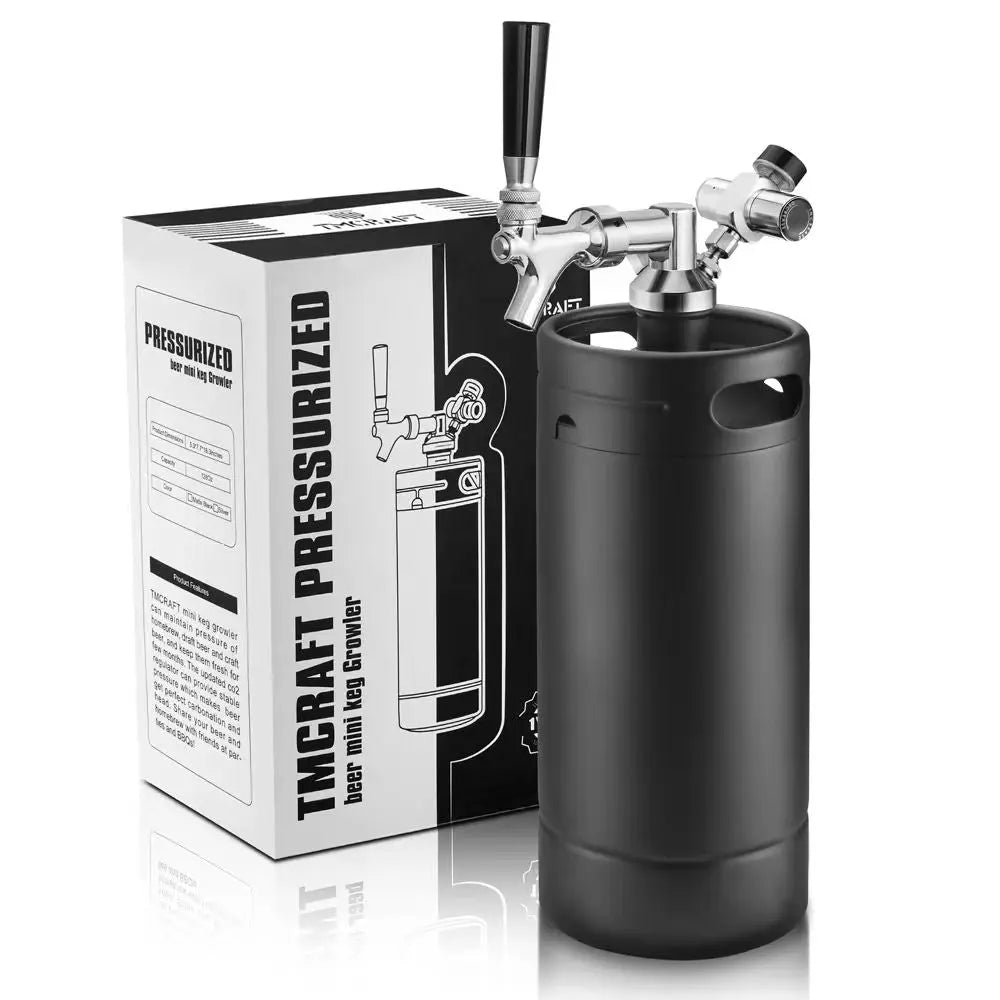


Ball Lock Keg Mastery: How to Build a Reliable Homebrew Kegging System
Keywords
Ball Lock Keg, Kegging System, Homebrewing Equipment, TMCRAFT Ball Lock Kegs, CO₂ system, beer kegging, homebrew keg, draft beer at home, keg maintenance, pressure control
Introduction: Why Ball Lock Kegs Are the Standard for Homebrewers
For many homebrewers, bottling is the first serious limitation they encounter. While it works, it introduces unnecessary complexity—oxygen exposure, inconsistent carbonation, storage issues, and time-consuming cleanup. As brewing skills advance, the desire for better control and professional results naturally leads to kegging.
At the center of nearly every modern homebrew kegging system is the ball lock keg.
Ball lock kegs are trusted by homebrewers worldwide because they are reliable, modular, easy to maintain, and compatible with standard CO₂ systems. Whether you are building your first kegerator or upgrading from bottling, ball lock kegs provide a foundation that scales with your brewing ambitions.
This guide covers:
- What a ball lock keg is and how it works
- Why ball lock kegs outperform other kegging options
- How to integrate a ball lock keg into a complete CO₂ system
- Best practices for carbonation, serving, and maintenance
- Why TMCRAFT Ball Lock Kegs are designed for serious homebrewers
What Is a Ball Lock Keg?
A ball lock keg is a stainless steel, pressure-rated keg originally developed for soda dispensing and later adopted by the homebrewing community. Its defining feature is the ball lock quick-disconnect post system, which allows secure, leak-resistant connections for gas and liquid lines.
Core Features of a Ball Lock Keg
- Separate gas-in and liquid-out posts
- Spring-loaded ball bearings for secure connections
- Food-grade stainless steel construction
- Pressure relief valve (PRV) for safety
- Compatibility with standard CO₂ regulators
TMCRAFT Ball Lock Kegs are manufactured with precision-machined posts and reinforced welds, ensuring consistent pressure performance and long service life.
Why Ball Lock Kegs Are Preferred Over Other Keg Types
While pin lock kegs and other alternatives exist, ball lock kegs dominate modern homebrew setups for several practical reasons.
1. Universal Compatibility
Ball lock fittings are the most widely used standard in homebrewing. Replacement parts, accessories, and upgrades are easy to find and widely supported.
2. Compact Profile
Ball lock kegs typically have a slimmer diameter, allowing them to fit more easily in:
- Kegerators
- Keezers
- Modified refrigerators
3. Easier Identification
Gas and liquid posts are clearly differentiated, reducing setup errors and accidental line swaps.
How Ball Lock Kegs Improve the Homebrewing Process
Consistent Carbonation Control
With bottles, carbonation depends on yeast activity and priming sugar accuracy. With a ball lock keg, carbonation is controlled directly using a regulated CO₂ system.
This allows brewers to:
- Dial in carbonation by beer style
- Adjust carbonation levels quickly
- Avoid over-carbonation or flat beer
Typical carbonation pressure ranges from 10–14 PSI, depending on temperature and desired CO₂ volume.
Reduced Oxygen Exposure and Fresher Beer
Oxygen is one of the biggest enemies of finished beer. Bottling introduces oxygen repeatedly—once per bottle. A ball lock keg, by contrast, operates as a sealed system.
Benefits include:
- Closed transfers from fermenter to keg
- Minimal oxygen pickup
- Better preservation of hop aroma and flavor
This is especially valuable for hop-forward styles like IPAs and pale ales.
Simplified Serving and Storage
Ball lock kegs connect directly to:
- Draft towers
- Picnic taps
- Portable dispensing systems
This flexibility allows brewers to serve beer professionally at home or on the go, without transferring to secondary containers.
Anatomy of a Ball Lock Keg
Understanding each component helps brewers troubleshoot issues and maintain performance.
Main Components
- Keg Body – Stainless steel pressure vessel
- Lid with PRV – Provides airtight seal and pressure release
- Gas-In Post – Accepts CO₂ from the regulator
- Liquid-Out Post – Dispenses beer
- Dip Tubes – Direct gas to headspace and beer to the tap
TMCRAFT Ball Lock Kegs use smooth internal finishes, reducing residue buildup and simplifying cleaning.
Building a CO₂ Kegging System with Ball Lock Kegs
A complete kegging system typically includes:
- CO₂ tank
- Regulator
- Gas and beverage lines
- Ball lock keg
- Faucet or tap
Ball lock kegs are designed to integrate seamlessly with these components, allowing precise pressure control from carbonation through serving.
Typical Pressure Guidelines
- Carbonation: 10–14 PSI
- Serving: 8–12 PSI
- Force carbonation (temporary): higher pressure, short duration
Proper pressure management is key to avoiding foamy pours.
Using Ball Lock Kegs for Fermentation
Many advanced homebrewers use ball lock kegs not only for serving, but also for pressure fermentation.
Advantages of Fermenting in a Ball Lock Keg
- Closed-system fermentation
- Reduced oxidation
- Natural carbonation during fermentation
- Faster turnaround times
TMCRAFT Ball Lock Kegs are pressure-rated to support these advanced techniques when used responsibly.
Common Ball Lock Keg Issues and How to Avoid Them
Issue 1: Gas Leaks
Most leaks come from worn O-rings or improperly seated posts.
Solution:
Inspect and replace O-rings regularly.
Issue 2: Foamy Beer
Often caused by:
- Excessive pressure
- Warm beer
- Improper line length
Solution:
Balance pressure with line resistance and keep beer cold.
Issue 3: Sticking Posts
Residue buildup can prevent smooth disconnect operation.
Solution:
Disassemble and clean posts during routine maintenance.
Cleaning and Maintenance Best Practices
Regular maintenance ensures clean flavor and long equipment life.
Recommended Routine
- Rinse keg immediately after emptying
- Clean with brewery-approved cleaner
- Disassemble posts and dip tubes periodically
- Sanitize before refilling
TMCRAFT Ball Lock Kegs are designed for easy disassembly, making routine maintenance straightforward.
How Ball Lock Kegs Scale with Your Brewing Setup
One of the biggest advantages of ball lock kegs is scalability.
As your system grows, you can:
- Add more kegs
- Expand CO₂ capacity
- Build multi-tap draft systems
- Integrate fermentation and serving workflows
Ball lock kegs adapt easily to both simple and complex setups.
Why TMCRAFT Ball Lock Kegs Are Built for Long-Term Use
TMCRAFT Ball Lock Kegs are engineered specifically for homebrewers who value reliability and consistency.
TMCRAFT Design Advantages
- Food-grade stainless steel construction
- Precision-machined ball lock posts
- Reinforced weld seams
- Leak-resistant sealing system
- Compatibility with standard draft hardware
These features ensure stable pressure handling and dependable performance batch after batch.
Who Should Use a Ball Lock Keg?
Ball lock kegs are ideal for:
- Homebrewers upgrading from bottling
- Brewers seeking precise carbonation control
- Those building kegerators or keezer systems
- Advanced brewers exploring pressure fermentation
From first-time keggers to seasoned brewers, ball lock kegs remain the most versatile option available.
Conclusion: The Foundation of Modern Homebrew Kegging
Ball lock kegs have become the gold standard for a reason. They simplify carbonation, protect beer quality, and integrate seamlessly into modern draft systems. With proper setup and maintenance, they deliver professional-level results at home.
For brewers looking to elevate their process and enjoy consistently fresh draft beer, TMCRAFT Ball Lock Kegs provide a dependable, scalable foundation for every stage of homebrewing.
Link to: The Homebrewer’s Workhorse: How Ball Lock Kegs Power Modern Kegging Systems