

Why Ball Lock Kegs Became the Industry Standard for Home Brewing and Small-Scale Draft Systems
Primary SEO Keywords
ball lock keg, ball lock keg system, stainless steel ball lock keg
Secondary SEO Keywords
home brewing keg, draft beer system, pressurized keg, pin lock vs ball lock, small batch keg
Introduction: The Keg Design That Changed Home Brewing
In modern home brewing and small-scale draft systems, few components are as widely adopted—or as trusted—as the ball lock keg. While casual drinkers may focus on taps or CO₂ tanks, experienced brewers know that keg design determines reliability, compatibility, and long-term performance.
Ball lock kegs earned their reputation not through marketing, but through engineering. Originally developed for soda dispensing, they were quickly adopted by home brewers for one reason: they work consistently under pressure. Today, the ball lock keg has become the de facto standard for home draft beer systems, pilot batches, and even commercial test pours.
This guide explains what a ball lock keg is, how it differs from other keg types, and why it remains the most practical choice for brewers who care about control, sanitation, and repeatable results.
What Is a Ball Lock Keg?
A ball lock keg is a stainless steel, pressure-rated keg that uses quick-disconnect ball lock fittings for both gas input and liquid output. These fittings lock securely into place using internal ball bearings, creating an airtight seal that can withstand repeated pressurization cycles.
Unlike traditional Sankey kegs used in commercial breweries, ball lock kegs are designed for flexibility and user control. They allow brewers to assemble, disassemble, clean, and reconfigure their systems without specialized tools.
Core Components of a Ball Lock Keg
- Stainless steel keg body
- Removable lid with pressure relief valve (PRV)
- Gas-in post (IN)
- Liquid-out post (OUT)
- Internal dip tubes
Each component plays a role in maintaining carbonation, preventing oxygen ingress, and ensuring smooth dispensing.
Why Ball Lock Kegs Became the Industry Standard
1. Secure, Leak-Resistant Connections
Ball lock fittings are engineered to prevent accidental disconnection. Once locked, the fitting resists vibration, pressure changes, and repeated use—making it ideal for both stationary and portable setups.
This reliability significantly reduces common issues such as:
- Gas leaks
- Pressure loss
- Flat beer
2. Clear Separation of Gas and Liquid
Ball lock kegs use distinct post sizes for gas and liquid. This prevents incorrect connections, a common source of dispensing problems for beginners.
From a systems perspective, this design improves:
- Safety
- Ease of use
- Consistency between pours
Ball Lock Keg vs Pin Lock Keg
While both designs are popular, ball lock kegs have largely surpassed pin lock kegs in adoption.
Key Differences
- Connection style: Ball bearings vs mechanical pins
- Post size: Ball lock posts are slimmer and more standardized
- Accessory compatibility: Ball lock fittings dominate the aftermarket
For brewers building or expanding a draft system, ball lock kegs offer broader compatibility with regulators, manifolds, and tap systems.
How Ball Lock Keg Systems Work
A ball lock keg operates as a closed, pressurized system.
- CO₂ enters through the gas-in post
- Pressure forces the beverage downward
- Liquid exits through the dip tube and out post
- Displaced volume is replaced with CO₂, not air
This process ensures oxygen never contacts the beverage after sealing, preserving flavor and carbonation.
From a technical standpoint, this mimics professional brewery serving methods—scaled for home and small-batch use.
Advantages for Home Brewers
Precise Carbonation Control
Ball lock keg systems allow brewers to dial in exact pressure levels based on temperature and desired carbonation volumes. This is critical for:
- Style accuracy
- Mouthfeel consistency
- Foam control
Easier Cleaning and Sanitation
Because ball lock kegs fully disassemble, thorough cleaning is straightforward. Brewers can remove posts, dip tubes, and lids to eliminate residue and microbial risk.
This level of access is difficult to achieve with non-modular containers.
Ball Lock Kegs for Small Draft Systems
Beyond home brewing, ball lock kegs are widely used in:
- Home bars
- Coffee and kombucha setups
- Event-based draft service
- Commercial pilot systems
Their standardized connections make them easy to integrate with:
- Compact kegerators
- Portable draft boxes
- Wall-mounted tap systems
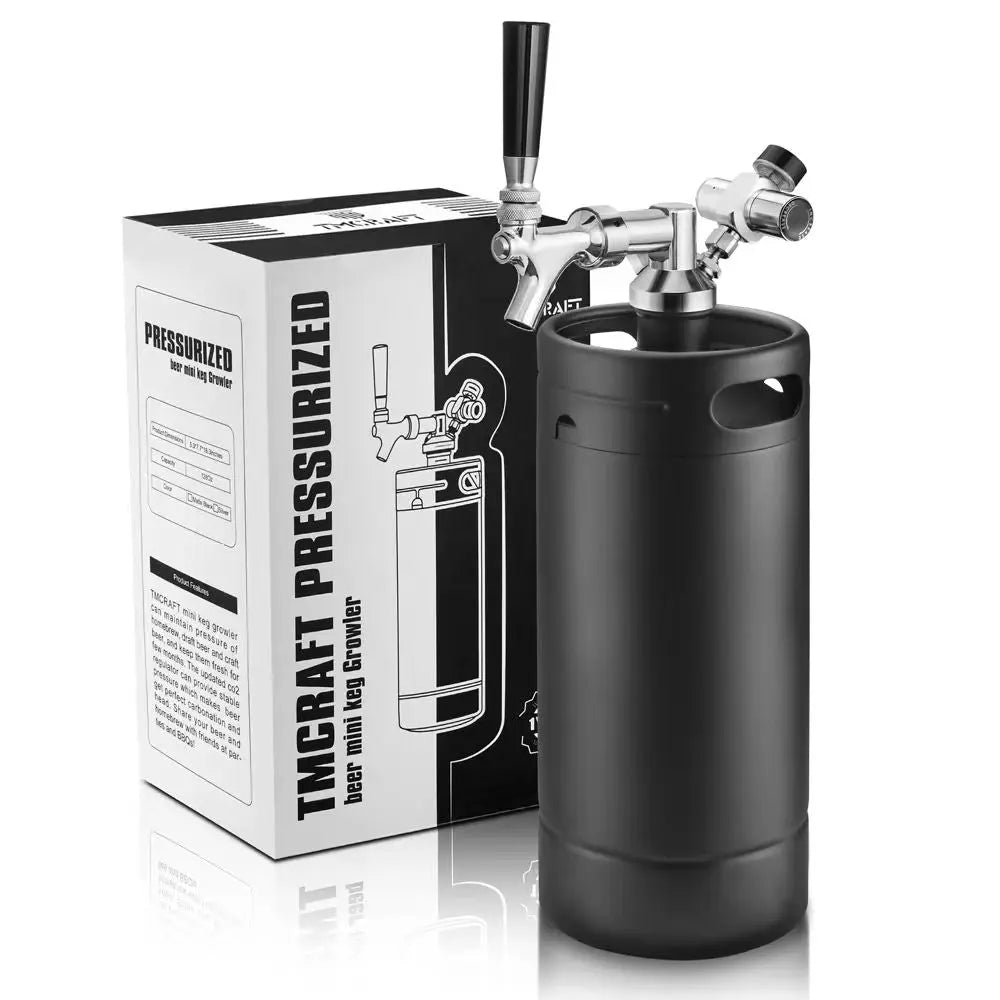
TMCRAFT ball lock kegs are designed to balance professional performance with manageable size and weight.
Choosing the Right Ball Lock Keg Size
2.5–3 Gallon Ball Lock Kegs
Best for:
- Test batches
- Limited refrigeration space
- Frequent recipe changes
5 Gallon Ball Lock Kegs
Best for:
- Standard home brew batches
- Shared consumption
- Longer serving windows
Smaller sizes reduce waste and speed carbonation, while larger sizes maximize efficiency.
Material Quality and Pressure Ratings
Not all ball lock kegs are built to the same standard.
High-quality stainless steel ensures:
- No flavor contamination
- Resistance to acidic beverages
- Long service life under pressure
Pressure-rated lids and reinforced posts are critical for safety and consistency. TMCRAFT ball lock kegs are engineered to withstand repeated pressurization without seal deformation.
Common Ball Lock Keg Mistakes
-
Mixing up gas and liquid posts
Always confirm post orientation before connecting. -
Ignoring O-ring maintenance
Worn seals cause slow leaks and pressure loss. -
Over-carbonating
Excess pressure leads to foaming and unstable pours.
Avoiding these errors dramatically improves system reliability.
Ball Lock Kegs Beyond Beer
Modern ball lock kegs are used for more than beer:
- Cold brew coffee
- Nitro beverages
- Kombucha
- Sparkling water
Their compatibility with nitrogen and mixed gases makes them ideal for expanding beverage programs without changing infrastructure.
Why Ball Lock Kegs Pair Well with TMCRAFT Systems
TMCRAFT designs ball lock kegs with:
- Precision-machined posts
- Durable food-grade seals
- Compatibility with standard regulators and gas sources
This ensures seamless integration across mini keg systems, CO₂ tanks, and cleaning solutions.
Final Thoughts: Are Ball Lock Kegs Worth It?
For brewers and beverage enthusiasts who value control, cleanliness, and long-term flexibility, the ball lock keg remains the gold standard. Its modular design, secure connections, and universal compatibility make it the most future-proof choice for home and small-scale draft systems.
Whether you are upgrading from bottles or building a multi-keg setup, investing in a high-quality ball lock keg—such as those engineered by TMCRAFT—lays a reliable foundation for better pours and better beverages.
Link to: Why Homebrewers Choose Ball Lock Kegs: Stability, Pressure, and Long-Term Reliability Explained