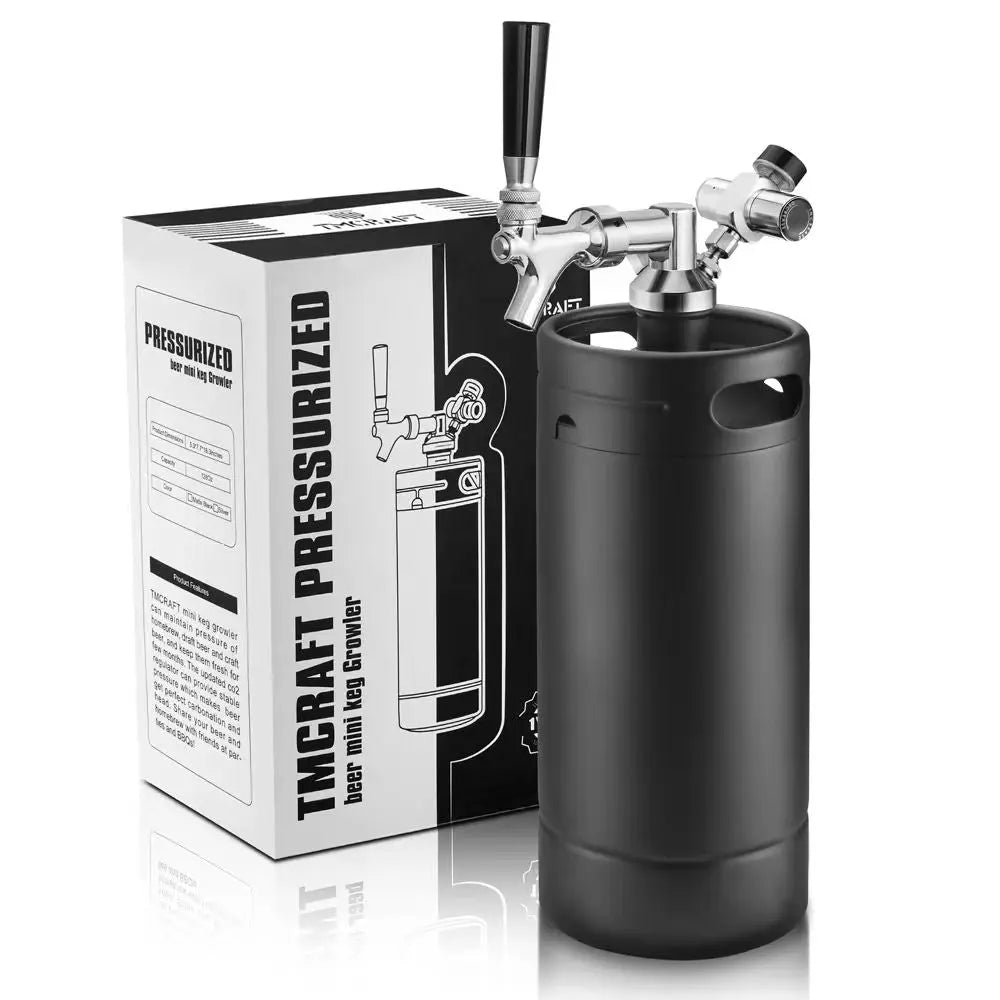


The Homebrewer’s Workhorse: How Ball Lock Kegs Power Modern Kegging Systems
Keywords
Ball Lock Keg, Homebrewing Equipment, Kegging System, TMCRAFT Ball Lock Kegs, Beer kegging, CO₂ keg system, homebrew keg, draft beer at home, keg maintenance, kegging beer
Introduction: Why Ball Lock Kegs Are the Backbone of Home Kegging
As homebrewers progress beyond bottling, one question inevitably arises: How do I serve beer more consistently, cleanly, and professionally?
For decades, the answer has been the ball lock keg.
Ball lock kegs are widely considered the industry standard for modern homebrewing equipment, offering reliability, modularity, and precise control over carbonation and dispensing. Whether you are building your first kegging system or upgrading an existing draft setup, ball lock kegs form the foundation of nearly every professional-quality homebrew system.
In this guide, we will cover:
- What a ball lock keg is and how it works
- Why ball lock kegs outperform alternative kegging options
- How they integrate into a complete CO₂ keg system
- Maintenance and longevity best practices
- Why TMCRAFT Ball Lock Kegs are designed for serious brewers
What Is a Ball Lock Keg?
A ball lock keg is a stainless steel pressure vessel originally developed for soda dispensing and later adopted by homebrewers for beer. The defining feature is its ball lock quick-disconnect posts, which securely attach gas and liquid lines.
Key Characteristics
- Separate gas-in and liquid-out posts
- Spring-loaded ball bearings for leak-free connections
- Pressure-rated stainless steel construction
- Compatible with standard CO₂ regulators
Ball lock kegs typically come in 2.5-gallon, 3-gallon, and 5-gallon sizes, making them suitable for most homebrew batch volumes.
TMCRAFT Ball Lock Kegs are engineered with precision-machined posts and reinforced welds, ensuring consistent pressure handling and long-term durability.
Ball Lock vs Pin Lock: Why Ball Lock Wins for Most Brewers
While both ball lock and pin lock kegs are used in homebrewing, ball lock kegs have become the preferred choice for most modern setups.
Advantages of Ball Lock Kegs
- Slimmer profile for easier fridge and kegerator fit
- More widely available replacement parts
- Greater compatibility with modern draft systems
- Easier post identification (gas vs liquid)
For brewers planning to expand or upgrade their kegging system, ball lock kegs offer maximum flexibility and future-proofing.
Why Ball Lock Kegs Are Essential Homebrewing Equipment
1. Precise Carbonation Control
With bottles, carbonation depends on priming sugar and timing. With a ball lock keg, carbonation is controlled using regulated CO₂ pressure, allowing brewers to:
- Dial in exact carbonation levels
- Adjust for different beer styles
- Avoid over- or under-carbonation
This precision is one of the biggest reasons experienced brewers switch to kegging.
2. Reduced Oxidation and Fresher Beer
Every transfer introduces oxygen. Bottling requires dozens of individual fills, each increasing oxidation risk.
Ball lock kegs:
- Use sealed, pressurized transfers
- Allow closed-loop beer movement
- Preserve hop aroma and flavor
As a result, beer stored in a ball lock keg stays fresher for weeks or even months when properly maintained.
3. Streamlined Serving and Storage
Ball lock kegs connect directly to:
- Kegerators
- Keezers
- Picnic taps
- Mobile draft systems
This versatility allows brewers to serve beer:
- At home
- At events
- In outdoor or portable setups
TMCRAFT Ball Lock Kegs are designed for smooth integration across all draft environments.
Anatomy of a Ball Lock Keg System
Understanding how each component works helps brewers troubleshoot and optimize performance.
Core Components
- Stainless Steel Keg Body – Pressure-rated vessel
- Lid with Pressure Relief Valve (PRV) – Seals and safety control
- Gas-In Post – Connects to CO₂
- Liquid-Out Post – Dispenses beer
- Dip Tubes – Direct beer and gas flow
Each component must be clean, sealed, and properly maintained for optimal performance.
How Ball Lock Kegs Fit into a CO₂ Keg System
Ball lock kegs are designed to work with regulated CO₂ systems, allowing full control over both carbonation and dispensing pressure.
Typical Pressure Ranges
- Carbonation: 10–14 PSI (varies by style and temperature)
- Serving: 8–12 PSI
- Cold crashing or force carbonation: higher temporary pressures
TMCRAFT Ball Lock Kegs are compatible with both small CO₂ tanks and larger multi-keg systems, making them suitable for brewers at any scale.
Using Ball Lock Kegs for Fermentation (Optional Upgrade)
Advanced homebrewers increasingly use ball lock kegs as pressure-capable fermenters.
Benefits of Fermenting in a Ball Lock Keg
- Closed transfers
- Reduced oxygen exposure
- Natural carbonation during fermentation
- Cleaner flavor profiles
This approach further reinforces the ball lock keg’s reputation as the workhorse of modern homebrewing.
Cleaning and Maintenance: Keeping Your Keg System Leak-Free
Proper maintenance ensures consistent pours and prevents gas leaks.
Best Practices
- Disassemble posts regularly
- Replace O-rings as needed
- Use brewery-approved cleaners
- Sanitize before every fill
TMCRAFT offers compatible cleaning kegs and replacement components, simplifying routine maintenance.
Common Mistakes New Keggers Make
Avoiding these pitfalls will save time and beer.
Mistake 1: Over-Pressurizing
Leads to foamy pours and wasted beer.
Mistake 2: Ignoring O-Rings
Worn seals are the most common source of leaks.
Mistake 3: Poor Line Balance
Improper hose length or diameter affects pour quality.
Ball lock kegs reward precision—but once dialed in, they deliver unmatched consistency.
Why TMCRAFT Ball Lock Kegs Are Built for Brewers
TMCRAFT Ball Lock Kegs are designed with real-world homebrewing workflows in mind.
TMCRAFT Engineering Advantages
- Food-grade stainless steel construction
- Precision ball lock posts
- Reinforced weld seams
- Smooth internal surfaces for easy cleaning
- Compatibility with standard draft hardware
These features make TMCRAFT Ball Lock Kegs suitable for:
- Beginners upgrading from bottles
- Intermediate brewers building full draft systems
- Advanced brewers seeking fermentation and serving versatility
Ball Lock Kegs as the Core of a Growing Kegging System
Ball lock kegs scale effortlessly:
- Add more kegs
- Expand CO₂ capacity
- Integrate mini kegs or coffee kegs
- Build multi-tap systems
This scalability is why nearly every serious homebrewer eventually centers their setup around ball lock kegs.
Conclusion: The Gold Standard for Homebrew Kegging
Ball lock kegs have earned their reputation as the most reliable, flexible, and brewer-friendly kegging solution available. They simplify carbonation, preserve freshness, and transform homebrewed beer into a true draft experience.
For brewers who value control, consistency, and long-term system growth, TMCRAFT Ball Lock Kegs provide the professional foundation every homebrew setup deserves.
Link to: Ball Lock Keg Systems Explained: Building a Reliable Draft Setup for Homebrewers