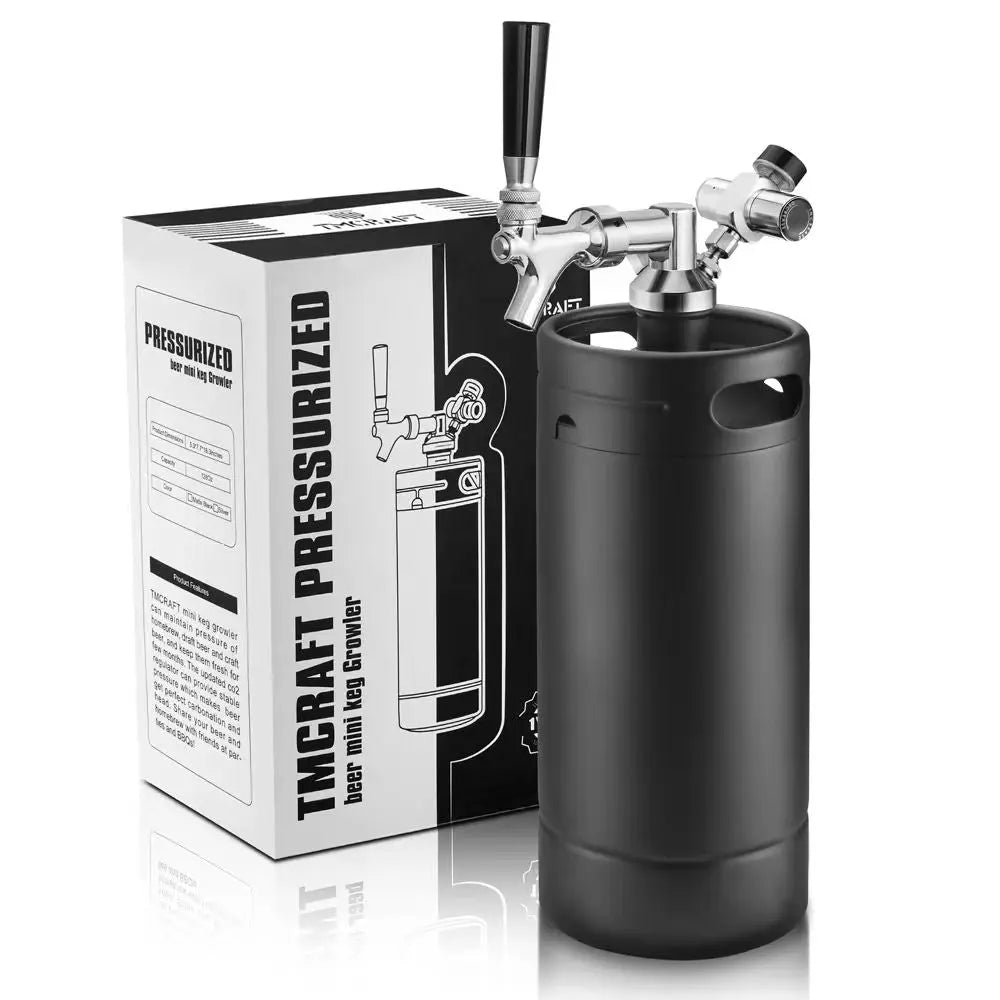


Ball Lock Keg Systems Explained: Building a Reliable Draft Setup for Homebrewers
Keywords
Ball Lock Keg, Kegging System, Homebrewing Equipment, CO₂ System, TMCRAFT Ball Lock Kegs
Secondary Keywords:
Ball lock disconnects, homebrew keg setup, draft system maintenance, CO₂ pressure control, keg carbonation
Introduction: Why Ball Lock Kegs Are the Gold Standard in Homebrewing
For serious homebrewers, bottling is often the first process they outgrow. While bottles serve a purpose, they introduce oxygen exposure, inconsistent carbonation, and time-consuming cleanup. This is where the ball lock keg system becomes a game-changer.
Ball lock kegs offer precise carbonation control, professional draft-style dispensing, and long-term beer freshness, making them the preferred kegging system for modern homebrewers.
In this guide, you will learn:
- How ball lock kegs work
- What components make up a complete kegging system
- How to carbonate and serve beer correctly
- How to prevent leaks and pressure issues
- Why TMCRAFT Ball Lock Kegs are engineered for reliability
What Is a Ball Lock Keg?
A ball lock keg is a stainless steel pressure vessel originally developed for soda dispensing and later adopted by the homebrewing community. It uses quick-disconnect ball lock fittings to attach gas and liquid lines securely.
Key Characteristics of Ball Lock Kegs
- Separate gas and liquid posts
- Spring-loaded ball bearings for tight seals
- High pressure tolerance
- Easy disassembly for cleaning
Ball lock kegs are most commonly available in 5-gallon capacities, but TMCRAFT also offers options suitable for smaller setups and modular draft systems.
Ball Lock Keg vs Pin Lock Keg
| Feature | Ball Lock Keg | Pin Lock Keg |
|---|---|---|
| Connector Type | Ball lock disconnect | Pin lock disconnect |
| Size | Slimmer | Wider |
| Availability | Widely available | Less common |
| Ease of Use | Easier | Moderate |
Because of their compatibility, slimmer profile, and easier sourcing, ball lock kegs have become the dominant standard in homebrewing equipment.
Anatomy of a Ball Lock Keg System
Understanding each component is critical to building a reliable kegging system.
1. The Keg Body
The stainless steel vessel holds the beer under pressure. TMCRAFT Ball Lock Kegs are made from food-grade stainless steel, ensuring durability, corrosion resistance, and flavor neutrality.
2. Gas-In Post
Connects to the CO₂ system. Typically marked with a notch or star.
3. Liquid-Out Post
Delivers beer to the tap or faucet.
4. Dip Tubes
- Gas dip tube: short, directs CO₂ into headspace
- Liquid dip tube: long, reaches bottom to draw beer
5. Lid and O-Ring
Creates an airtight seal essential for pressure retention.
Building Your Homebrew Kegging System
A functional ball lock keg setup includes:
- Ball lock keg
- CO₂ tank
- Regulator
- Gas and liquid disconnects
- Beverage tubing
- Faucet or tap system
TMCRAFT Ball Lock Kegs are designed to integrate seamlessly with standard CO₂ systems, making them ideal for both beginner and advanced homebrew setups.
Carbonating Beer in a Ball Lock Keg
Carbonation is one of the greatest advantages of kegging.
Force Carbonation Method
- Chill beer to 34–38°F
- Apply CO₂ at 12–14 PSI
- Allow 3–5 days for absorption
- Fine-tune pressure for serving
Burst Carbonation (Advanced)
- Apply 25–30 PSI for 24 hours
- Reduce to serving pressure
- Monitor closely to avoid over-carbonation
Ball lock kegs allow repeatable, precise carbonation, which is impossible to achieve consistently with bottles.
CO₂ Pressure Control: Why It Matters
Incorrect pressure is the most common cause of kegging frustration.
Too Much Pressure:
- Excess foam
- Over-carbonated beer
Too Little Pressure:
- Flat pours
- Poor mouthfeel
A properly regulated CO₂ system ensures:
- Stable carbonation
- Smooth dispensing
- Minimal foam
TMCRAFT Ball Lock Kegs are pressure-tested to maintain consistent performance even under frequent adjustments.
Serving Beer from a Ball Lock Keg
Serving methods include:
- Kegerator setup
- Keezer (chest freezer conversion)
- Portable tap systems
Best Serving Practices:
- Keep beer cold
- Match serving pressure to line length
- Open faucets fully during pours
A balanced system results in clear, foam-free pours from the first glass to the last.
Common Ball Lock Keg Problems (and Fixes)
Gas Leaks
Cause: Worn O-rings or loose posts
Fix: Replace seals regularly
Foamy Beer
Cause: Warm beer or incorrect pressure
Fix: Chill keg and rebalance PSI
Flat Beer
Cause: CO₂ leaks or under-carbonation
Fix: Check connections and increase pressure gradually
TMCRAFT Ball Lock Kegs use high-tolerance fittings and durable seals to reduce these issues.
Cleaning and Maintenance Best Practices
Regular cleaning preserves flavor and equipment life.
Recommended Routine:
- Rinse immediately after emptying
- Use brewery-grade cleaners
- Disassemble posts and dip tubes monthly
- Sanitize before each refill
Stainless steel construction allows TMCRAFT kegs to withstand deep cleaning without degradation.
Upgrading Your Ball Lock Keg System
Advanced upgrades include:
- Secondary regulators
- Flow control faucets
- Inline filters
- Spunding valves
These upgrades allow homebrewers to fine-tune pressure and dispensing for professional-quality results.
Why Choose TMCRAFT Ball Lock Kegs?
TMCRAFT Ball Lock Kegs are built with homebrewers in mind:
- Food-grade stainless steel
- Precision-machined posts
- Leak-resistant lid design
- Compatible with standard CO₂ systems
- Durable construction for long-term use
They deliver commercial-grade reliability in a homebrewing format.
Conclusion: Is a Ball Lock Keg Worth the Upgrade?
For homebrewers seeking consistency, efficiency, and draft-quality beer, ball lock kegs are one of the most impactful upgrades available. They reduce oxygen exposure, eliminate bottling fatigue, and provide unmatched control over carbonation and serving.
With TMCRAFT Ball Lock Kegs, homebrewers gain a dependable foundation for a professional-grade draft system—one keg at a time.
Link to: Ball Lock Keg Systems Made Simple: How to Build a Reliable Home Draft Setup