

The Engineering Behind Ball Lock Keg Systems: Why Precision Pressure Changes Everything
Primary Keyword
ball lock keg
Secondary Keywords
ball lock keg system, stainless steel ball lock keg, home brewing keg, carbonation control, draft beer system, pressurized keg
Introduction: Great Carbonation Is Built on Control
In home brewing, flavor development often receives the most attention—grain selection, yeast strains, fermentation temperature, and dry hopping schedules. Yet when beer is finally served, the most noticeable quality indicator is carbonation. Too much pressure leads to excessive foam and sharp mouthfeel. Too little pressure results in flat, lifeless pours.
Carbonation consistency is not accidental. It is a function of system design. A ball lock keg provides the structural and mechanical control necessary to regulate pressure precisely, ensuring repeatable draft performance across batches.
Unlike bottles and cans, which trap a fixed amount of carbon dioxide, a ball lock keg system allows brewers to adjust, fine-tune, and maintain carbonation levels without reopening the container. This article explores the engineering behind ball lock kegs, how they improve carbonation control, and why they are foundational to modern home draft systems.
What Is a Ball Lock Keg?
A ball lock keg is a reusable, pressure-rated stainless steel container designed for storing and dispensing carbonated beverages. It uses quick-disconnect fittings with internal ball bearings that lock securely onto dedicated gas and liquid posts.
Originally developed for soda distribution, ball lock kegs were adopted by home brewers due to their durability, modularity, and precise pressure capability.
A typical ball lock keg system includes:
- Stainless steel keg body
- Removable lid with pressure relief valve (PRV)
- Gas-in post
- Liquid-out post
- Internal dip tubes
Together, these components create a sealed, controllable environment.
Why Bottles and Cans Limit Carbonation Precision
Before understanding the strengths of a ball lock keg system, it is important to examine the structural limitations of traditional packaging.
Fixed Carbonation
In bottles, carbonation is achieved through priming sugar and sealed fermentation. Once capped, the carbonation level is locked. If over-carbonated, the only correction is venting—an action that permanently alters the beer.
Oxygen Risk During Bottling
Even minor oxygen exposure during transfer can degrade flavor. Over time, oxidation dulls hop aroma and increases stale characteristics.
No Post-Packaging Adjustments
With bottles and cans, pressure cannot be adjusted after sealing.
A ball lock keg eliminates these restrictions by allowing external pressure regulation at any time.
The Core Engineering Advantage: Dual-Post Separation
The defining feature of a ball lock keg is its dual-post configuration.
Gas-In Post
Delivers CO2 into the headspace of the keg.
Liquid-Out Post
Dispenses beverage from the bottom of the keg via a dip tube.
This separation ensures:
- Controlled gas flow
- Stable internal pressure
- Minimal agitation during dispensing
Because gas replaces liquid volume as beer is poured, air never enters the system.
Understanding Pressure and Carbonation Physics
Carbonation relies on Henry's Law: gas dissolves into liquid in proportion to pressure at a given temperature.
In practical terms:
- Higher pressure = more dissolved CO2
- Lower pressure = less dissolved CO2
A ball lock keg system allows brewers to set regulator pressure precisely, enabling style-specific carbonation targets.
For example:
- Wheat beers typically require higher carbonation.
- Stouts often require lower carbonation.
This flexibility is impossible with bottle conditioning alone.
Components That Support System Stability
Stainless Steel Body
A stainless steel ball lock keg resists corrosion, protects against light exposure, and maintains structural integrity under pressure.
Pressure Relief Valve (PRV)
The PRV allows controlled depressurization, improving safety and enabling fine adjustments.
Replaceable O-Rings
Sealing integrity is essential for maintaining pressure. Ball lock kegs allow O-ring replacement, extending lifespan and preventing leaks.
Dip Tubes
Internal dip tubes draw liquid from the bottom while gas remains in the headspace. This separation stabilizes dispensing.
Ball Lock vs Pin Lock: Standardization Matters
While both systems operate similarly, ball lock kegs dominate modern home brewing due to standardized fittings and widespread accessory compatibility.
Advantages include:
- Compact dimensions
- Easier disconnect operation
- Broad regulator and accessory availability
Standardization simplifies system expansion and maintenance.
Carbonation Methods Using a Ball Lock Keg
Set-and-Forget Method
The brewer applies consistent pressure over several days until equilibrium is reached.
Burst Carbonation
Higher pressure is applied for a short duration, then reduced.
Natural Conditioning in Keg
Priming sugar can be added directly to the keg, combining traditional conditioning with system control.
Each method benefits from the adjustability of a ball lock keg system.
Cleaning and Maintenance: Engineering for Longevity
A major advantage of a ball lock keg is serviceability.
Users can:
- Remove posts for deep cleaning
- Extract dip tubes
- Replace seals
- Sanitize internal surfaces thoroughly
This reduces contamination risk and ensures consistent performance across batches.
Choosing the Right Ball Lock Keg Size
2.5–3 Gallon Kegs
Ideal for experimental batches and limited refrigerator space.
5 Gallon Kegs
Standard for full home brew batches and extended serving.
Size selection depends on brewing volume and draft setup configuration.
Common Pressure Management Mistakes
Over-Pressurizing
Excessive pressure leads to foamy pours and wasted beer.
Temperature Neglect
Carbonation levels shift if temperature fluctuates.
Ignoring Minor Leaks
Even small leaks reduce pressure stability over time.
Routine inspection and proper regulator calibration prevent these issues.
Applications Beyond Beer
Ball lock keg systems are widely used for:
- Kombucha
- Sparkling water
- Hard seltzer
- Cold brew coffee
Their pressure versatility makes them suitable for multiple beverage categories.
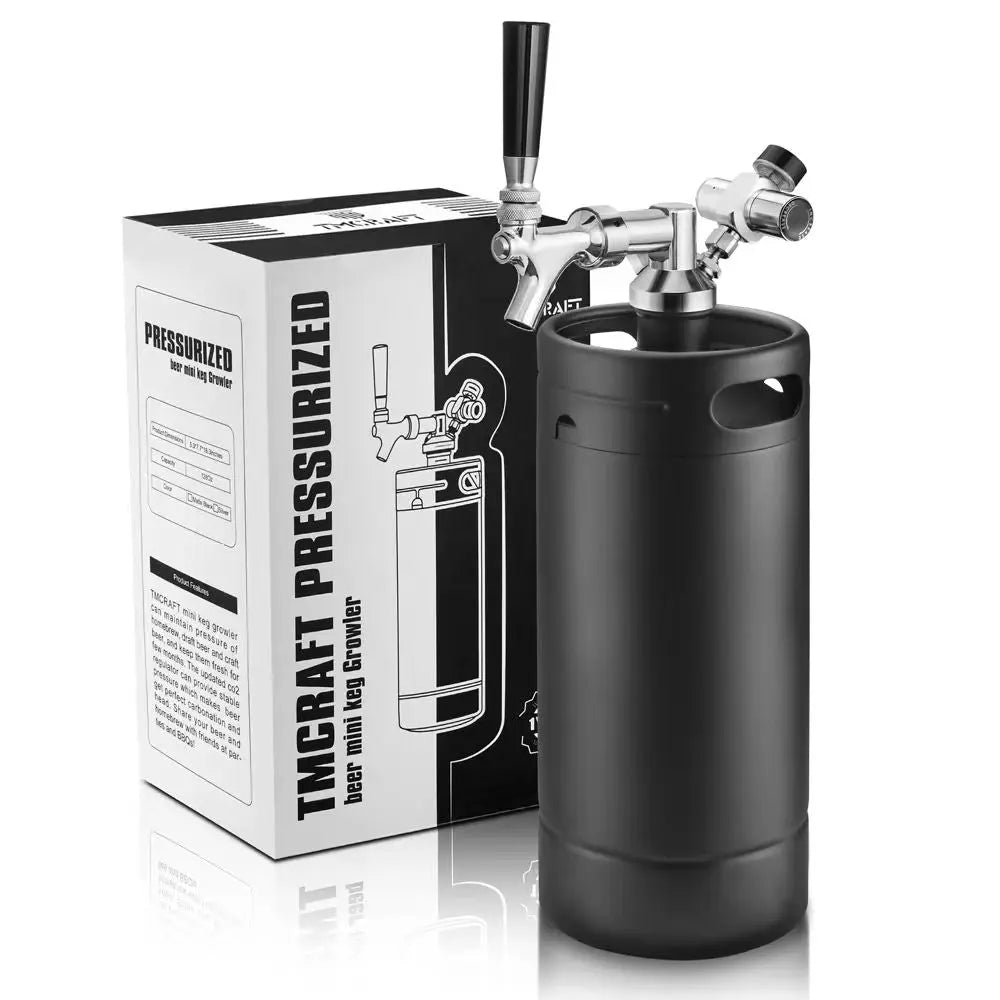
Why TMCRAFT Ball Lock Kegs Deliver Consistency
TMCRAFT ball lock kegs are engineered with:
- Food-grade stainless steel construction
- Precision-machined posts
- Durable sealing components
- Pressure-stable lids with PRV
These features support accurate carbonation control and long-term reliability within home draft beer systems.
Final Thoughts: Precision Is the Difference
A ball lock keg system transforms carbonation from a passive outcome into a controlled variable. By allowing precise pressure regulation, preventing oxygen exposure, and enabling repeatable dispensing, ball lock kegs provide the engineering foundation for consistent draft quality.
For home brewers seeking professional-level carbonation control and dependable draft performance, a stainless steel ball lock keg is not merely convenient—it is essential.
Link to:
How Ball Lock Keg Systems Control Carbonation Better Than Bottles and Cans