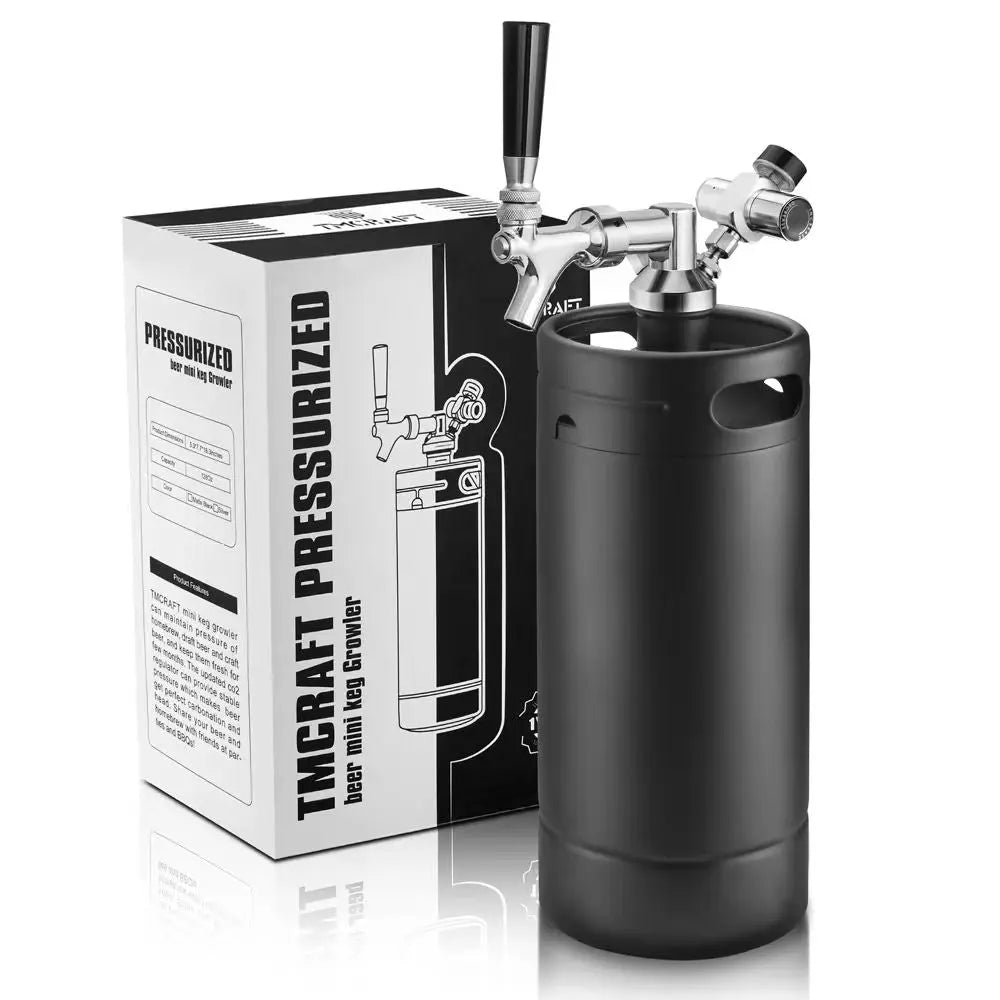


How Ball Lock Keg Systems Control Carbonation Better Than Bottles and Cans
Primary SEO Keywords
ball lock keg, ball lock keg system, stainless steel ball lock keg
Secondary SEO Keywords
carbonation control, home brewing keg, draft beer system, pressurized keg
Introduction: Carbonation Is a System Problem, Not a Recipe Problem
Many brewers assume that inconsistent carbonation is caused by mistakes in brewing—too much sugar, the wrong yeast, or poor timing. In reality, carbonation issues are more often caused by storage and dispensing limitations. Bottles, cans, and improvised containers simply do not offer the control needed to manage pressure reliably.
This is why the ball lock keg has become a foundational component of modern home brewing and small draft systems. Rather than relying on guesswork, ball lock keg systems give brewers direct control over pressure, gas flow, and sealing integrity. This article explains how ball lock kegs work, why they outperform bottles and cans, and how they help brewers achieve repeatable carbonation results.
What Is a Ball Lock Keg?
A ball lock keg is a reusable, pressure-rated stainless steel keg that uses quick-disconnect ball lock fittings for both gas input and liquid output. These fittings lock onto dedicated posts using internal ball bearings, creating a secure, airtight seal.
Ball lock kegs were originally designed for soda dispensing, where precise carbonation and sanitation were critical. Home brewers adopted them because those same requirements apply to beer, kombucha, coffee, and other carbonated beverages.
Why Bottles and Cans Struggle With Carbonation Control
Fixed Pressure Environment
Once sealed, bottles and cans trap a fixed amount of CO₂. There is no way to adjust carbonation levels without opening the container—an action that immediately releases pressure and introduces oxygen.
Inconsistent Results
Minor variations in sugar levels, temperature, or timing can lead to:
- Over-carbonated bottles
- Under-carbonated beer
- Gushing or flat pours
Oxygen Exposure
Every opening introduces oxygen, which degrades flavor and aroma.
Ball lock keg systems eliminate these issues by allowing carbonation to be adjusted externally, without ever opening the container.
How a Ball Lock Keg System Works
A ball lock keg functions as a closed, pressurized system.
- Finished beverage is transferred into the keg
- The lid seals the keg airtight
- Gas pressure is applied through the gas-in post
- Pressure dissolves CO₂ into the liquid
- Beverage is dispensed through the liquid-out post
As liquid exits the keg, gas replaces the volume—not air—maintaining stable pressure and preventing oxidation.
The Role of Pressure in Carbonation
Carbonation follows basic gas solubility principles: the higher the pressure, the more CO₂ dissolves into liquid at a given temperature. Ball lock kegs allow brewers to:
- Set exact pressure levels
- Adjust carbonation gradually
- Match carbonation to specific beer styles
This level of control is impossible with bottles and cans.
Key Components of a Ball Lock Keg
Stainless Steel Keg Body
The keg body is constructed from food-grade stainless steel, offering durability, corrosion resistance, and neutral flavor retention.
Lid With Pressure Relief Valve (PRV)
The removable lid creates an airtight seal and includes a PRV, allowing safe depressurization and pressure adjustments.
Gas-In and Liquid-Out Posts
Separate posts prevent incorrect connections and ensure smooth gas flow and dispensing.
Dip Tubes
Internal dip tubes guide gas and liquid to the correct locations, minimizing waste and turbulence.
Ball Lock vs Other Keg and Packaging Options
Ball Lock vs Pin Lock Kegs
Pin lock kegs use mechanical pins to secure fittings. While functional, they are bulkier and less standardized. Ball lock fittings dominate modern draft system accessories.
Ball Lock vs Sankey Kegs
Commercial Sankey kegs are robust but require specialized couplers and are difficult to clean internally. Ball lock kegs are modular and user-serviceable.
Ball Lock vs Bottles
Bottles are convenient but offer no pressure control and introduce oxygen with every opening.
Cleaning and Sanitation Advantages
Sanitation is essential for carbonation stability and flavor consistency.
Ball lock kegs can be fully disassembled, allowing brewers to:
- Remove posts and dip tubes
- Replace worn O-rings
- Clean all internal surfaces
This reduces contamination risk and improves repeatability across batches.
Choosing the Right Ball Lock Keg Size
Small Ball Lock Kegs (2.5–3 Gallons)
Best for:
- Test batches
- Limited refrigeration space
- Rapid carbonation cycles
Standard Ball Lock Kegs (5 Gallons)
Best for:
- Full home brew batches
- Long-term serving
- Shared consumption
TMCRAFT ball lock kegs are designed for efficient storage and easy handling across size options.
Common Ball Lock Keg Mistakes
-
Over-carbonating too quickly
Rapid pressure increases cause foaming. -
Ignoring temperature effects
Carbonation depends on both pressure and temperature. -
Neglecting seal maintenance
Small leaks lead to pressure loss over time.
Avoiding these mistakes leads to smoother pours and better consistency.
Ball Lock Kegs Beyond Beer
Ball lock kegs are widely used for:
- Kombucha
- Sparkling water
- Cold brew coffee
- Nitro beverages
Their compatibility with multiple gas types makes them a versatile foundation for beverage systems.
Why TMCRAFT Ball Lock Kegs Are Built for Control
TMCRAFT ball lock kegs feature:
- Precision-machined posts
- Durable food-grade seals
- Pressure-stable construction
- Compatibility with standard regulators
These design choices support consistent carbonation and long-term reliability.
Final Thoughts: Is a Ball Lock Keg Worth Using?
A ball lock keg system gives brewers control that bottles and cans cannot provide. By allowing precise pressure adjustment, eliminating oxygen exposure, and simplifying sanitation, ball lock kegs enable repeatable carbonation and professional-quality results.
For home brewers and small draft setups focused on consistency and control, a high-quality ball lock keg—such as those from TMCRAFT—is not just an upgrade, but a necessity.
Link to: Inside a Ball Lock Keg System: Connections, Pressure, and Why Brewers Trust It