

The Complete Guide to Carbonating Beer in a Ball Lock Keg: Force Carbonation vs Natural Carbonation
One of the biggest advantages of switching from bottling to a ball lock keg is having complete control over carbonation. For homebrewers, carbonation is more than just bubbles—it directly affects mouthfeel, aroma, foam stability, flavor perception, and overall drinking experience.
Many new brewers quickly discover that creating perfectly carbonated beer is easier said than done. Too little carbonation can make beer taste flat and lifeless. Too much carbonation can create excessive foam, harsh mouthfeel, and pouring problems.
Fortunately, a modern homebrew keg system allows brewers to precisely manage carbonation levels. Whether you prefer fast results through force carbonation or traditional conditioning through natural carbonation, understanding both methods will help you consistently produce better beer.
This guide explains how carbonating beer in a keg works, compares force carbonation and natural carbonation, and provides practical tips for achieving professional-quality results using a ball lock corny keg.
Why Carbonation Matters in Beer
Carbonation plays a major role in how beer is perceived.
Carbon dioxide affects:
- Aroma release
- Foam formation
- Mouthfeel
- Flavor intensity
- Perceived freshness
The same beer can taste completely different at different carbonation levels.
For example:
Low Carbonation
Typically preferred for:
- English ales
- Milds
- Some stouts
Produces:
- Softer mouthfeel
- Lower foam production
- Less carbonic bite
Moderate Carbonation
Common for:
- Pale ales
- Amber ales
- Porters
- Most craft beers
Provides:
- Balanced mouthfeel
- Stable head retention
- Improved aroma delivery
High Carbonation
Common for:
- Wheat beers
- Belgian ales
- Saisons
Creates:
- Crisp finish
- Lively mouthfeel
- Dense foam
A properly managed corny keg carbonation system allows brewers to target the exact carbonation level required for each beer style.
What Is a Ball Lock Keg?
A ball lock keg is a reusable pressurized container widely used in homebrewing.
Originally designed for soft drink syrup distribution, these kegs have become the industry standard for small-batch beer storage and dispensing.
A typical ball lock corny keg includes:
- Stainless steel body
- Gas post
- Liquid post
- Pressure relief valve
- Removable lid
- Dip tubes
When connected to a CO2 system, the keg becomes both a storage vessel and serving system.
Understanding CO2 and Beer Carbonation
Carbonation occurs when carbon dioxide dissolves into beer.
The amount of dissolved CO2 depends primarily on:
- Pressure
- Temperature
- Contact time
Colder beer absorbs CO2 more efficiently than warm beer.
This relationship explains why brewers often chill beer before beginning force carbonation.
Understanding this principle is essential for successful carbonating beer in a keg.
What Is Force Carbonation?
Force carbonation uses an external CO2 source to rapidly dissolve carbon dioxide into beer.
This is the most popular carbonation method among homebrewers using a homebrew keg system.
Instead of relying on yeast to create carbonation naturally, brewers inject CO2 directly into the keg.
How Force Carbonation Works
The process is simple:
Step 1: Transfer Beer Into the Keg
Finished beer is transferred into a sanitized stainless steel keg.
Step 2: Chill the Beer
Cold beer absorbs CO2 faster and more efficiently.
Most brewers carbonate between 34°F and 40°F.
Step 3: Connect CO2
A gas line connects the keg to a CO2 tank and regulator.
Step 4: Apply Pressure
The regulator delivers controlled pressure into the keg.
Over time, carbon dioxide dissolves into the beer.
Advantages of Force Carbonation
Faster Results
Many beers can be carbonated within a few days.
Some methods achieve acceptable carbonation within 24 hours.
Greater Precision
Pressure can be adjusted to achieve exact carbonation levels.
This provides consistency from batch to batch.
Reduced Risk
Since additional fermentation is not required, there is less uncertainty compared with bottle conditioning.
Better for Modern Beer Styles
Hop-forward beers benefit from faster packaging and reduced oxygen exposure.
What Is Natural Carbonation?
Natural carbonation relies on yeast activity inside the keg.
Before sealing the keg, brewers add a measured amount of priming sugar.
The remaining yeast consumes the sugar and produces carbon dioxide.
Since the keg is sealed, the CO2 becomes trapped and dissolves into the beer.
This method closely resembles bottle conditioning.
How Natural Carbonation Works
Step 1: Add Priming Sugar
Calculated sugar is added before filling the keg.
Step 2: Transfer Beer
Beer is transferred onto the sugar solution.
Step 3: Seal the Keg
The keg is sealed and stored at fermentation temperatures.
Step 4: Allow Conditioning
Yeast produces CO2 over several weeks.
Step 5: Chill Before Serving
Once carbonation is complete, the keg is chilled and connected to serving gas.
Advantages of Natural Carbonation
Traditional Character
Many brewers believe natural conditioning contributes subtle flavor complexity.
Lower CO2 Consumption
Less external gas is required.
Cost Savings
Natural carbonation reduces reliance on force carbonation equipment.
Suitable for Traditional Styles
Many Belgian and English beer styles historically used natural conditioning.
Force Carbonation vs Natural Carbonation
Speed
Force Carbonation:
- 1–7 days
Natural Carbonation:
- 2–4 weeks
Winner: Force Carbonation
Precision
Force Carbonation:
- Highly controllable
Natural Carbonation:
- Depends on yeast activity
Winner: Force Carbonation
Traditional Brewing Character
Force Carbonation:
- Neutral
Natural Carbonation:
- Traditional conditioning process
Winner: Natural Carbonation
Convenience
Force Carbonation:
- Easy adjustments
Natural Carbonation:
- Requires waiting
Winner: Force Carbonation
Understanding a Keg Carbonation Chart
Most brewers use a keg carbonation chart to determine appropriate pressure settings.
The chart calculates carbonation levels based on:
- Beer temperature
- Desired CO2 volumes
- Applied pressure
For example:
- Colder beer requires less pressure
- Warmer beer requires more pressure
Using a chart helps prevent under-carbonation and over-carbonation.
Common Force Carbonation Methods
Set-and-Forget Method
The safest and most consistent approach.
Brewers simply:
- Chill the beer
- Apply serving pressure
- Wait approximately one week
This method minimizes mistakes.
Burst Carbonation
Uses elevated pressure for a shorter period.
Benefits:
- Faster carbonation
Risks:
- Over-carbonation
Shake Method
The keg is agitated while under pressure.
Benefits:
- Very rapid carbonation
Risks:
- Difficult to control
Most experienced brewers prefer the set-and-forget approach.
Common Carbonation Problems
Flat Beer
Causes:
- Low pressure
- Gas leaks
- Insufficient carbonation time
Excessive Foam
Causes:
- Over-carbonation
- Warm beer
- Incorrect serving pressure
Inconsistent Carbonation
Causes:
- Temperature fluctuations
- Regulator issues
- Incomplete gas absorption
Why Ball Lock Kegs Are Ideal for Carbonation
The design of a ball lock keg makes carbonation efficient and reliable.
Benefits include:
Airtight Sealing
Maintains pressure effectively.
Easy Gas Connections
Quick disconnects simplify operation.
Pressure Compatibility
Designed specifically for carbonated beverages.
Durability
A quality stainless steel keg withstands years of repeated use.
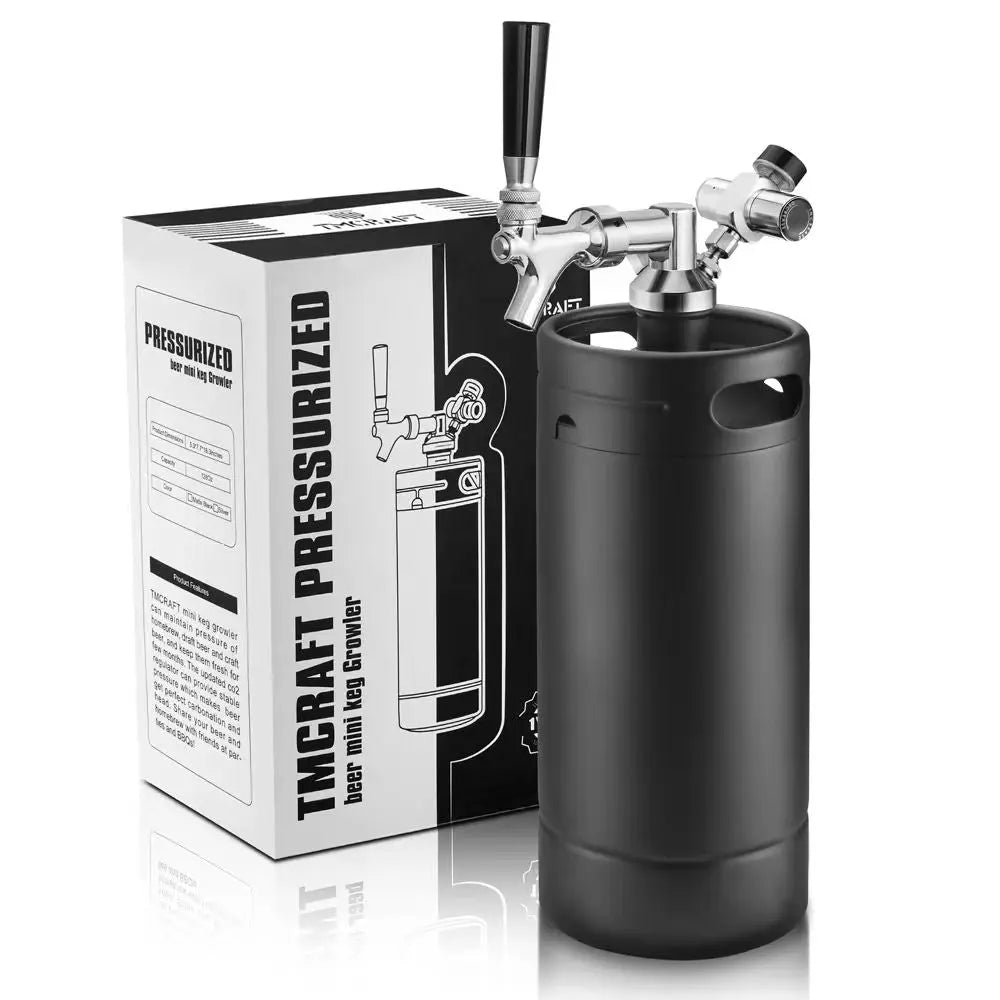
Why TMCRAFT Ball Lock Kegs Are Built for Better Carbonation
TMCRAFT ball lock kegs are engineered to help homebrewers achieve consistent carbonation and reliable serving performance.
Key features include:
- Food-grade stainless steel construction
- Pressure-resistant design
- Reliable gas and liquid posts
- Durable sealing components
- Easy-clean surfaces
- Compatibility with standard homebrew systems
Whether you're learning carbonating beer in a keg for the first time or refining an advanced draft setup, TMCRAFT kegs provide dependable performance for every batch.
Frequently Asked Questions
How long does force carbonation take in a ball lock keg?
Most beers reach serving carbonation levels within 5–7 days using the set-and-forget method.
Is force carbonation better than natural carbonation?
Both methods work well. Force carbonation offers speed and precision, while natural carbonation provides a traditional conditioning process.
Can beer be over-carbonated in a keg?
Yes. Excess pressure or excessive carbonation time can create over-carbonated beer and pouring issues.
Do I need a CO2 regulator?
Yes. A CO2 regulator controls pressure and is essential for safe and accurate force carbonation.
Why do homebrewers prefer ball lock kegs?
A ball lock corny keg offers easy cleaning, reliable pressure retention, precise carbonation control, and convenient draft serving.
Conclusion
Understanding the differences between force carbonation and natural carbonation is one of the most valuable skills a homebrewer can learn.
A modern ball lock keg system gives brewers precise control over carbonation, allowing every beer style to be served exactly as intended. While natural carbonation remains popular among traditional brewers, force carbonation has become the preferred method for most homebrew enthusiasts because of its speed, consistency, and convenience.
Whether you're building your first homebrew keg system or upgrading an existing draft setup, mastering corny keg carbonation will help you produce fresher, better-tasting beer with professional-level results. A high-quality TMCRAFT ball lock keg provides the reliability and performance needed to make every batch a success.
Link to: Ball Lock Kegs Explained: Why Homebrewers Prefer Corny Kegs Over Traditional Bottling