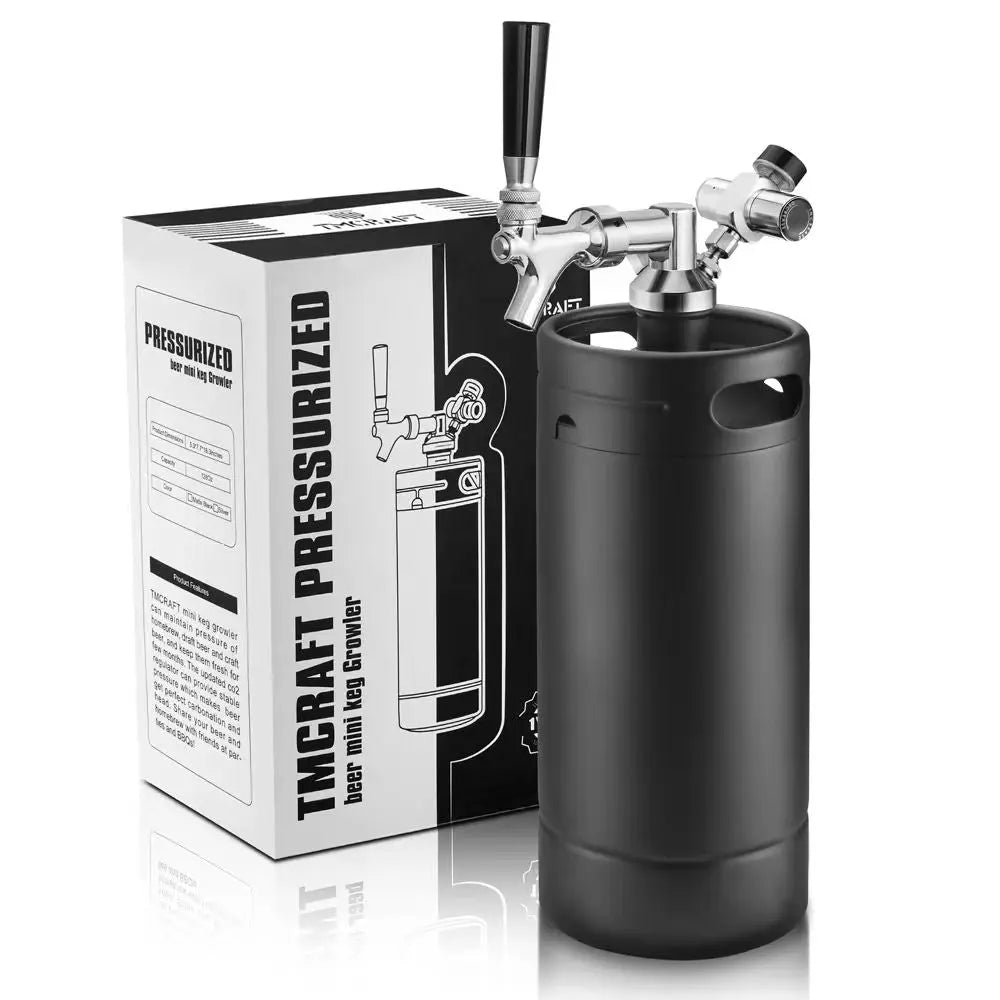


Ball Lock Kegs Explained: Why Homebrewers Prefer Corny Kegs Over Traditional Bottling
For many homebrewers, the biggest upgrade in beer quality does not come from changing ingredients or brewing equipment. It comes from switching from bottles to a ball lock keg system.
Traditional bottling can be time-consuming, inconsistent, and difficult to manage for growing homebrew setups. In contrast, a corny keg offers faster packaging, better carbonation control, easier cleaning, and a true draft beer experience at home.
Today, more brewers are investing in a complete homebrew keg system to simplify beer storage and serving. Whether you brew IPA, lager, stout, or sparkling cold brew coffee, a stainless steel keg system can dramatically improve efficiency and beverage quality.
This guide explains how ball lock kegs work, why they have become the standard choice for homebrewers, and how to build a reliable kegging system for fresh draft beer at home.
What Is a Ball Lock Keg?
A ball lock keg is a pressurized beverage container originally designed for soda distribution but now widely used in homebrewing.
These kegs are commonly called corny kegs because they were originally manufactured for soft drink syrup systems.
Unlike commercial beer kegs, ball lock kegs are compact, reusable, and ideal for small-scale brewing operations.
Most ball lock corny kegs include:
- Stainless steel construction
- Pressure-rated body
- Gas and liquid disconnect posts
- Removable lid
- CO2 compatibility
- Portable sizing options
The “ball lock” name comes from the small ball bearings inside the connection posts that secure quick-disconnect fittings.
Why Homebrewers Are Switching from Bottling to Kegging
Many beginner brewers start with bottles because the setup cost is lower. However, after several batches, bottling often becomes one of the least enjoyable parts of brewing.
A homebrew keg system solves many common frustrations.
The Problems with Traditional Bottling
Bottling beer requires:
- Cleaning dozens of bottles
- Sanitizing each bottle
- Filling bottles individually
- Capping every bottle
- Waiting for carbonation
- Managing inconsistent carbonation levels
For larger batches, this process becomes extremely time-consuming.
Bottled beer is also more vulnerable to oxygen exposure during filling.
Advantages of Kegging Homebrew Beer
A ball lock corny keg simplifies nearly every part of packaging and serving beer.
Faster Packaging
Instead of filling dozens of bottles, brewers transfer beer directly into one keg.
This can reduce packaging time dramatically.
Easier Carbonation Control
With a CO2 keg system, brewers can precisely control carbonation levels using regulated pressure.
This creates more consistent beer quality compared with bottle conditioning.
Better Freshness
Kegs reduce oxygen exposure during transfer and storage.
This helps preserve:
- Hop aroma
- Carbonation
- Flavor stability
- Mouthfeel
Especially for hop-forward beers like IPA, oxygen reduction is critical.
Draft Beer Experience at Home
A beer keg for homebrewing transforms ordinary serving into a professional-style draft system.
Fresh beer on tap provides:
- Cleaner pours
- Better foam control
- Improved convenience
- More enjoyable serving
How a Ball Lock Keg System Works
A standard pressurized keg system uses CO2 to move beer from the keg to the faucet.
The system usually includes:
- Ball lock keg
- CO2 cylinder
- Regulator
- Gas line
- Liquid line
- Faucet or tap
- Disconnect fittings
Gas Side
CO2 enters through the gas post and pressurizes the keg interior.
Liquid Side
The pressure pushes beer through the liquid dip tube and out of the faucet.
Controlled Carbonation
The regulator controls serving pressure and carbonation levels.
This gives brewers much greater precision than bottle conditioning.
Why Stainless Steel Kegs Are the Industry Standard
A quality stainless steel keg offers major advantages over plastic containers or glass storage.
Durability
Stainless steel withstands:
- Pressure
- Transport
- Temperature changes
- Repeated cleaning
This makes the keg highly reusable for long-term brewing.
Sanitation
Smooth stainless steel surfaces are easier to sanitize than plastic.
This reduces contamination risk during fermentation and serving.
Flavor Protection
Stainless steel does not absorb flavors or odors.
This is especially important when switching between beer styles.
Pressure Retention
A properly sealed ball lock keg maintains pressure efficiently for extended periods.
Ball Lock vs Pin Lock Kegs
Homebrewers often compare ball lock and pin lock systems.
Ball Lock Kegs
Advantages:
- More common fittings
- Slightly taller and slimmer design
- Easier disconnect handling
- Larger accessory availability
Pin Lock Kegs
Advantages:
- Shorter height
- Slightly lower cost in some markets
However, most modern homebrew systems favor ball lock kegs because of broader compatibility.
Best Beer Styles for Kegging
Almost any beer style benefits from kegging, but certain styles gain especially noticeable improvements.
IPA and Pale Ale
Reduced oxygen exposure preserves hop aroma and freshness.
Stouts and Porters
Nitro-compatible systems create creamy texture and dense foam.
Lagers
Precise carbonation improves crispness and mouthfeel.
Wheat Beers
Kegs maintain lively carbonation levels more consistently.
Common Uses Beyond Beer
A corny keg is more versatile than many people realize.
Homebrewers and beverage enthusiasts also use them for:
- Nitro cold brew coffee
- Kombucha
- Sparkling water
- Cocktails
- Hard cider
This versatility increases the long-term value of a stainless steel keg system.
How to Clean a Ball Lock Keg Properly
Cleaning is essential for maintaining beer quality.
Step 1: Disassemble the Keg
Remove:
- Lid
- Posts
- Dip tubes
- O-rings
Step 2: Wash Thoroughly
Use brewery-approved cleaners with warm water.
Step 3: Sanitize
Apply food-safe sanitizer before filling.
Step 4: Reassemble and Pressure Test
Check for leaks before transferring beer.
A dedicated cleaning keg can simplify line cleaning and sanitation.
Building a Simple Homebrew Draft Beer Setup
A beginner-friendly draft beer setup does not need to be complicated.
Basic equipment includes:
- Ball lock corny keg
- CO2 tank
- Regulator
- Tubing
- Faucet
- Refrigerator or kegerator
Many homebrewers start with a single-keg system and expand later.
Why TMCRAFT Ball Lock Kegs Are Ideal for Homebrewers
TMCRAFT ball lock kegs are designed for both beginner and advanced brewing systems.
Key features include:
- Food-grade stainless steel
- Pressure-resistant construction
- Durable sealing components
- Easy-clean interior
- Compact handling design
- Reliable gas and liquid connections
TMCRAFT also offers compatible keg accessories and cleaning solutions that help simplify maintenance and improve long-term performance.
For brewers looking to upgrade from bottling, a TMCRAFT ball lock keg provides a durable and efficient solution.
Tips for Better Kegging Results
Purge Oxygen Before Filling
Use CO2 to reduce oxidation inside the keg.
Maintain Stable Serving Pressure
Avoid excessive carbonation fluctuations.
Keep Lines Clean
Dirty lines negatively affect flavor and foam quality.
Store Kegs Cold
Cold temperatures improve carbonation stability and serving performance.
Frequently Asked Questions
What is the difference between a ball lock keg and a corny keg?
A corny keg is the general term, while a ball lock keg refers specifically to the connection style used on the keg posts.
Is kegging better than bottling?
For many homebrewers, kegging offers faster packaging, better carbonation control, easier cleaning, and improved serving convenience.
How long does beer stay fresh in a keg?
When stored properly under CO2 pressure, beer can remain fresh for weeks or even months depending on beer style and storage conditions.
Can beginners use a ball lock keg system?
Yes. Many starter homebrew keg systems are beginner-friendly and relatively easy to assemble.
Can ball lock kegs be used for coffee?
Yes. Many users fill corny kegs with nitro cold brew coffee or sparkling beverages.
Final Thoughts
Switching to a ball lock keg system is one of the most valuable upgrades a homebrewer can make. Compared with traditional bottling, kegging offers greater efficiency, improved carbonation control, cleaner serving, and better overall beer quality.
A reliable corny keg setup simplifies the brewing process while creating a professional draft beer experience at home.
Whether you are brewing small experimental batches or building a complete home bar system, investing in a high-quality stainless steel keg can improve both convenience and beverage freshness for years to come.
Link to: How to Deep Clean a Ball Lock Keg After Long-Term Storage