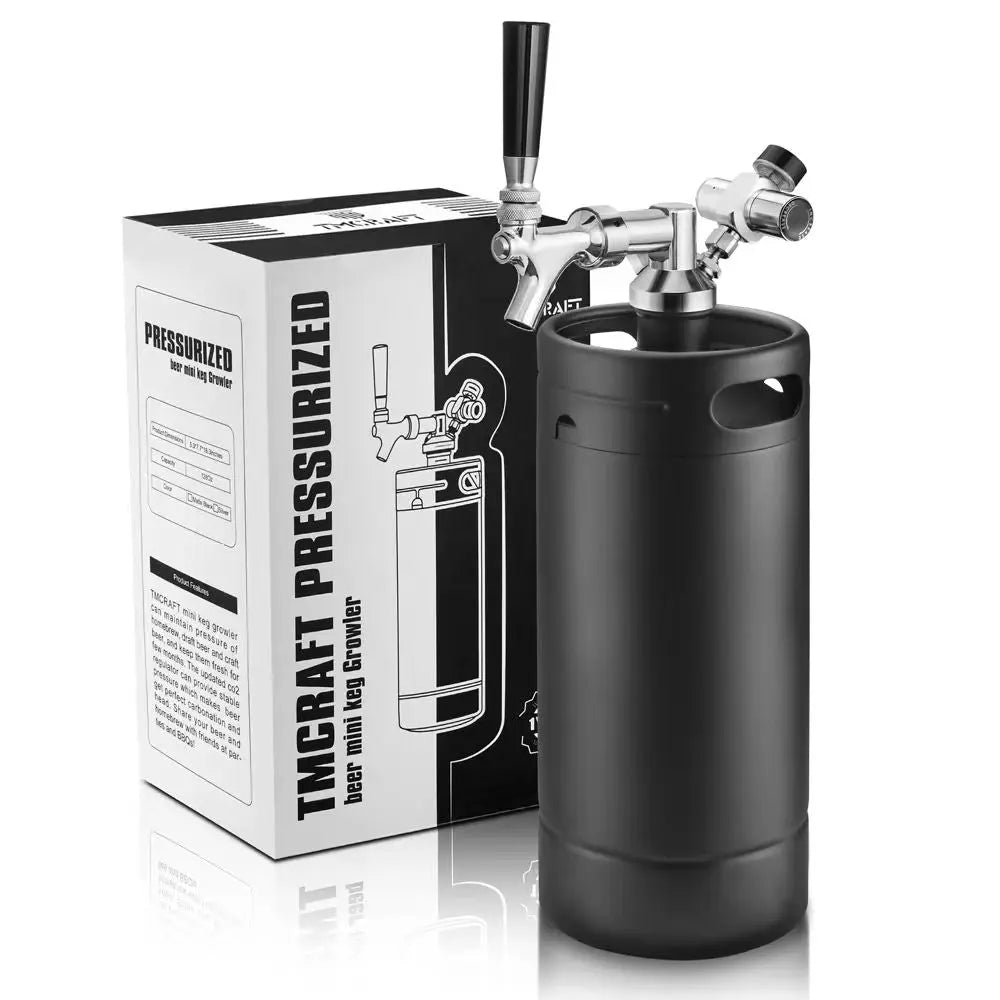


Small-Batch Draft Beer Done Right: How Mini Kegs Change the Way Homebrewers Serve Beer
Primary SEO Keywords
Mini Keg, Portable Beer Keg, Homebrew Kegging, TMCRAFT Mini Kegs
Secondary SEO Keywords
Small batch brewing, draft beer at home, fresh beer storage, mini keg system, homebrewing equipment
Introduction: The Small-Batch Problem Homebrewers Don’t Talk About
Homebrewers often focus on recipes, yeast strains, and fermentation temperatures—but far less attention is paid to how beer is served. For brewers working in small batches, this oversight can quietly undo weeks of careful work.
Bottles and growlers are convenient, but they introduce familiar problems: oxygen exposure, inconsistent carbonation, limited portability, and a narrow window of freshness once opened. These issues become even more noticeable when brewing one- or two-gallon batches, where every pint matters.
This is where the mini keg fundamentally changes the homebrewing experience.
Rather than acting as a simple container, a mini keg functions as a small-scale draft system, preserving beer quality while offering flexibility that bottles and growlers cannot match. In this guide, we’ll explore how mini kegs reshape small-batch brewing—and why TMCRAFT Mini Kegs are designed for brewers who care about freshness, control, and convenience.
What Makes Mini Kegs Different from Bottles and Growlers?
At a glance, a mini keg may look like a compact version of a standard keg. In practice, it solves a completely different set of problems than traditional packaging methods.
Bottles and Growlers: The Limitations
- Oxygen enters during filling and pouring
- Carbonation drops quickly after opening
- Each container must be cleaned individually
- Beer freshness declines rapidly once exposed
These issues compound in small batches, where a single oxidized pour represents a significant percentage of the total brew.
Mini Kegs: A Draft-First Approach
A mini keg stores beer in a sealed, pressurized stainless steel vessel. Instead of air replacing beer as it’s dispensed, CO₂ maintains internal pressure, protecting carbonation and flavor.
This difference—air vs. gas displacement—is the foundation of why mini kegs keep beer fresher for longer.
What Is a Mini Keg?
A mini keg is a pressure-capable stainless steel container, typically ranging from 64 oz to 170 oz, designed to store and dispense beer using controlled CO₂ pressure.
Unlike disposable kegs or novelty growlers, true mini kegs:
- Are reusable
- Maintain carbonation
- Prevent oxidation
- Support tap-based dispensing
TMCRAFT Mini Kegs are built from food-grade stainless steel and designed to integrate with portable CO₂ systems, making them suitable for both home use and on-the-go serving.
Why Mini Kegs Excel at Small-Batch Brewing
1. Freshness Is Preserved from First Pour to Last
Oxygen is the fastest way to degrade beer flavor. With bottles, oxygen exposure is unavoidable—especially after opening.
Mini kegs create a closed environment, where CO₂ replaces beer volume as it’s dispensed. This means:
- No air contact
- Slower flavor degradation
- Stable aroma and mouthfeel
For hop-forward styles like IPAs, this preservation is especially valuable.
2. Carbonation Is Controlled, Not Guesswork
Bottle conditioning relies on yeast activity and sugar measurements, which can vary widely. Mini kegs allow brewers to control carbonation directly.
With a mini keg system:
- Carbonation can be adjusted by style
- Over-carbonation is avoidable
- Flat beer can be corrected
Typical serving pressure for a mini keg ranges between 8–12 PSI, depending on temperature and beer style.
3. One Vessel Replaces Dozens of Bottles
Cleaning bottles is one of the most time-consuming parts of homebrewing. A mini keg reduces this workload dramatically.
Instead of:
- Cleaning 10–20 bottles
- Managing caps and labels
- Storing empties
You clean one vessel, one dip tube, and one tap assembly.
This simplicity encourages more frequent brewing with less burnout.
How a Mini Keg System Works
A basic mini keg setup includes:
- Mini Keg (Stainless Steel Vessel)
- CO₂ Source (cartridge or small tank)
- Pressure Control Cap or Regulator
- Dispensing Tap
TMCRAFT Mini Kegs are compatible with multiple dispensing styles, allowing brewers to start simple and upgrade over time.
Portability: Draft Beer Beyond the Kitchen
One of the most overlooked advantages of mini kegs is mobility.
Mini kegs are ideal for:
- Backyard gatherings
- Camping and tailgating
- Apartment living
- Limited refrigerator space
Because they maintain pressure and carbonation, mini kegs outperform growlers for transport. TMCRAFT’s insulated mini keg options further improve temperature stability during outdoor use.
How Long Does Beer Stay Fresh in a Mini Keg?
When properly cleaned, sealed, and refrigerated:
- Bottles (after opening): 3–7 days
- Growlers: 24–48 hours
- Mini kegs: 2–4 weeks or longer
The difference lies in oxygen control. CO₂ pressure continuously protects the beer until the keg is empty.
Choosing the Right Mini Keg Size
Mini kegs are available in multiple sizes, each serving a different use case.
| Size | Best Use |
|---|---|
| 64 oz | Personal batches |
| 128 oz | Small gatherings |
| 1.3–1.5 gal | Parties and events |
| 170 oz | Extended outings |
TMCRAFT Mini Kegs are designed to balance capacity with portability, ensuring freshness without excess volume.
Cleaning and Maintenance Best Practices
To maintain flavor integrity:
- Rinse immediately after emptying
- Use brewery-safe cleaning solutions
- Sanitize before refilling
- Inspect seals periodically
Stainless steel construction ensures no flavor absorption and long service life.
Why TMCRAFT Mini Kegs Are Built for Real Homebrewers
TMCRAFT Mini Kegs are not novelty containers—they are engineered for repeat use and pressure stability.
Key design advantages include:
- Food-grade stainless steel
- Reliable pressure sealing
- Modular compatibility with taps and CO₂ systems
- Options for insulation and portability
These features make TMCRAFT Mini Kegs suitable for beer, coffee, and mixed beverages, expanding their usefulness beyond brewing alone.
Who Benefits Most from Mini Kegging?
Mini kegs are ideal for:
- Small-batch homebrewers
- Apartment or space-limited brewers
- Brewers who value freshness
- Anyone tired of bottling
They also serve as a stepping stone toward larger kegging systems without committing to full-size equipment.
Conclusion: A Smarter Way to Serve Small Batches
Mini kegs don’t just replace bottles—they redefine how small-batch beer is stored, served, and enjoyed. By preserving freshness, improving carbonation control, and simplifying cleanup, mini kegs remove many of the friction points that discourage frequent brewing.
For homebrewers who want draft-quality results without complexity, TMCRAFT Mini Kegs offer a practical, professional-grade solution that fits modern brewing lifestyles.
Link to: Mini Kegs vs Bottles: Why Small Kegging Is the Best Upgrade for Fresh Homebrew