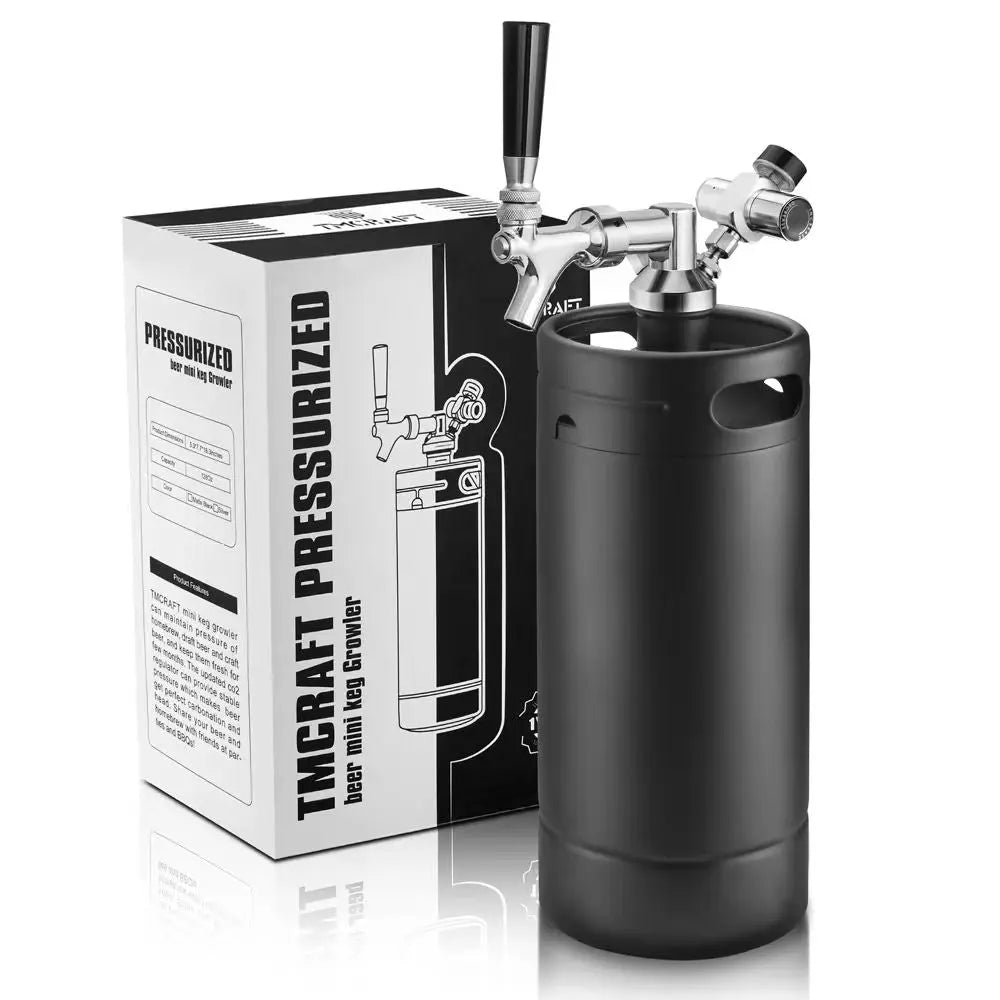


Mini Keg Temperature Guide: How Cold Should Your Beer Be for Perfect Draft Pours?
Primary Keywords:
mini keg temperature, mini keg, stainless steel mini keg, mini keg system
Secondary Keywords:
best temperature for draft beer, mini keg pressure and temperature, portable draft keg, double walled mini keg, TMCRAFT mini keg
Temperature is one of the most overlooked factors in draft beer quality. You can have the perfect recipe, the right carbonation level, and a high-quality mini keg, but if your temperature is off, your beer can still pour poorly.
Too warm? You’ll get foam and flat taste.
Too cold? Flavor becomes muted and carbonation behaves differently.
So what is the ideal temperature for a mini keg system?
In this guide, we break down the exact temperature ranges for different beer styles, explain how temperature affects carbonation and pouring, and show how to maintain the perfect serving conditions using a TMCRAFT mini keg.
Why Temperature Matters in a Mini Keg
Temperature directly affects:
- Carbonation stability
- Foam formation
- Flavor perception
- Aroma release
- Pour consistency
In a sealed mini keg, temperature and pressure work together. If one changes, the other is affected.
That’s why proper temperature control is essential for great draft beer.
Ideal Mini Keg Temperature Range
For most beers, the ideal serving temperature is:
36°F to 40°F (2°C to 4°C)
This range provides:
- Balanced carbonation
- Smooth pouring
- Full flavor expression
- Controlled foam head
This is the standard range used in professional draft systems.
Temperature by Beer Style
Different beer styles perform best at slightly different temperatures.
Light Lagers & Pilsners
Best Temperature: 34–38°F (1–3°C)
- Crisp taste
- Clean finish
- Refreshing carbonation
Too warm, and these beers lose their clean character.
Pale Ales & IPAs
Best Temperature: 38–45°F (3–7°C)
- Enhances hop aroma
- Improves flavor complexity
Too cold, and hop notes become muted.
Stouts & Porters
Best Temperature: 45–55°F (7–13°C)
- Richer mouthfeel
- Fuller flavor expression
These beers benefit from slightly warmer serving conditions.
Wheat Beers
Best Temperature: 38–45°F (3–7°C)
- Maintains smooth texture
- Supports balanced carbonation
What Happens If Your Mini Keg Is Too Warm?
Warm beer creates several issues.
Excess Foam
CO2 escapes faster at higher temperatures.
Flat Taste
Carbonation becomes unstable.
Poor Pour Control
Foam overwhelms liquid during dispensing.
Faster Flavor Degradation
Heat accelerates oxidation and staling.
What Happens If Your Mini Keg Is Too Cold?
Over-chilling also causes problems.
Reduced Flavor
Cold suppresses aroma and taste.
Slower CO2 Release
Beer may feel overly tight or dull.
Inconsistent Carbonation Perception
Beer may seem less lively than expected.
How Temperature Affects Pressure in a Mini Keg
Temperature and pressure are directly linked.
- Higher temperature = higher internal pressure
- Lower temperature = lower pressure
This relationship affects:
- Pour speed
- Foam level
- Carbonation stability
That’s why adjusting PSI without considering temperature often leads to poor results.
Best Practice: Match Temperature and Pressure
For most beers:
- 36–40°F
- 10–12 PSI
This combination delivers balanced carbonation and smooth pouring.
A mini keg with CO2 system allows you to fine-tune both variables for perfect results.
How to Keep Your Mini Keg at the Right Temperature
Use a Refrigerator
The most reliable option.
- Keeps stable temperature
- Prevents fluctuation
- Supports consistent carbonation
Pre-Chill Before Use
Always chill your keg before serving.
Never try to serve warm beer and fix it with pressure.
Avoid Temperature Swings
Frequent warming and cooling affects:
- Flavor
- Carbonation
- Foam stability
Consistency is key.
Use Insulated Mini Kegs for Outdoor Use
A double walled mini keg helps maintain temperature longer.
Ideal for:
- Camping
- Parties
- Tailgating
- Outdoor events
Monitor Temperature with a Thermometer
Even small changes can affect performance.
A simple thermometer helps maintain accuracy.
Mini Keg Temperature vs Growler Storage
| Feature | Mini Keg | Growler |
|---|---|---|
| Temperature Stability | Strong | Weak |
| Carbonation Retention | Excellent | Limited |
| Draft Serving | Yes | No |
| Freshness Duration | Longer | Shorter |
A mini keg provides better overall control of serving conditions.
Common Temperature Mistakes
Serving Immediately After Transport
Always let the keg rest and cool before pouring.
Adjusting Pressure Instead of Temperature
Foam issues are often temperature-related, not pressure-related.
Storing at Room Temperature
This shortens shelf life and affects carbonation.
Overfilling Refrigerator Space
Poor airflow can create uneven cooling.
Why Stainless Steel Mini Kegs Perform Better
A stainless steel mini keg improves temperature stability.
Better Insulation Support
Works well with refrigeration and insulated designs.
Durable Construction
Handles repeated temperature changes.
Flavor Protection
No taste absorption or contamination.
Long-Term Use
Ideal for consistent beverage performance.
Why Choose TMCRAFT Mini Kegs?
TMCRAFT mini kegs are designed for reliable temperature control and consistent draft performance.
Benefits include:
- Food-grade stainless steel construction
- Double-walled insulation options
- Strong pressure retention
- Leak-resistant design
- Portable and reusable
- Compatible with CO2 systems
Whether at home or outdoors, TMCRAFT helps maintain ideal serving conditions.
Best Use Cases for Mini Keg Temperature Control
Perfect for:
- Homebrew beer
- Craft beer storage
- Outdoor parties
- Camping trips
- Cold brew coffee
- Sparkling beverages
Temperature control improves every use case.
Final Verdict
The ideal mini keg temperature is one of the most important factors in achieving perfect draft beer.
For most styles, keeping your keg between 36°F and 40°F delivers the best balance of carbonation, flavor, and pour quality.
When combined with proper pressure and a reliable TMCRAFT mini keg, you can enjoy consistent, professional-quality draft beverages anywhere.
Link to: How to Carbonate Beer in a Mini Keg: Easy CO2 Guide for Homebrewers