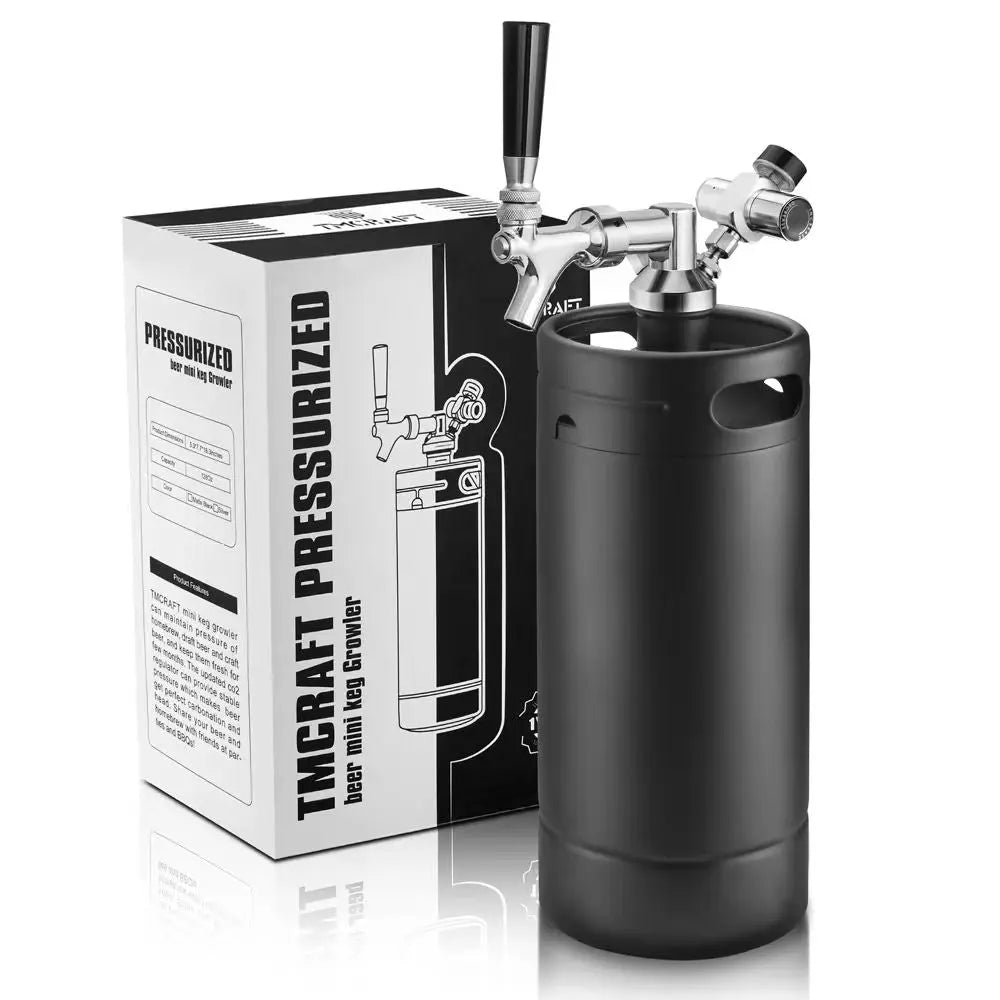


How to Carbonate Beer in a Ball Lock Keg Faster Without Overfoaming
Primary Keywords:
ball lock keg, carbonate beer in a ball lock keg, ball lock keg carbonation, stainless steel ball lock keg
Secondary Keywords:
force carbonation keg, fast keg carbonation, keg PSI guide, homebrew keg system, TMCRAFT ball lock keg
Carbonating beer in a ball lock keg is one of the biggest advantages of modern homebrewing. Compared to bottling, keg carbonation is faster, more consistent, and much easier to control.
But many brewers run into the same problem:
They try to carbonate beer quickly—and end up with excessive foam, unstable pours, or overcarbonated beer.
The key is understanding how pressure, temperature, and time work together.
In this guide, you’ll learn how to carbonate beer in a ball lock keg faster without ruining pour quality, what PSI settings work best, and how to avoid common carbonation mistakes.
Why Use a Ball Lock Keg for Carbonation?
A ball lock keg system gives homebrewers more control over carbonation compared to bottles.
Key advantages include:
- Faster carbonation
- Better pressure control
- Easier serving
- More consistent beer quality
- Reduced oxygen exposure
- Less cleanup work
This is why most advanced homebrewers prefer keg systems.
What Is Force Carbonation?
Force carbonation uses external CO2 pressure to dissolve gas directly into beer.
Instead of relying on natural yeast activity, the keg absorbs carbonation from a regulated CO2 source.
Benefits include:
- Faster results
- Adjustable carbonation levels
- More predictable performance
A properly sealed stainless steel ball lock keg is ideal for this process.
The Three Factors That Affect Carbonation Speed
1. Temperature
Cold beer absorbs CO2 more efficiently.
Ideal carbonation temperature:
- 34°F to 40°F (1°C to 4°C)
Warm beer requires more pressure and more time.
2. Pressure (PSI)
Higher PSI speeds up carbonation.
However, excessive pressure can lead to:
- Overcarbonation
- Foam problems
- Harsh mouthfeel
Balance is critical.
3. Time
Even fast carbonation requires some absorption time.
Rushing the process too aggressively often creates unstable beer.
Best Methods for Carbonating a Ball Lock Keg
Method 1: Slow Carbonation (Best Overall Results)
This is the safest and most consistent method.
Recommended Settings
- Temperature: 36–40°F
- Pressure: 10–12 PSI
- Time: 5–7 days
Benefits:
- Stable carbonation
- Minimal foam problems
- Better flavor balance
Although slower, this method produces the most reliable results.
Method 2: Fast Carbonation (Popular Homebrew Method)
This method speeds up carbonation while maintaining reasonable control.
Recommended Settings
- Temperature: 36–40°F
- Pressure: 20–30 PSI
- Time: 24–48 hours
After carbonation:
- Reduce pressure to serving PSI (10–12 PSI)
This approach is much faster while still manageable for most users.
Method 3: Shake Carbonation (Fastest but Riskiest)
Some brewers shake the keg to speed up CO2 absorption.
Process
- Apply high PSI
- Shake keg gently for several minutes
This increases gas contact with beer.
Risks of Shake Carbonation
Improper shaking can cause:
- Severe overcarbonation
- Excess foam
- Inconsistent results
This method requires experience and careful monitoring.
How to Avoid Overfoaming During Fast Carbonation
Keep the Beer Cold
Cold beer stabilizes carbonation.
Warm beer creates foam problems quickly.
Do Not Leave High PSI Too Long
Excessive pressure duration causes overcarbonation.
Monitor carefully during fast carbonation.
Reduce Pressure Before Serving
Always lower pressure after fast carbonation.
Typical serving PSI:
- 10–12 PSI
Let the Keg Stabilize
After carbonation:
- Let the keg rest several hours before pouring
This helps stabilize dissolved CO2.
Use Proper Beer Line Length
Short lines increase foam problems.
Balanced systems pour more smoothly.
Common Carbonation Problems
Problem: Beer Is Flat
Causes:
- Pressure too low
- Insufficient carbonation time
- Gas leak
Fix:
Increase PSI slightly and check seals.
Problem: Beer Is Too Foamy
Causes:
- Overcarbonation
- Warm beer
- Excessive serving pressure
Fix:
Reduce PSI and chill keg fully.
Problem: Inconsistent Carbonation
Causes:
- Temperature fluctuation
- Poor pressure control
- Unbalanced system
Fix:
Maintain stable refrigeration and proper PSI.
Problem: CO2 Tank Empties Quickly
Causes:
- Leaks in fittings or O-rings
Fix:
Inspect all seals carefully.
Ideal PSI for Different Beer Styles
| Beer Style | Recommended PSI |
|---|---|
| Lager | 10–12 PSI |
| IPA | 11–13 PSI |
| Wheat Beer | 12–14 PSI |
| Stout | 8–10 PSI |
Different styles require slightly different carbonation levels.
Why Stainless Steel Ball Lock Kegs Perform Better
A stainless steel ball lock keg improves carbonation consistency.
Better Pressure Retention
Maintains stable CO2 levels.
Durable Construction
Handles repeated pressure cycles safely.
Easy Cleaning
Supports flavor purity.
Long-Term Reliability
Ideal for frequent use.
Why Choose TMCRAFT Ball Lock Kegs?
TMCRAFT kegs are designed for reliable carbonation and professional draft performance.
Key features include:
- Food-grade stainless steel construction
- Leak-resistant sealing system
- Standard ball lock compatibility
- Easy-clean interior design
- Strong pressure handling
- Suitable for beer, coffee, kombucha, and more
Whether you are force carbonating your first batch or upgrading your setup, TMCRAFT offers dependable results.
Best Uses for a Ball Lock Keg System
A properly carbonated ball lock keg works perfectly for:
- Homebrew beer
- Craft beer serving
- Sparkling water
- Kombucha
- Hard seltzer
- Nitro beverages
Versatile keg systems support multiple beverage applications.
Final Verdict
Learning how to carbonate beer in a ball lock keg faster without overfoaming helps you achieve professional draft beer quality at home.
The key is balancing:
- Temperature
- Pressure
- Carbonation time
With the right setup and a reliable TMCRAFT ball lock keg, you can enjoy smooth pours, stable carbonation, and fresher beer with far less effort than traditional bottling.
Link to: How to Fix a Leaking Ball Lock Keg: Complete Troubleshooting Guide