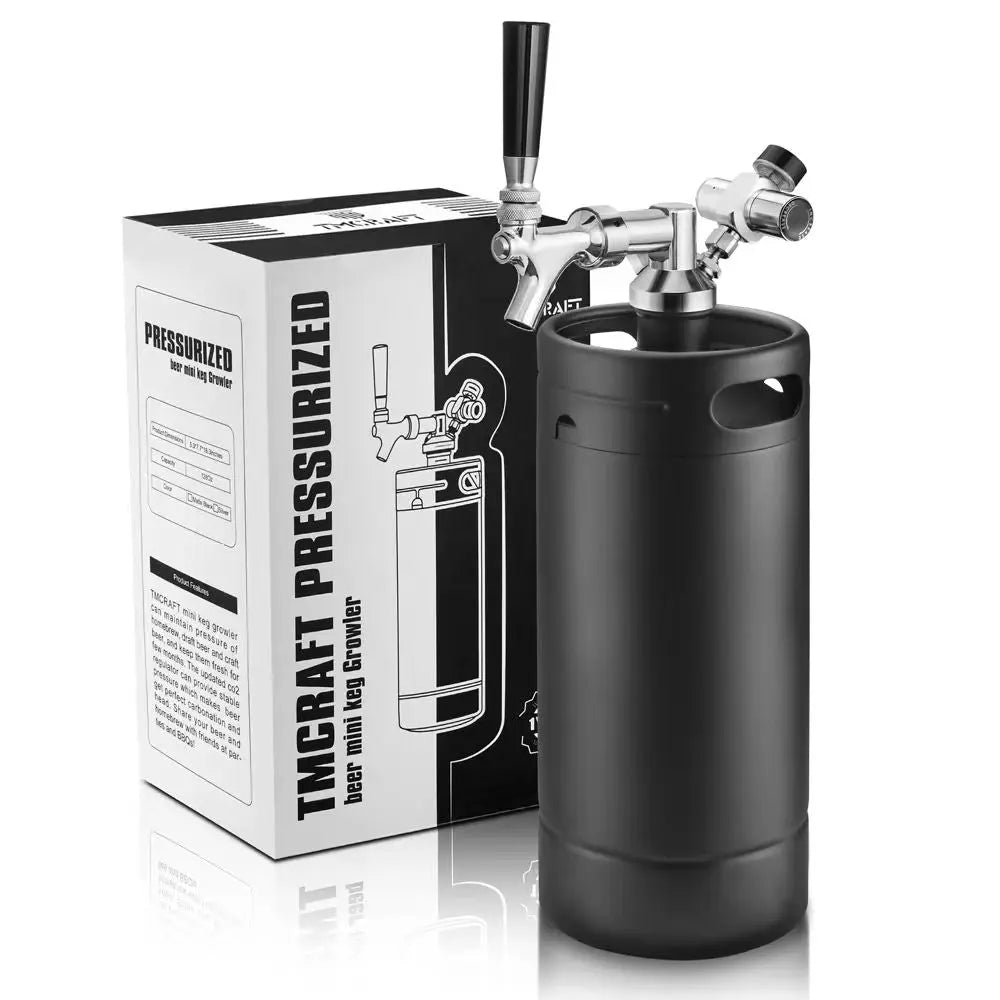


From Flat to Flawless: How Ball Lock Kegs Transform Carbonation Control in Homebrewing
Introduction: The Hidden Challenge of Perfect Carbonation
For many homebrewers, the difference between an average beer and an exceptional one comes down to a single factor: carbonation control.
Too little carbonation results in flat, lifeless beer. Too much leads to excessive foam and poor drinkability. Achieving the perfect balance consistently can be difficult—especially when relying on traditional bottling methods.
This is where the ball lock keg system changes everything.
Designed for precision and ease of use, ball lock kegs allow brewers to control pressure, regulate carbonation, and serve draft-quality beverages with professional consistency. If you’re looking to move from unpredictable results to repeatable perfection, mastering this system is essential.
What Is a Ball Lock Keg System?
A ball lock keg system is a pressurized stainless steel container that uses quick-connect ball lock fittings to manage gas and liquid flow.
Key components include:
- Gas post (for CO₂ input)
- Liquid post (for beverage output)
- Dip tubes for efficient transfer
- Pressure relief valve (PRV)
- Airtight lid with sealing O-ring
The defining feature is the ball lock connector mechanism, which ensures secure, leak-free connections and simplifies setup.
Why Carbonation Control Matters More Than You Think
Carbonation is not just about bubbles—it directly affects:
- Mouthfeel
- Aroma release
- Flavor perception
- Overall drinking experience
Without precise control, even a well-brewed beer can underperform.
A ball lock keg system provides the tools needed to manage carbonation scientifically rather than relying on guesswork.
How Ball Lock Kegs Solve Carbonation Problems
1. Precision Pressure Adjustment
Unlike bottles, which rely on fixed sugar-based carbonation, ball lock kegs allow you to:
- Set exact PSI levels
- Adjust pressure at any time
- Fine-tune carbonation to style
This transforms carbonation from a variable into a controlled parameter.
2. Consistent Results Every Batch
Once you dial in the right pressure and temperature combination, you can replicate it across batches—ensuring:
- Predictable carbonation
- Uniform flavor
- Professional consistency
3. Faster Carbonation with Force Methods
Using CO₂ directly, ball lock kegs enable force carbonation, reducing wait times significantly:
- Bottling: 1–2 weeks
- Ball lock keg: 24–48 hours
This speed is a major advantage for active brewers.
Understanding Force Carbonation in Ball Lock Kegs
Force carbonation works by dissolving CO₂ into liquid under controlled pressure and temperature.
Key Variables:
- Pressure (PSI): Higher pressure increases CO₂ absorption
- Temperature: Colder liquid absorbs gas more efficiently
- Time: Longer exposure leads to more stable carbonation
This method gives brewers full control over the final product.
Step-by-Step: Achieving Perfect Carbonation
Step 1: Chill Your Beverage
Cold liquid absorbs CO₂ more effectively. Ideally:
- Temperature: 34–40°F (1–4°C)
Step 2: Transfer to the Keg
Fill your ball lock keg, leaving headspace for gas.
Step 3: Purge Oxygen
Apply CO₂ pressure and release it multiple times to remove oxygen, preserving flavor and preventing oxidation.
Step 4: Apply Pressure
Set your regulator to the desired PSI based on the beverage type.
Step 5: Wait and Monitor
Allow the keg to sit under pressure:
- Quick method: shake gently to accelerate absorption
- Standard method: wait 24–48 hours
Step 6: Test and Adjust
Pour a sample and adjust pressure if needed to refine carbonation levels.
Recommended PSI Levels for Different Beverages
| Beverage | PSI Range |
|---|---|
| Ale | 10–12 PSI |
| Lager | 12–14 PSI |
| Wheat Beer | 14–18 PSI |
| Kombucha | 8–10 PSI |
| Sparkling Water | 20–30 PSI |
These ranges help achieve balanced carbonation and ideal mouthfeel.
Ball Lock Keg vs Bottling: A Clear Upgrade
| Feature | Ball Lock Keg System | Bottling |
|---|---|---|
| Carbonation Control | Precise | Limited |
| Time Efficiency | Fast | Slow |
| Consistency | High | Variable |
| Ease of Use | Moderate | Labor-intensive |
| Scalability | High | Low |
For brewers seeking efficiency and quality, the ball lock keg system is a clear upgrade.
Common Mistakes and How to Avoid Them
❌ Over-Carbonation
Cause: Excessive pressure
Fix: Release pressure and reset to lower PSI
❌ Under-Carbonation
Cause: Insufficient pressure or time
Fix: Increase PSI and allow more absorption time
❌ Gas Leaks
Cause: Worn O-rings or loose connections
Fix: Inspect and replace seals regularly
❌ Foamy Pours
Cause: High pressure or warm serving temperature
Fix: Lower PSI and chill the keg
Advanced Tips for Pro-Level Results
✔ Use a Dual Gauge Regulator
Allows precise monitoring of tank and output pressure.
✔ Balance Your Draft Lines
Proper line length prevents excessive foam.
✔ Maintain Stable Temperature
Fluctuations affect carbonation consistency.
✔ Track Your Settings
Keep notes to replicate successful batches.
Why TMCRAFT Ball Lock Kegs Stand Out
TMCRAFT ball lock kegs are designed with both performance and usability in mind.
Key advantages include:
- High-grade stainless steel durability
- Precision-engineered fittings for leak prevention
- Reliable pressure retention for consistent carbonation
- User-friendly design for quick setup and maintenance
These features make TMCRAFT systems ideal for anyone seeking professional-quality home draft results.
The Role of Ball Lock Kegs in Modern Homebrewing
As homebrewing continues to evolve, the focus has shifted toward:
- Precision
- Efficiency
- Repeatability
Ball lock kegs align perfectly with these priorities, offering brewers the ability to control every variable that matters.
Conclusion: From Guesswork to Mastery
Carbonation is no longer something you hope for—it’s something you control.
With a ball lock keg system, you gain:
- Precision pressure control
- Faster turnaround times
- Consistent, high-quality results
For anyone serious about brewing, this system represents a transition from trial-and-error to true mastery.
👉 Flat beer becomes a thing of the past—precision is the new standard.
Link to:
Ball Lock Keg Mastery: Pressure Control, Carbonation Science, and Pro-Level Draft Results