

Dialing It In: How Ball Lock Kegs Give You Total Control Over Pressure, Flow, and Flavor
Introduction: Why Control Is the Key to Better Draft Beer
Brewing great beer is only half the equation. The other half—often overlooked—is how that beer is stored, carbonated, and served.
Many homebrewers struggle with:
- Inconsistent carbonation
- Excess foam or flat pours
- Flavor degradation over time
These issues usually stem from a lack of control. That’s where the ball lock keg system becomes a game-changer.
By giving users precise control over pressure, flow, and serving conditions, ball lock kegs transform home setups into professional-grade draft systems.
What Is a Ball Lock Keg System?
A ball lock keg system is a pressurized stainless steel keg that uses quick-connect ball lock fittings for gas and liquid connections.
Core components include:
- Gas post (CO₂ input)
- Liquid post (beverage output)
- Dip tubes for internal flow
- Pressure relief valve (PRV)
- Airtight lid with sealing system
The ball lock mechanism ensures secure, leak-resistant connections, making the system both reliable and easy to use.
The Three Pillars of Draft Perfection
A ball lock keg system excels because it allows control over three critical variables:
1. Pressure
Determines carbonation level and dispensing force
2. Flow
Affects pour speed, foam formation, and drinkability
3. Flavor
Maintained through airtight storage and stable conditions
When these three elements are balanced, the result is a perfect draft pour every time.
How Ball Lock Kegs Improve Pressure Control
Adjustable CO₂ Regulation
Unlike bottling, where carbonation is fixed, ball lock kegs allow:
- Real-time pressure adjustments
- Fine-tuning for different beverage styles
- Immediate corrections if something goes wrong
This makes keg pressure control far more precise and flexible.
Stable Carbonation Environment
Once pressurized, the keg maintains a consistent internal environment, ensuring:
- Even CO₂ distribution
- Long-term carbonation stability
- Reduced risk of over- or under-carbonation
Mastering Draft Flow with a Ball Lock Keg
Flow control is essential for achieving a clean, professional pour.
Factors That Affect Flow:
- Pressure level (PSI)
- Beverage temperature
- Line length and diameter
With a ball lock keg system, you can adjust these variables to eliminate:
- Excess foam
- Slow or uneven pours
- Inconsistent serving quality
Flavor Preservation: The Hidden Advantage
Flavor degradation is often caused by oxygen exposure. Ball lock kegs solve this problem through:
- Airtight sealing
- CO₂ purging capabilities
- Stable storage conditions
This preserves:
- Aroma
- Taste complexity
- Freshness over time
For craft beverages, this is a critical advantage.
Step-by-Step: Setting Up Your Ball Lock Keg System
Step 1: Clean and Sanitize
Ensure all components are thoroughly cleaned to prevent contamination.
Step 2: Fill the Keg
Transfer your beverage carefully, leaving headspace for gas.
Step 3: Purge Oxygen
Pressurize and release CO₂ multiple times to remove oxygen from the keg.
Step 4: Set Your Pressure
Adjust your regulator based on the beverage type and desired carbonation.
Step 5: Connect and Serve
Attach your liquid line and begin dispensing, adjusting pressure as needed.
Recommended Pressure Settings
| Beverage Type | PSI Range |
|---|---|
| Ale | 10–12 PSI |
| Lager | 12–14 PSI |
| Wheat Beer | 14–18 PSI |
| Kombucha | 8–10 PSI |
| Sparkling Water | 20–30 PSI |
These ranges provide a starting point for achieving balanced carbonation and smooth flow.
Ball Lock Keg vs Other Keg Systems
| Feature | Ball Lock Keg | Alternative Systems |
|---|---|---|
| Ease of Use | High | Moderate |
| Compatibility | Wide | Limited |
| Pressure Control | Precise | Variable |
| Maintenance | Simple | Complex |
Ball lock kegs are widely preferred due to their user-friendly design and consistent performance.
Common Issues and How to Fix Them
❌ Too Much Foam
Cause: High pressure or warm temperature
Solution: Lower PSI and chill the keg
❌ Flat Beverage
Cause: Low pressure or insufficient carbonation time
Solution: Increase PSI and wait longer
❌ Gas Leaks
Cause: Damaged O-rings or loose fittings
Solution: Inspect and replace seals
❌ Slow Pour
Cause: Low pressure or blockage
Solution: Increase pressure or clean dip tubes
Advanced Tips for Better Results
✔ Balance Your System
Match pressure with proper line length for optimal flow.
✔ Keep Temperature Stable
Consistency improves carbonation and flavor retention.
✔ Track Your Settings
Record PSI and temperature for repeatable success.
✔ Upgrade Your Regulator
Dual-gauge regulators offer better precision and monitoring.
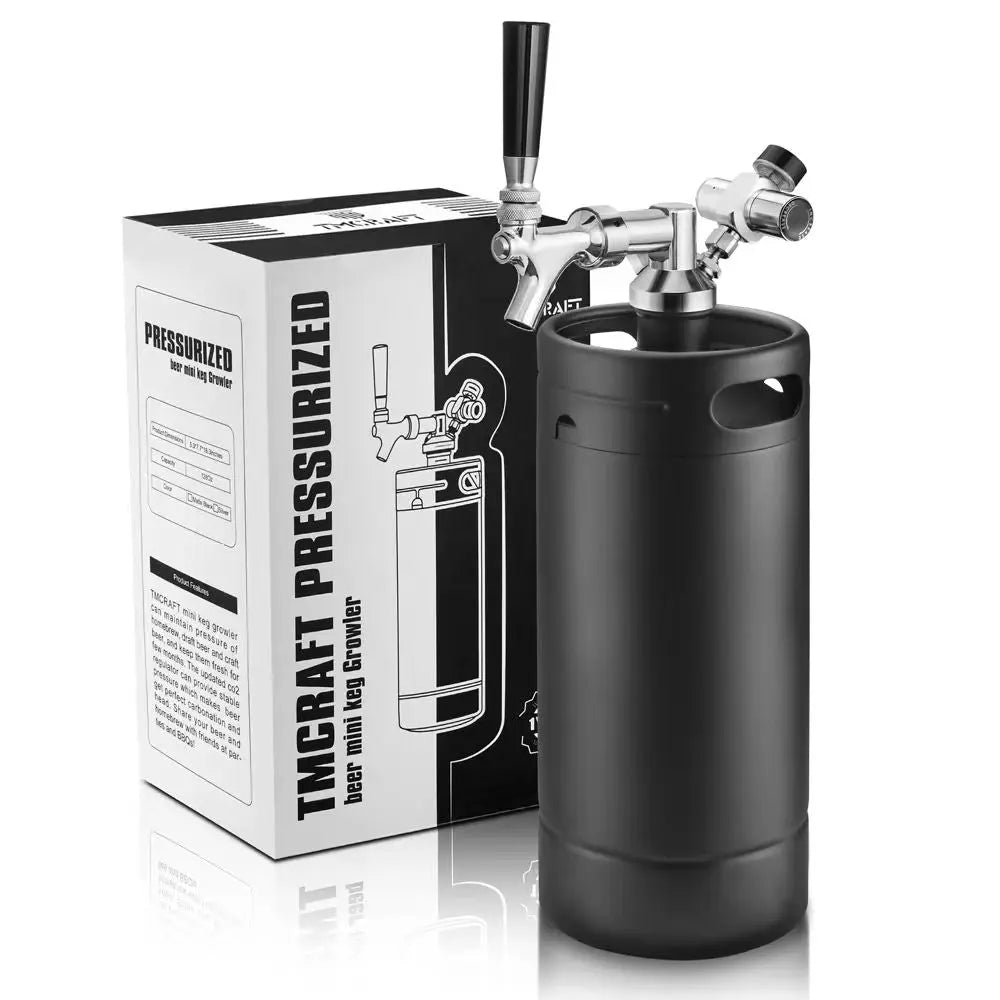
Why TMCRAFT Ball Lock Kegs Deliver Better Performance
TMCRAFT ball lock kegs are engineered for precision, durability, and ease of use, offering:
- High-quality stainless steel construction
- Reliable pressure retention systems
- Leak-resistant fittings
- Compatibility with standard CO₂ setups
These features make them ideal for achieving consistent, professional-level results at home.
The Evolution of Home Draft Systems
As homebrewing continues to grow, the focus is shifting toward:
- Greater control
- Faster processes
- Higher-quality outcomes
Ball lock keg systems are at the center of this evolution, enabling users to optimize every stage of the draft process.
Conclusion: Precision Changes Everything
A ball lock keg system transforms the way beverages are stored, carbonated, and served.
By giving you full control over:
- Pressure
- Flow
- Flavor
It eliminates guesswork and replaces it with precision and consistency.
👉 When you can control every variable, every pour becomes predictable—and exceptional.
Link to: From Flat to Flawless: How Ball Lock Kegs Transform Carbonation Control in Homebrewing