

Can You Carbonate Drinks in a Mini Keg? A Beginner’s Guide to Pressure and Carbonation
Can You Carbonate Drinks in a Mini Keg?
If you enjoy sparkling drinks, you may have wondered whether you can carbonate in a keg instead of using bottles.
The answer is yes, provided the keg and other equipment are designed for pressure use.
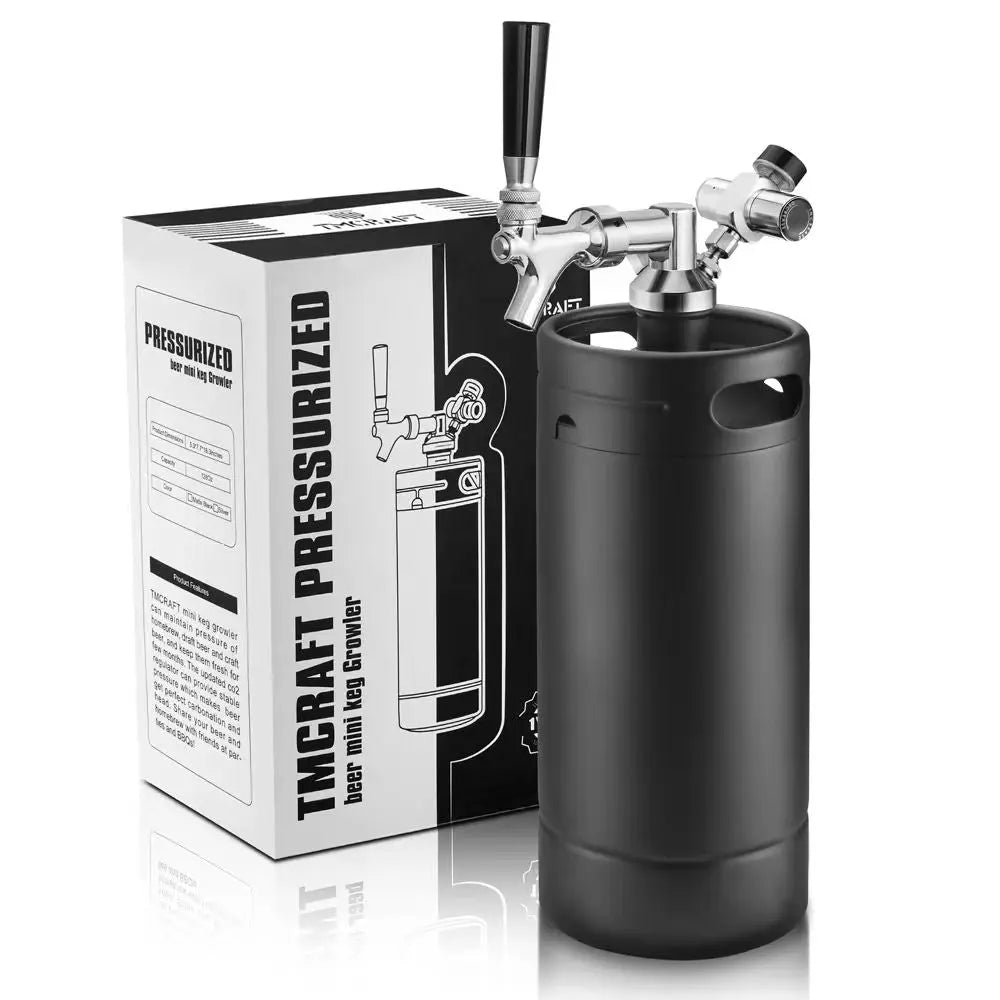
A mini keg can be used for more than simply storing a finished beverage. With the right setup, CO₂ can be used to carbonate beer and other suitable beverages while the keg is also used for dispensing.
For beginners, however, carbonation can seem complicated.
How much pressure should you use? Does temperature matter? How long does carbonation take?
Understanding a few basic principles can make the process much easier.
What Is Carbonation?
Carbonation is the process of dissolving carbon dioxide, or CO₂, into a liquid.
When CO₂ dissolves into a beverage, it creates the familiar bubbles and refreshing sensation associated with sparkling drinks.
Beer, sparkling water, soda, cider, and other beverages can all contain dissolved CO₂, although the desired carbonation level may be different for each drink.
A mini keg provides a sealed environment where gas pressure can be used to help move CO₂ into the beverage.
How Does Mini Keg Carbonation Work?
A typical system uses a CO₂ source connected to the keg through a suitable regulator and gas connection.
The basic process is:
CO₂ tank → regulator → gas line → keg
CO₂ enters the headspace of the keg and creates pressure above the beverage.
Over time, some of the CO₂ dissolves into the liquid.
The amount that dissolves depends on several factors, especially temperature and pressure.
This is why simply turning on the CO₂ tank is not enough to understand carbonation.
Why Does Temperature Matter?
Temperature is one of the most important factors in carbonation.
Cold liquid can generally hold more dissolved CO₂ than warmer liquid.
This means that if you are trying to carbonate a beverage, keeping it properly chilled can make the process more efficient and predictable.
For this reason, many kegging setups combine a mini keg with refrigeration.
If the beverage is warm, you may need different pressure conditions than you would for the same beverage when chilled.
What Does a CO₂ Regulator Do?
A regulator helps control the pressure coming from the CO₂ cylinder.
Without a regulator, you would not have the same level of control over the gas entering the keg.
The regulator allows you to adjust keg pressure according to the beverage and carbonation goal.
This is an important part of a keg system because excessive pressure can create problems, while insufficient pressure may not provide the desired carbonation or dispensing performance.
Always use pressure settings appropriate for your equipment and follow the manufacturer's specifications.
How Long Does Carbonation Take?
There is no single carbonation time that works for every beverage.
Carbonation speed can depend on:
- Beverage temperature
- Pressure
- Desired carbonation level
- Beverage volume
- Surface contact between gas and liquid
- Agitation
A gradual method can take several days.
Some faster carbonation methods use higher pressure and agitation, but beginners should understand their equipment before trying accelerated techniques.
When learning mini keg carbonation, consistency is often more useful than simply trying to carbonate as quickly as possible.
Can You Carbonate More Than Beer?
Yes, depending on the beverage and equipment.
Keg systems can be used for various carbonated beverages, including:
- Beer
- Cider
- Soda
- Sparkling water
- Some cocktails and non-alcoholic drinks
However, not every beverage should be treated exactly the same way.
Different drinks have different carbonation requirements, ingredients, and serving characteristics.
If you are experimenting with a new beverage, start by understanding its carbonation needs and make sure your keg system is compatible.
Why Use a Stainless Steel Keg?
A stainless steel keg is a popular choice for reusable beverage applications because stainless steel is durable and relatively easy to clean.
For carbonation, the most important consideration is that the keg is properly designed and rated for the pressure you intend to use.
Stainless steel itself does not determine the carbonation level.
Instead, it provides a durable container while the regulator, gas system, temperature, and beverage determine how carbonation is managed.
Always check the pressure rating of your specific stainless steel keg before use.
What Happens If You Use Too Much Pressure?
More pressure does not automatically mean better carbonation.
Using excessive pressure can create several problems.
The beverage may become over-carbonated, making it difficult to pour without excessive foam.
High pressure can also be inappropriate for equipment that is not designed for it.
For this reason, never guess at pressure limits.
Use the manufacturer's specifications and a suitable regulator.
When working with pressurized equipment, safety should always come before speed.
How Do You Know When Your Beverage Is Carbonated?
The easiest way is to sample it.
Once the beverage has had enough time to absorb CO₂, pour a small amount and check:
- Carbonation level
- Taste
- Mouthfeel
- Foam
- Dispensing performance
If the beverage is still too flat, carbonation may need more time or adjustment.
If it is excessively fizzy or difficult to pour, the system may need to be adjusted.
Small changes are usually easier to manage than making large pressure adjustments.
Carbonation and Dispensing Are Connected
One important thing for beginners to understand is that carbonation and dispensing are not completely separate.
The beverage needs enough pressure to remain carbonated while being dispensed, but the system also needs to provide a controlled pour.
If the pressure, temperature, beverage line, and faucet are not balanced, you may see:
- Excessive foam
- Slow pouring
- Flat beverage
- Inconsistent results
Learning to carbonate is therefore also the beginning of learning how to manage a draft system.
A Simple Beginner's Approach
If you are using a mini keg for the first time, keep the process simple.
1. Prepare the beverage.
Make sure it is ready for carbonation.
2. Chill the beverage.
Cold liquid generally absorbs CO₂ more effectively.
3. Connect the gas system.
Use the correct gas connection and regulator.
4. Set an appropriate pressure.
Follow reliable carbonation guidance for your specific beverage.
5. Give the beverage time.
Avoid constantly changing the pressure before the beverage has had time to respond.
6. Test the result.
Pour a small sample and make adjustments if necessary.
Final Thoughts: Learn the Basics Before Increasing Pressure
A mini keg can make carbonation convenient, but good results come from understanding the relationship between pressure, temperature, and time.
The basic principle is simple:
Cold beverage + controlled CO₂ pressure + enough time = carbonation.
The exact settings depend on the beverage and equipment, so there is no universal pressure number that should be used for every situation.
A durable stainless steel keg can provide a reusable foundation for a carbonation and dispensing system, but always confirm its pressure rating and follow the manufacturer's instructions.
Once you understand how mini keg carbonation works, experimenting with beer, sparkling water, cider, and other suitable beverages becomes much easier.
The goal is not simply to add as much CO₂ as possible. The goal is to achieve the right carbonation level and then serve the beverage smoothly, consistently, and safely.
Link to: How Long Does Beer Last in a Mini Keg? What Affects Freshness After Opening