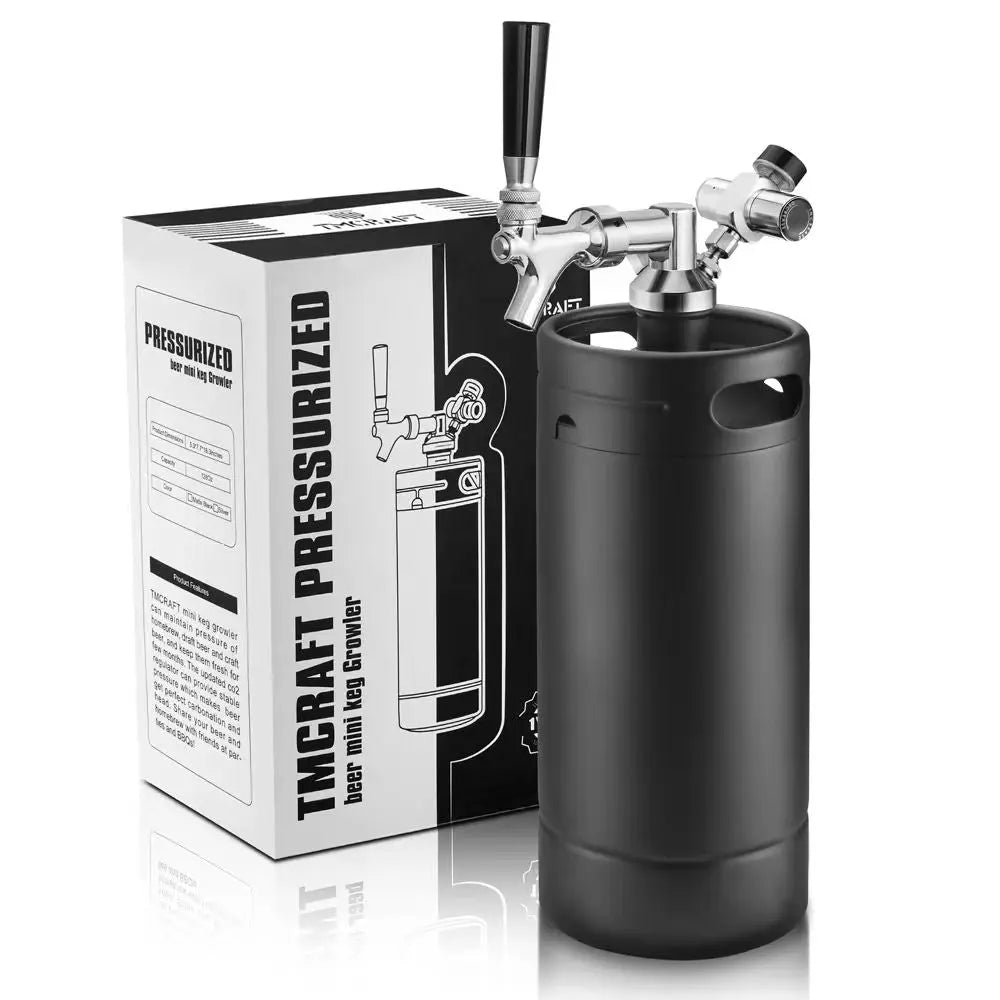


Ball Lock Keg Systems Made Simple: How to Build a Reliable Home Draft Setup
As homebrewers progress beyond bottling, one question inevitably arises: How do I serve my beer like a professional? The answer, for most brewers, is the ball lock keg system.
Ball lock kegs have become the industry standard for homebrewing due to their reliability, ease of use, and compatibility with modern draft equipment. Whether you are kegging your first batch or building a multi-tap kegerator, ball lock kegs offer unmatched control over carbonation, oxygen exposure, and serving consistency.
In this guide, we break down how ball lock kegs work, why they outperform alternative systems, and how to build a dependable setup using TMCRAFT Ball Lock Kegs.
What Is a Ball Lock Keg?
A ball lock keg is a stainless steel, pressurized vessel designed to store and dispense beer using CO₂. It connects to gas and liquid lines via quick-disconnect ball lock fittings, allowing fast, secure hookups without tools.
Typical features include:
- Separate gas-in and liquid-out posts
- Pressure-rated stainless steel body
- Lid with pressure relief valve (PRV)
- Compatibility with CO₂ regulators and draft systems
Ball lock kegs are most commonly available in 5-gallon sizes, but smaller volumes are also used for specialty beverages.
Ball Lock vs Pin Lock: Why Ball Lock Wins
Although pin lock kegs still exist, ball lock kegs have largely become the preferred choice.
| Feature | Ball Lock Keg | Pin Lock Keg |
|---|---|---|
| Post Identification | Easy (different fittings) | Less intuitive |
| Replacement Parts | Widely available | Limited |
| Kegerator Compatibility | Universal | Sometimes restrictive |
| Ease of Use | High | Moderate |
| Industry Adoption | Standard | Declining |
Because of their widespread adoption, ball lock kegs integrate seamlessly with modern regulators, disconnects, and draft accessories—making them the logical choice for most homebrewers.
Why Ball Lock Kegs Improve Beer Quality
1. Oxygen-Free Transfers
Oxygen exposure is one of the biggest threats to beer quality. Ball lock kegs allow brewers to:
- Transfer beer under CO₂ pressure
- Purge oxygen before filling
- Seal beer immediately after fermentation
This significantly reduces oxidation, preserving hop aroma, malt character, and freshness.
2. Precise Carbonation Control
With ball lock kegs, carbonation is no longer guesswork. Brewers can:
- Force carbonate quickly
- Adjust carbonation levels by style
- Correct under- or over-carbonation
This control results in more consistent pours and professional-quality beer.
Essential Components of a Ball Lock Keg System
To build a functional setup, you’ll need:
Core Components
- Ball Lock Keg (TMCRAFT stainless steel keg)
- CO₂ tank
- CO₂ regulator
- Gas line and liquid line
- Ball lock quick disconnects
- Tap or faucet
Optional Upgrades
- Dual-gauge regulator
- Secondary regulators
- Flow control disconnects
- Kegerator or keezer
TMCRAFT Ball Lock Kegs are compatible
Link to: Ball Lock Keg Systems 101: Build a Reliable, Leak-Free Draft Setup for Homebrewing