

Ball Lock Keg Pressure Guide: How Brewers Achieve Perfect Carbonation Every Time
Primary Keyword
Secondary Keywords
ball lock keg system
stainless steel ball lock keg
home brewing keg
keg carbonation
draft beer system
home draft setup
Introduction: Carbonation Is the Key to Great Draft Beer
One of the most noticeable characteristics of a well-made beer is carbonation. The right level of carbonation enhances aroma, mouthfeel, and overall drinkability. Too much carbonation can cause excessive foam, while too little can leave beer tasting flat and lifeless.
For home brewers, achieving consistent carbonation can be challenging when using traditional bottling methods. Bottle conditioning relies on priming sugar and sealed fermentation, which can lead to variations between bottles.
A ball lock keg offers a more precise solution. Instead of relying solely on fermentation for carbonation, brewers can control pressure directly using carbon dioxide. This makes it possible to fine-tune carbonation levels and achieve consistent results with every batch.
By understanding how a ball lock keg system works, brewers can maintain stable pressure, preserve beer freshness, and serve draft-quality beer at home.
What Is a Ball Lock Keg?
A ball lock keg is a pressurized stainless steel container designed to store and dispense carbonated beverages. The name comes from the small ball bearings inside the connectors that lock gas and liquid lines securely to the keg posts.
These kegs were originally used in the soft drink industry but became popular among home brewers because they are durable, reliable, and easy to maintain.
A typical ball lock keg system includes several components:
- Stainless steel keg body
- Gas-in post for CO₂ supply
- Liquid-out post for dispensing beer
- Internal dip tubes
- Removable lid with pressure relief valve
Together, these parts create a sealed container capable of maintaining precise internal pressure.
Why Pressure Control Matters in Home Brewing
Carbonation depends on a simple scientific principle: gas dissolves in liquid under pressure.
When pressure inside the container increases, more carbon dioxide dissolves into the beer. When pressure decreases, CO₂ escapes from the liquid.
A home brewing keg allows brewers to regulate pressure using a CO₂ regulator. This provides far more control compared with traditional bottle conditioning.
With proper pressure control, brewers can:
- maintain consistent carbonation
- reduce foam during pouring
- match carbonation levels to beer style
For example, wheat beers often require higher carbonation levels than stouts.
Key Components of a Ball Lock Keg System
To build a reliable home draft setup, brewers need several essential pieces of equipment.
The Ball Lock Keg
The keg itself stores the beer and maintains pressure. A stainless steel ball lock keg is strong enough to handle repeated pressurization without corrosion or flavor contamination.
Most home brewers use a 5-gallon keg, which matches the size of many home brewing batches.
CO₂ Tank
The CO₂ tank supplies carbon dioxide to the keg. This gas maintains pressure and pushes beer through the draft line when the tap is opened.
Common tank sizes include 5 lb and 10 lb cylinders.
Pressure Regulator
A regulator controls how much CO₂ enters the keg. Brewers can adjust the regulator to set the desired carbonation level.
For most beers, pressure levels range between 10 and 14 PSI.
Disconnects and Tubing
Ball lock systems use quick-disconnect fittings that attach to the gas and liquid posts. These connectors allow brewers to connect and disconnect lines easily.
Gas tubing carries CO₂ into the keg, while beverage tubing carries beer to the tap.
Draft Tap
The tap is the final component of the draft beer system. It allows beer to flow smoothly from the keg into the glass.
Taps can be mounted on kegerators or connected to portable picnic-style faucets.
Understanding Carbonation Levels in Beer
Different beer styles require different carbonation levels.
A ball lock keg system makes it easy to adjust carbonation based on the style being served.
Typical carbonation levels include:
- Ales: moderate carbonation
- Lagers: slightly higher carbonation
- Wheat beers: high carbonation
- Stouts: lower carbonation
Using a regulator, brewers can adjust pressure until the desired carbonation is achieved.
Methods for Carbonating Beer in a Ball Lock Keg
Home brewers commonly use three methods to carbonate beer in a ball lock keg.
Set-and-Forget Method
In this method, brewers set the regulator to the desired pressure and leave the keg refrigerated for several days.
The beer gradually absorbs CO₂ until equilibrium is reached.
This method is simple and produces consistent results.
Burst Carbonation
Burst carbonation uses higher pressure for a short period to speed up carbonation.
Afterward, the pressure is reduced to normal serving levels.
Although faster, this method requires careful monitoring to avoid over-carbonation.
Natural Carbonation in the Keg
Some brewers add priming sugar directly to the keg. The yeast produces CO₂ inside the sealed container, creating natural carbonation.
After carbonation is complete, brewers can still adjust pressure using the regulator.
Benefits of Stainless Steel Ball Lock Kegs
Material choice plays a major role in beverage storage.
A stainless steel ball lock keg offers several advantages.
Durability
Stainless steel withstands pressure and repeated cleaning without damage.
Flavor Protection
Unlike plastic containers, stainless steel does not absorb odors or flavors.
Light Protection
Beer can develop off-flavors when exposed to light. Stainless steel blocks light completely.
Easy Maintenance
Smooth surfaces make cleaning and sanitizing easier.
These advantages help maintain beer quality over time.
Common Ball Lock Keg Problems and Solutions
Even experienced brewers sometimes encounter draft system issues.
Excessive Foam
Foam problems often result from high pressure or warm beer. Lowering the pressure and chilling the keg usually resolves the issue.
Flat Beer
Flat beer typically indicates insufficient pressure or gas leaks in the system.
Checking regulator settings and hose connections can fix the problem.
Slow Flow
A clogged dip tube or draft line may restrict flow. Cleaning the system typically restores proper pouring speed.
Ball Lock Kegs for More Than Beer
Although they are commonly used for beer, ball lock kegs can store many other beverages.
Popular options include:
- kombucha
- sparkling water
- hard seltzer
- cold brew coffee
Because they support controlled pressure, these kegs are versatile for many drinks.
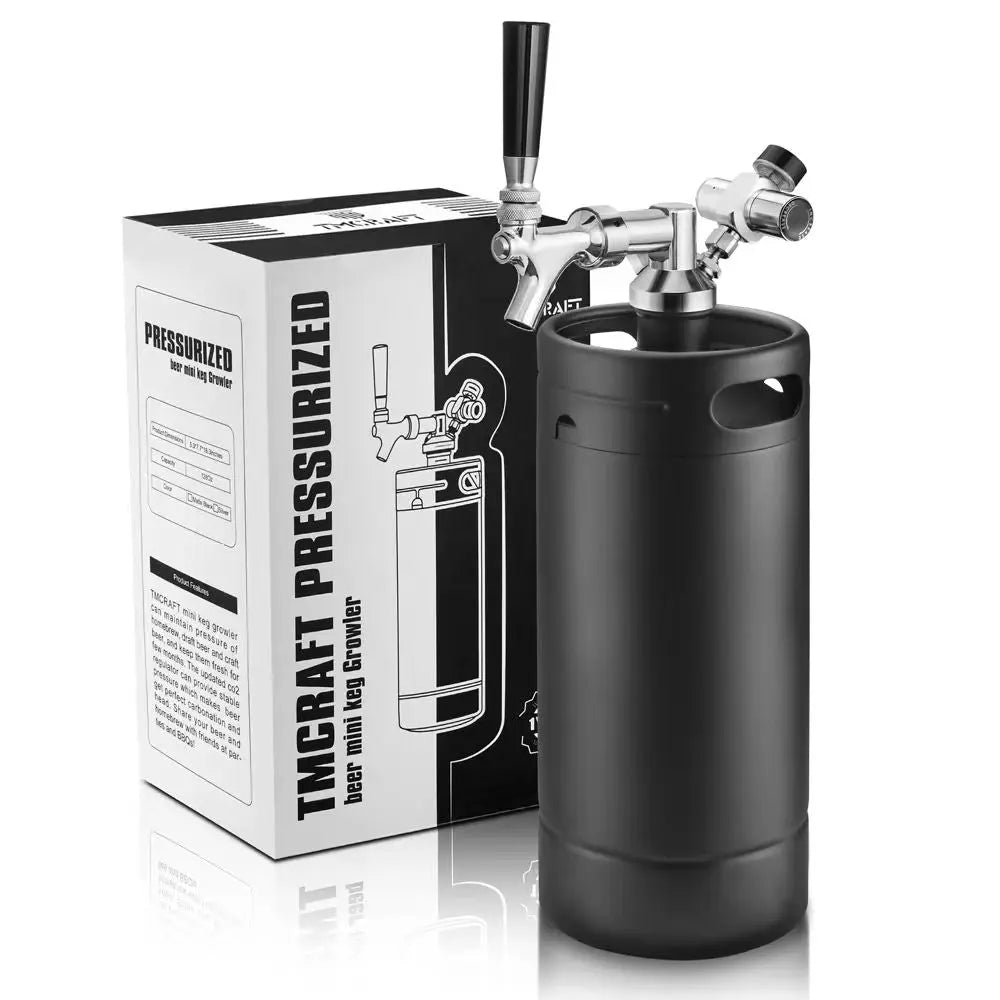
Why TMCRAFT Ball Lock Kegs Deliver Reliable Performance
TMCRAFT ball lock kegs are designed to meet the needs of home brewers who want dependable draft systems.
Key features include:
- durable stainless steel construction
- precision-machined posts
- replaceable seals and O-rings
- pressure relief valves for safety
These features help maintain stable carbonation while protecting beer freshness.
Final Thoughts: Ball Lock Kegs Bring Professional Draft Beer Home
For home brewers seeking consistent carbonation and easier serving, a ball lock keg offers a significant upgrade from traditional bottling.
With proper pressure control and maintenance, a ball lock keg system allows brewers to produce draft-quality beer while simplifying the brewing workflow.
By combining durability, carbonation control, and reliable dispensing, ball lock kegs make it possible to enjoy professional-style draft beer directly from a home brewing setup.
Link to: Ball Lock Keg Setup Guide: How to Build a Reliable Home Draft Beer System