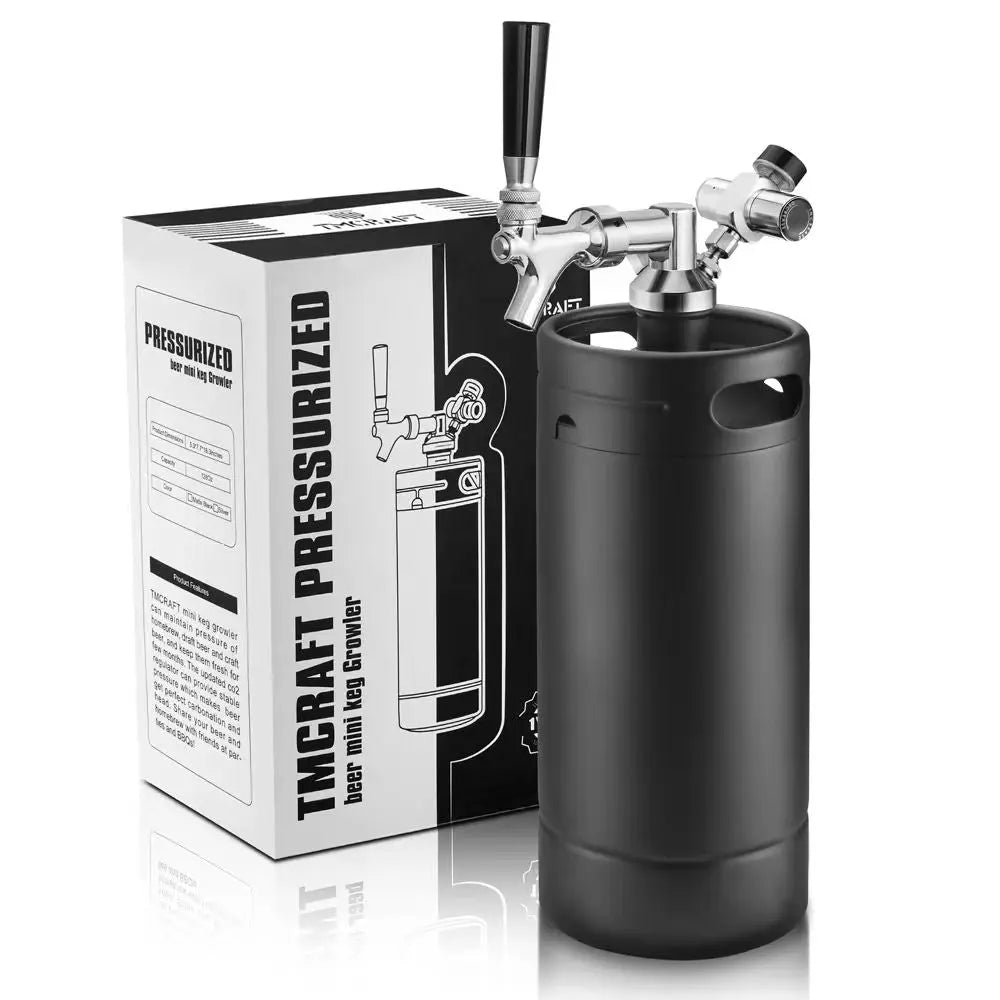


Ball Lock Keg Parts Explained: What Every Beginner Should Know Before Kegging
Understanding Your First Keg
Moving from bottles to kegging can make home brewing much more convenient.
Instead of filling and storing many individual bottles, you can keep an entire batch in one reusable container and serve it directly from a faucet. However, when beginners first look at a ball lock keg, the different fittings and components can seem confusing.
What does the gas post do?
Why are there two disconnects?
What is the long tube inside the keg?
And what exactly is a corny keg?
Understanding these basic parts makes your first kegging experience much easier.
The good news is that most components have a simple purpose. Once you know what each part does, connecting and maintaining your keg system becomes much more straightforward.
What Is a Ball Lock Keg?
A ball lock keg is a reusable pressure-rated beverage container commonly used for home brewing and other draft beverages.
It has two main connections:
- Gas connection
- Liquid connection
The gas connection introduces pressure into the keg, while the liquid connection allows the beverage to leave the keg and travel toward the faucet.
Many people also use the term corny keg when talking about this style of keg. Originally associated with soft-drink service, these compact stainless-steel kegs became popular among home brewers because of their convenient size and reusable design.
Today, corny kegs are widely associated with homebrew kegging systems.
1. Keg Body: Where Your Beverage Is Stored
The keg body is the main container.
Most homebrew kegs are made from stainless steel because it offers several useful properties:
- Durable construction
- Corrosion resistance
- Reusable design
- Easy cleaning
A quality stainless steel keg can be used repeatedly when it is properly cleaned and maintained.
The capacity you choose depends on how much beverage you normally prepare. Smaller kegs can be useful for testing recipes, while larger versions are suitable for bigger batches.
2. The Keg Lid: Creating a Sealed Environment
The lid sits on top of the keg and creates the seal needed for pressure.
A typical lid uses a gasket or O-ring to help prevent gas from escaping.
The lid also provides access to the inside of the keg for:
- Cleaning
- Filling
- Inspection
- Maintenance
Before using a keg, check that the lid gasket is clean and correctly positioned.
A damaged or incorrectly installed gasket may result in a gas leak.
3. Gas Post: Where the Pressure Enters
The gas post is one of the two main connections on a ball lock keg.
It connects to the gas line from your CO₂ regulator.
Its job is to allow gas to enter the keg.
The gas side is important for:
- Carbonation
- Maintaining pressure
- Dispensing the beverage
For beginners, one of the easiest ways to remember the system is:
Gas goes in. Beverage comes out.
4. Liquid Post: Where the Beverage Leaves
The liquid post performs the opposite function.
It connects the keg to the beverage line, which eventually leads to the faucet.
When you pour a drink, pressure inside the keg pushes the beverage through the liquid dip tube and out through this connection.
Keeping the liquid side clean is particularly important because it directly contacts your beverage.
5. Gas and Liquid Disconnects
The disconnects connect your external lines to the keg posts.
There are two basic types:
Gas Disconnect
The gas disconnect attaches to the gas post.
It connects the keg to the CO₂ supply.
Liquid Disconnect
The liquid disconnect attaches to the liquid post.
It connects the keg to the beverage line and faucet.
These quick connections make a ball lock system convenient to assemble and disassemble.
6. Dip Tubes: The Hidden Parts Inside the Keg
The dip tubes are easy to overlook because they are located inside the keg.
There are generally two:
- Gas dip tube
- Liquid dip tube
The liquid dip tube usually extends toward the bottom of the keg.
This allows the system to draw beverage from near the bottom while pressure enters through the gas side.
The gas dip tube is typically shorter because its purpose is to introduce gas into the upper part of the keg.
These small components play an important role in how the system works.
7. O-Rings and Gaskets: Small Parts With a Big Job
O-rings and gaskets may not look important, but they are essential for creating reliable seals.
You may find sealing components around:
- Keg lid
- Posts
- Dip tubes
- Connections
If an O-ring becomes worn, cracked, dirty, or incorrectly installed, the keg may lose pressure.
For this reason, it is a good habit to inspect these parts whenever you clean your keg.
Keeping a few replacement O-rings available can also be useful for regular home brewing.
8. Pressure Relief Valve: An Important Safety Component
Many kegs include a pressure relief valve on the lid.
Its purpose is to release pressure when necessary.
This component should never be ignored or blocked.
Before using your keg, become familiar with the pressure limits and instructions provided by the manufacturer.
A pressure-rated container should always be used within its specified operating conditions.
How All the Parts Work Together
Now that we have looked at the individual components, it is easier to understand the complete process.
First, the beverage is transferred into the keg.
The lid is secured to create a sealed environment.
Next, the gas line is connected to the gas post. CO₂ can then enter the keg and provide pressure.
When the faucet is opened, pressure pushes the beverage down through the liquid dip tube.
The beverage then travels through:
Liquid post → liquid disconnect → beverage line → faucet
That is the basic operating principle behind a ball lock keg system.
Ball Lock Keg vs. Other Keg Connections
Beginners may come across different types of keg connections.
The two terms you may hear most often are:
- Ball lock
- Pin lock
Both systems can be used for kegging, but their connectors are different.
Ball lock systems use quick-connect fittings that attach to the gas and liquid posts.
A corny keg can be found with different connection configurations depending on its design and history, so it is important to confirm which type of fittings your keg uses before purchasing accessories.
This is especially important when buying disconnects, replacement posts, or other kegging equipment.
What Equipment Do You Need Besides the Keg?
A keg by itself is only part of a complete draft system.
Depending on your application, you may also need:
- CO₂ tank
- CO₂ regulator
- Gas line
- Beverage line
- Gas disconnect
- Liquid disconnect
- Faucet
- Cleaning equipment
For beginners, it is helpful to understand the entire system before purchasing individual components.
This can prevent compatibility problems later.
Common Beginner Problems
The Keg Is Losing Pressure
Check:
- Lid gasket
- Post O-rings
- Connections
- Gas line
A small leak can gradually reduce pressure.
The Beer Is Too Foamy
Possible causes include:
- Beverage temperature
- Incorrect pressure
- Poorly balanced beverage line
- Dirty faucet
Make adjustments gradually rather than changing several settings at once.
The Beverage Tastes Strange
Start by checking your cleaning routine.
Coffee, beer, and other beverages can leave residue inside the keg, dip tubes, and beverage lines.
Proper cleaning and sanitation are essential for maintaining good flavor.
How to Maintain Your Keg
Regular maintenance does not need to be complicated.
After use:
- Empty the keg.
- Rinse it thoroughly.
- Clean the interior.
- Clean the dip tubes.
- Clean the beverage lines and faucet.
- Inspect O-rings and gaskets.
- Sanitize before the next use.
Keeping your ball lock keg clean is one of the simplest ways to improve your overall kegging experience.
Is a Ball Lock Keg Only for Beer?
Not at all.
Although homebrew beer is one of the most common applications, this type of keg can be used for a variety of beverages when the equipment and materials are appropriate.
Examples include:
- Cold brew coffee
- Sparkling water
- Kombucha
- Homemade soda
- Other draft beverages
This flexibility is one reason the corny keg style remains popular among home beverage enthusiasts.
Final Thoughts: Learn the Parts Before You Start Kegging
A ball lock keg may look complicated when you first see all the fittings, but each component has a specific job.
The keg body stores the beverage.
The lid creates the seal.
The gas post introduces pressure.
The liquid post allows the beverage to leave.
The dip tubes move gas and liquid inside the keg.
The disconnects connect the keg to the external system.
O-rings and gaskets help keep everything sealed.
Once you understand these basic ball lock keg parts, building and maintaining a homebrew keg system becomes much easier.
Whether you call it a ball lock keg, a corny keg, or simply a homebrew keg, learning how the system works is the first step toward better carbonation, easier dispensing, and a more enjoyable draft experience.
Link to: Why Do Home Brewers Switch to Ball Lock Kegs? Understanding the Benefits Beyond Bottling