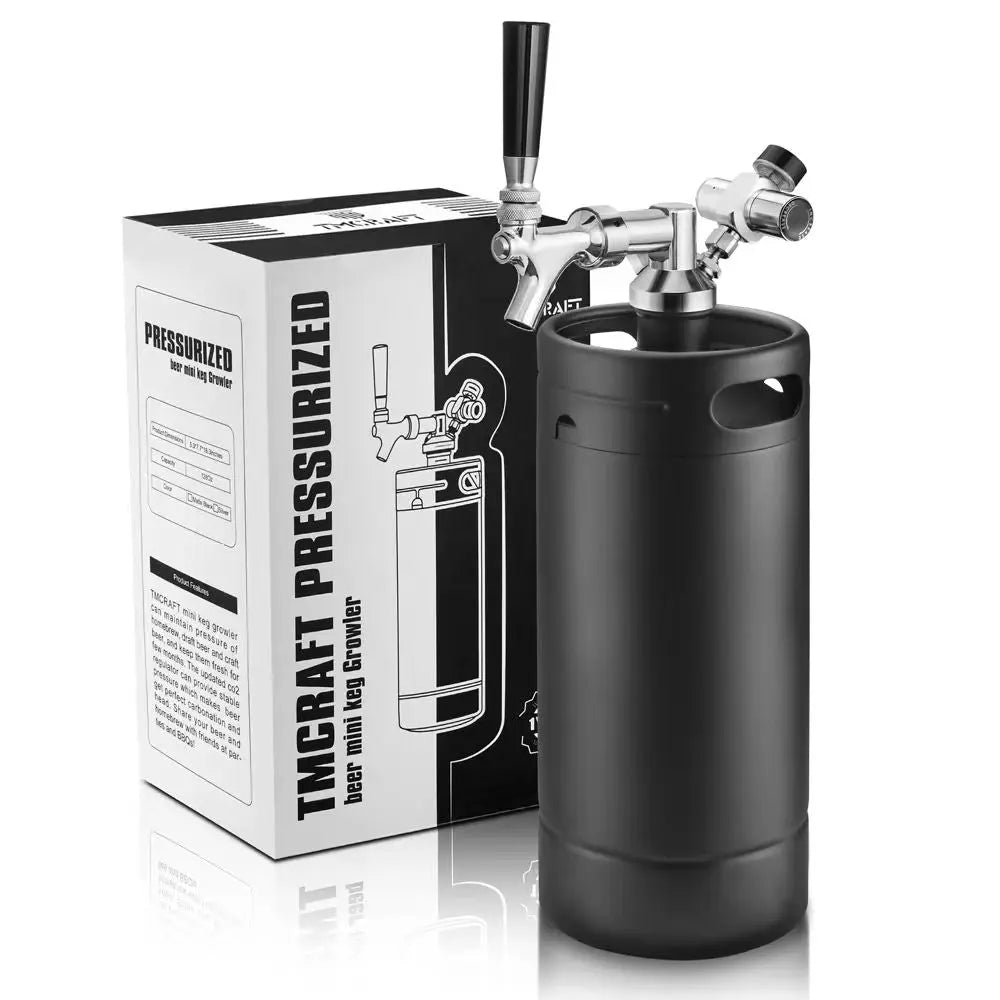


Ball Lock Keg Parts Explained: Posts, Dip Tubes, O-Rings and How They Work Together
Primary Keywords:
ball lock keg, ball lock keg parts, stainless steel ball lock keg, keg post dip tube O-ring
Secondary Keywords:
ball lock keg system, keg poppet, keg maintenance, homebrew keg parts, TMCRAFT ball lock keg
A ball lock keg looks simple from the outside, but inside it is a carefully engineered pressurized system. Every component has a specific function, and understanding these parts is the key to troubleshooting, maintenance, and better beverage quality.
Whether you are new to kegging or upgrading your setup, knowing how a ball lock keg system works will help you prevent leaks, improve carbonation, and serve better drinks.
In this guide, we break down every major part of a ball lock keg, explain what it does, and show how everything works together in a complete draft system.
What Is a Ball Lock Keg?
A ball lock keg is a stainless steel pressure vessel commonly used for homebrew beer, cold brew coffee, kombucha, cider, and carbonated drinks.
It uses quick-connect fittings with ball-lock mechanisms that allow secure gas and liquid connections.
This design makes it:
- Easy to connect and disconnect
- Reliable under pressure
- Simple to clean and maintain
- Compatible with modern draft systems
Because of its versatility, it has become one of the most widely used keg types in homebrewing.
Why Understanding Keg Parts Matters
Many common issues are not caused by the beer itself, but by small mechanical problems inside the keg system.
Knowing the parts helps you:
- Fix leaks faster
- Improve carbonation control
- Prevent contamination
- Maintain consistent pours
- Extend equipment lifespan
A well-maintained ball lock keg system performs significantly better over time.
Main Parts of a Ball Lock Keg
1. Keg Body (Stainless Steel Shell)
This is the main container that holds the beverage.
Function:
- Stores liquid under pressure
- Maintains carbonation
- Protects contents from oxygen and light
Why Stainless Steel Matters:
- Durable
- Non-reactive
- Easy to sanitize
- Long-lasting under pressure
A high-quality keg body is the foundation of every system.
2. Lid Assembly
The lid seals the keg and allows access for filling and cleaning.
Key Components:
- Lid body
- Lid O-ring
- Pressure relief valve (PRV)
Function:
- Creates airtight seal
- Allows safe pressure release
- Enables opening and closing access
A poor lid seal is one of the most common causes of pressure loss.
3. Ball Lock Posts
Posts are the connection points on top of the keg.
There are two types:
Gas Post (IN)
- Accepts CO2 or nitrogen
- Pressurizes the keg
Liquid Post (OUT)
- Dispenses beverage from keg
Each post uses a ball-lock disconnect for secure attachment.
4. Poppets (Inside the Posts)
Poppets are spring-loaded valves inside each post.
Function:
- Open when disconnect is attached
- Close automatically when disconnected
- Prevent leaks and gas escape
If poppets stick or wear out, pressure problems can occur.
5. Dip Tubes
Dip tubes determine where liquid enters or exits the keg.
Liquid Dip Tube (Long Tube)
- Reaches bottom of keg
- Draws beverage out for serving
Gas Dip Tube (Short Tube)
- Allows gas to enter headspace
- Keeps CO2 above liquid level
Correct dip tube function ensures smooth dispensing.
6. O-Rings (Seals)
O-rings are small rubber seals used throughout the keg.
Locations:
- Lid
- Posts
- Dip tubes
Function:
- Prevent gas leaks
- Maintain pressure integrity
- Seal connections between parts
Even a small damaged O-ring can cause major performance issues.
7. Ball Lock Disconnects
These are external connectors that attach gas and liquid lines to the keg posts.
Types:
- Gas disconnect (gray)
- Liquid disconnect (black or white)
Function:
- Provide quick connection and release
- Maintain sealed gas/liquid flow
- Enable safe keg operation
They are essential for a complete keg system.
How All Parts Work Together
A ball lock keg system works through a controlled pressure cycle:
- CO2 enters through gas post
- Pressure builds inside keg
- Liquid is forced upward through dip tube
- Beverage exits through liquid post
- Gas replaces liquid space, maintaining pressure
This system ensures consistent carbonation and smooth dispensing.
Common Problems Caused by Keg Parts
Problem 1: Gas Leak
Likely causes:
- Worn lid O-ring
- Loose posts
- Damaged poppet
Solution: Replace or reseat seals.
Problem 2: No Flow or Slow Pour
Likely causes:
- Blocked dip tube
- Low pressure
- Dirty faucet or disconnect
Solution: Clean and adjust pressure.
Problem 3: Foamy Beer
Likely causes:
- Incorrect pressure balance
- Warm keg
- Worn seals causing turbulence
Solution: Adjust temperature and PSI.
Problem 4: Pressure Loss
Likely causes:
- Faulty poppet
- Loose connection
- Damaged O-ring
Solution: Perform leak test and replace faulty parts.
Maintenance Tips for Ball Lock Keg Parts
Clean After Every Use
Prevent buildup inside dip tubes and posts.
Inspect O-Rings Regularly
Replace if cracked or flattened.
Lubricate Seals (Food Safe Only)
Helps improve sealing and lifespan.
Check Poppets Periodically
Ensure smooth spring action.
Keep Posts Tight but Not Over-Torqued
Over-tightening can damage threads.
Why Stainless Steel Ball Lock Kegs Are Better
A stainless steel ball lock keg offers long-term reliability.
Benefits:
- High pressure durability
- Corrosion resistance
- Easy sanitation
- Professional beverage use
- Long lifespan
This makes it ideal for beer, coffee, kombucha, and more.
Why Choose TMCRAFT Ball Lock Kegs?
TMCRAFT kegs are designed for real-world beverage performance.
Benefits include:
- Food-grade stainless steel construction
- Reliable sealing system
- Easy maintenance design
- Standard-compatible ball lock posts
- Durable for repeated use
- Suitable for multiple beverage types
Whether you are a beginner or advanced brewer, TMCRAFT simplifies kegging.
Best Uses for a Ball Lock Keg System
A properly assembled keg system can serve:
- Homebrew beer
- Sparkling water
- Nitro coffee
- Kombucha
- Cider
- Cocktails on tap
One system supports many beverage applications.
Final Verdict
Understanding ball lock keg parts is essential for building a reliable draft system. Each component—from posts and dip tubes to O-rings and poppets—plays a critical role in pressure control and beverage quality.
When properly maintained, a TMCRAFT ball lock keg delivers consistent performance, better carbonation control, and long-term durability.
Link to: How Long Does Beer Last in a Ball Lock Keg? Storage Tips for Freshness and Quality