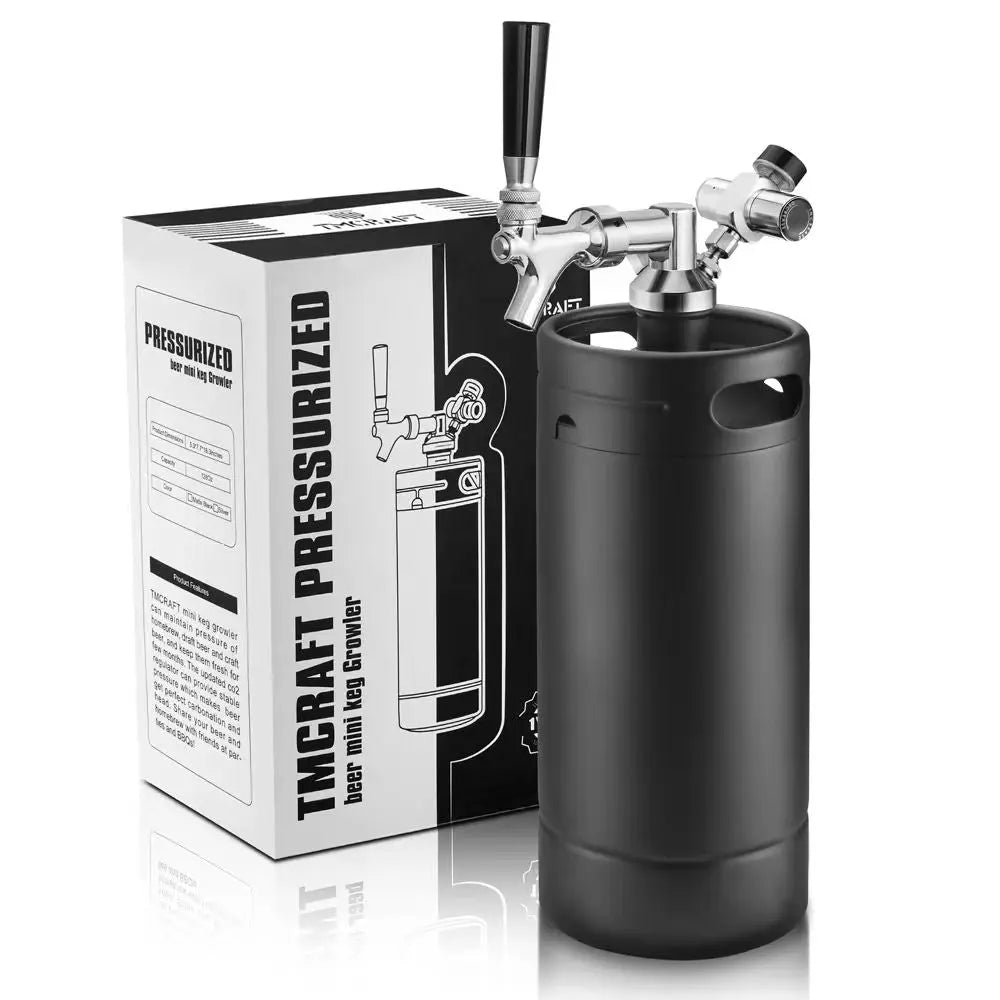


Why Your Mini Keg Beer Tastes Flat: 7 Common Causes and Easy Fixes
Primary Keywords:
mini keg, flat beer in mini keg, mini keg carbonation, stainless steel mini keg
Secondary Keywords:
mini keg with CO2 system, portable draft beer keg, beer carbonation problems, double walled mini keg, TMCRAFT mini keg
There’s nothing more disappointing than pouring a beer from your mini keg only to discover it tastes flat and lifeless.
The flavor may seem dull, the mouthfeel weak, and the draft experience completely different from what you expected. Fortunately, flat beer is usually not caused by the recipe itself. In most cases, the problem comes from carbonation, pressure, temperature, or keg handling mistakes.
The good news is that these problems are often simple to fix.
In this guide, we’ll explain the most common reasons beer tastes flat in a mini keg system, how to solve each issue, and how TMCRAFT mini kegs help maintain fresher, better-carbonated draft beer.
Why Carbonation Matters in Beer
Carbonation affects much more than bubbles.
It influences:
- Mouthfeel
- Aroma release
- Flavor perception
- Foam retention
- Overall freshness
Without proper carbonation, even high-quality beer can taste stale or unfinished.
A properly maintained mini keg with CO2 system helps keep carbonation stable from the first pour to the last.
Cause #1: Not Enough CO2 Pressure
Low pressure is one of the most common causes of flat beer.
If the keg pressure is too low:
- CO2 cannot remain dissolved properly
- Beer loses carbonation over time
- Pours become weak and lifeless
How to Fix It
For most beer styles:
- Maintain 10–12 PSI at serving temperature
If carbonation already dropped:
- Increase pressure slightly
- Allow beer to absorb CO2 for several hours or overnight
A reliable regulator is important for consistent pressure control.
Cause #2: Beer Temperature Is Too Warm
Warm beer loses carbonation much faster than cold beer.
As temperature rises:
- CO2 escapes more easily
- Foam becomes unstable
- Beer tastes flatter
How to Fix It
Store your mini keg at:
- 36°F to 40°F (2°C to 4°C)
Always chill the keg fully before serving.
A double-walled mini keg helps maintain stable temperature longer during outdoor use.
Cause #3: Gas Leaks in the Mini Keg System
Even small leaks can slowly drain pressure from your keg.
Common leak areas include:
- Lid O-rings
- Gas fittings
- Tap connections
- CO2 cartridges
- Regulator seals
How to Fix It
Inspect all seals carefully.
You can test for leaks by:
- Pressurizing the keg
- Spraying sanitizer or soapy water around fittings
- Watching for bubbles
Replace worn O-rings if necessary.
Cause #4: Insufficient Carbonation Time
Beer needs time to absorb CO2 properly.
Many beginners carbonate too quickly and serve immediately.
How to Fix It
For best results:
Slow Carbonation Method
- 10–12 PSI
- 3–5 days refrigeration
Faster Method
- 20–30 PSI for 24–48 hours
- Then reduce to serving pressure
Slow carbonation usually produces more stable results.
Cause #5: Frequent Opening or Oxygen Exposure
Opening the keg repeatedly allows:
- CO2 to escape
- Oxygen to enter
- Carbonation stability to decline
Oxygen also causes stale flavor.
How to Fix It
Use a proper dispensing tap instead of opening the lid frequently.
A sealed stainless steel mini keg protects beer freshness much better than open containers.
Cause #6: Poor Cleaning and Residue Build-Up
Dirty keg systems affect both flavor and carbonation.
Residue can interfere with:
- Pressure stability
- Tap performance
- Foam consistency
How to Fix It
Clean thoroughly after every use.
Always clean:
- Keg body
- Dip tubes
- Faucet
- Connectors
- O-rings
Sanitize before refilling.
Cause #7: Wrong Beer Line or Pouring Setup
Improper serving setup can make beer appear flat even when carbonation is correct.
Common issues include:
- Incorrect line length
- Excessive foam loss
- Poor flow control
How to Fix It
Balance your system with:
- Proper PSI
- Correct beer line length
- Stable temperature
Smooth pouring helps preserve carbonation in the glass.
Flat Beer vs Overcarbonated Beer
Many people confuse the two problems.
| Problem | Main Symptoms |
|---|---|
| Flat Beer | Weak bubbles, dull taste |
| Overcarbonated Beer | Excess foam, sharp mouthfeel |
Understanding the difference helps you adjust correctly.
Why Stainless Steel Mini Kegs Perform Better
A stainless steel mini keg offers important carbonation advantages.
Better Pressure Retention
Supports stable CO2 levels.
Light Protection
Prevents flavor degradation.
Easy Cleaning
Helps maintain hygiene and system performance.
Durable Construction
Handles repeated pressure cycles safely.
Why Choose TMCRAFT Mini Kegs?
TMCRAFT mini kegs are designed for consistent draft performance and long-term freshness.
Key features include:
- Food-grade stainless steel construction
- Reliable sealing system
- Double-walled insulation options
- Compatible CO2 dispensing systems
- Portable and reusable design
- Easy-clean interior surfaces
Whether you brew at home or serve at events, TMCRAFT helps maintain better carbonation and flavor.
Best Uses for a Mini Keg System
A portable mini keg works well for:
- Homebrew beer
- Craft beer storage
- Outdoor parties
- Camping trips
- Tailgating
- Sparkling beverages
Stable carbonation improves every serving experience.
Final Verdict
If your beer tastes flat in a mini keg, the issue is usually related to pressure, temperature, leaks, or carbonation time—not the beer recipe itself.
With proper setup and maintenance, a quality mini keg system can deliver fresh, fully carbonated draft beer for weeks.
A reliable TMCRAFT mini keg makes it easier to maintain pressure, preserve freshness, and enjoy better pours every time.
Link to: How to Store Beer in a Mini Keg: Shelf Life, Freshness and Storage Mistakes to Avoid