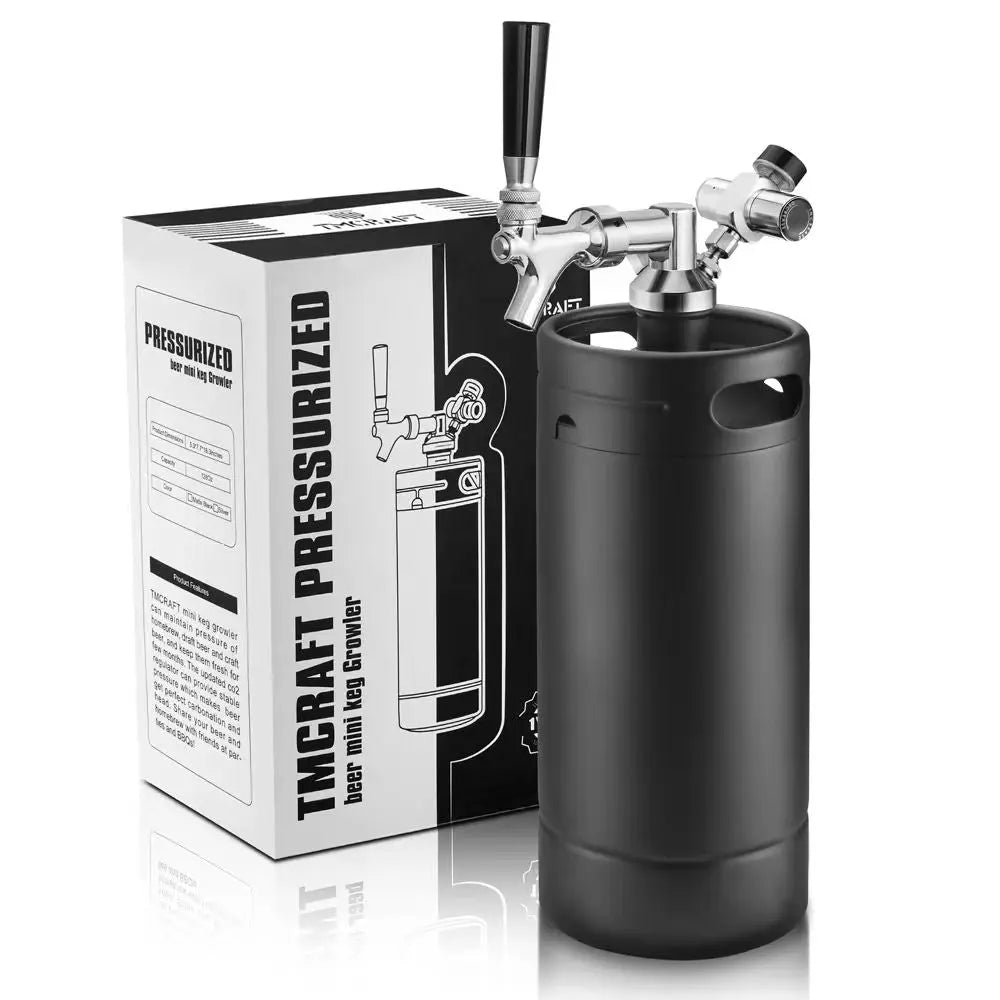


Why Is My Keg Foamy? 7 Common Draft Problems Every Beginner Should Know
Why Is My Keg Pouring So Much Foam?
Few things are more frustrating for a new home brewer than opening the faucet and getting a glass full of foam.
You may immediately think there is something wrong with your beer or your ball lock keg. In many cases, however, excessive foam is caused by something much simpler.
Temperature, pressure, beverage lines, connections, and even the way you pour can all affect the final result.
The good news is that most common draft problems can be solved once you understand how the system works.
In this guide, we will look at seven common reasons for foamy beer and explain what you can check before changing your entire setup.
1. Your Beer Is Too Warm
Temperature is one of the first things to check when troubleshooting a keg.
Carbonated beer behaves differently at different temperatures. When beer becomes warmer, dissolved CO₂ can come out of solution more easily.
The result may be excessive foam when you open the faucet.
This is why keeping your ball lock keg properly chilled is so important.
Before changing your pressure settings, check the temperature of the beer.
If the keg has recently been moved from one location to another, give it enough time to become properly chilled before serving.
2. Your Keg Pressure Is Too High
The second thing to check is keg pressure.
Pressure plays an important role in both carbonation and dispensing. However, more pressure does not always mean a better pour.
If the pressure is too high for your beverage and dispensing setup, beer may come out too quickly and produce excessive foam.
Make adjustments gradually and allow the system time to respond.
Avoid changing several variables at the same time. If you adjust temperature, pressure, and beverage-line length together, it becomes difficult to determine which change actually solved the problem.
3. Your Beverage Line May Not Be Balanced
The beverage line connects the keg to the faucet.
Its length and internal diameter affect how quickly the beer flows and how much pressure is lost before reaching the faucet.
If the system is not properly balanced, you may experience:
- Fast pouring
- Excessive foam
- Slow pouring
- Inconsistent flow
This is one reason a complete homebrew keg system needs to be considered as a whole.
The ball lock keg, gas pressure, beverage line, and faucet all work together.
4. Your Faucet Could Be Dirty
Sometimes the problem is not inside the keg at all.
A dirty faucet can interfere with smooth beer flow and may contribute to poor pours.
Beer residue can build up inside the faucet, particularly when it is used frequently without proper cleaning.
Make faucet cleaning part of your regular kegging routine.
If you have cleaned the keg but still experience a strange pour, inspect the faucet and beverage line before assuming the keg itself has a problem.
5. Your Beverage Line or Dip Tube May Be Dirty
The beverage path does not stop at the keg outlet.
Inside a typical corny keg, the liquid dip tube reaches into the beverage and carries liquid toward the liquid post.
From there, the beverage travels through the line and eventually reaches the faucet.
If residue or particles build up anywhere along this path, the flow can become inconsistent.
Regularly clean:
- Liquid dip tube
- Liquid post
- Disconnect
- Beverage line
- Faucet
This is especially important when switching between different beverages.
6. Your Beer May Be Over-Carbonated
Sometimes the dispensing equipment is working correctly, but the beer itself contains too much carbonation.
Over-carbonated beer can produce excessive foam even when the temperature and equipment appear normal.
This can happen for several reasons, including:
- Incorrect carbonation settings
- Carbonating for too long
- Using excessive pressure
- Not accounting for temperature
If you suspect over-carbonation, avoid simply increasing or decreasing pressure without understanding what is happening.
First check the beverage temperature and carbonation conditions.
Learning how carbonation works will make kegging troubleshooting much easier.
7. Your Pouring Technique Matters
Even a perfectly balanced ball lock keg can produce a poor pour if the glass and faucet are positioned incorrectly.
When pouring beer, hold the glass at an angle and allow the beer to flow smoothly down the side.
As the glass fills, gradually straighten it to create an appropriate head.
Also make sure the faucet is opened fully when dispensing.
Partially opening a standard faucet can create turbulence, which may contribute to foam.
Sometimes a small change in pouring technique can make a surprisingly large difference.
What About a Corny Keg?
You may see the term corny keg when researching homebrew equipment.
A corny keg is a reusable pressure vessel commonly used by home brewers. Many have separate gas and liquid connections, making them convenient for carbonation and draft dispensing.
The same basic troubleshooting principles apply:
- Keep the beverage cold.
- Check pressure.
- Inspect connections.
- Clean the beverage path.
- Balance the dispensing system.
Understanding these basics is more useful than memorizing one pressure setting that may not work for every beer.
Check Your Keg Connections
Leaks can also cause problems with a draft system.
Inspect the:
- Lid gasket
- Gas post
- Liquid post
- Disconnects
- O-rings
- Gas line
- Beverage line
If a connection is leaking, the keg may not maintain the pressure you expect.
When checking connections, follow the manufacturer's instructions and handle pressurized equipment carefully.
Why Keg Material Matters
A stainless steel keg is popular among home brewers because stainless steel is durable, reusable, and relatively easy to clean.
However, even a high-quality stainless steel keg needs regular maintenance.
The material itself does not prevent foaming.
Foam is usually related to factors such as:
- Temperature
- Pressure
- Carbonation
- Beverage-line balance
- Faucet condition
In other words, choosing a good keg is only the beginning. The complete draft system needs to work together.
A Simple Troubleshooting Checklist
If your beer is too foamy, check these factors in order:
1. Is the beer cold enough?
2. Is the pressure appropriate?
3. Is the beer over-carbonated?
4. Is the beverage line clean and properly configured?
5. Is the faucet clean?
6. Are the keg connections secure?
7. Are you pouring correctly?
Working through the checklist one step at a time is usually more effective than changing everything at once.
How to Prevent Draft Problems
Good maintenance can prevent many problems before they happen.
After each batch, clean the keg and beverage-contact equipment.
Pay attention to:
- Dip tubes
- Posts
- Disconnects
- Beverage lines
- Faucet
Also keep your ball lock keg at an appropriate temperature and regularly inspect the sealing components.
If something starts behaving differently, investigate it early rather than waiting for the problem to become worse.
Final Thoughts: Don't Blame the Keg Too Quickly
A foamy pour does not necessarily mean your ball lock keg is defective.
In many cases, the problem comes from the relationship between temperature, pressure, carbonation, beverage lines, and the faucet.
Start with the simplest checks.
Keep the beer cold.
Check your pressure.
Clean the entire beverage path.
Inspect your connections.
Use a suitable beverage line.
And pay attention to your pouring technique.
Whether you use a corny keg for homebrew or another stainless steel keg for draft beverages, understanding these basic principles will help you troubleshoot problems with more confidence.
Once you learn how the individual parts work together, getting a smooth, consistent pour becomes much easier.
Link to: What Happens Inside a Keg? A Beginner’s Guide to Pressure, Carbonation, and Dispensing