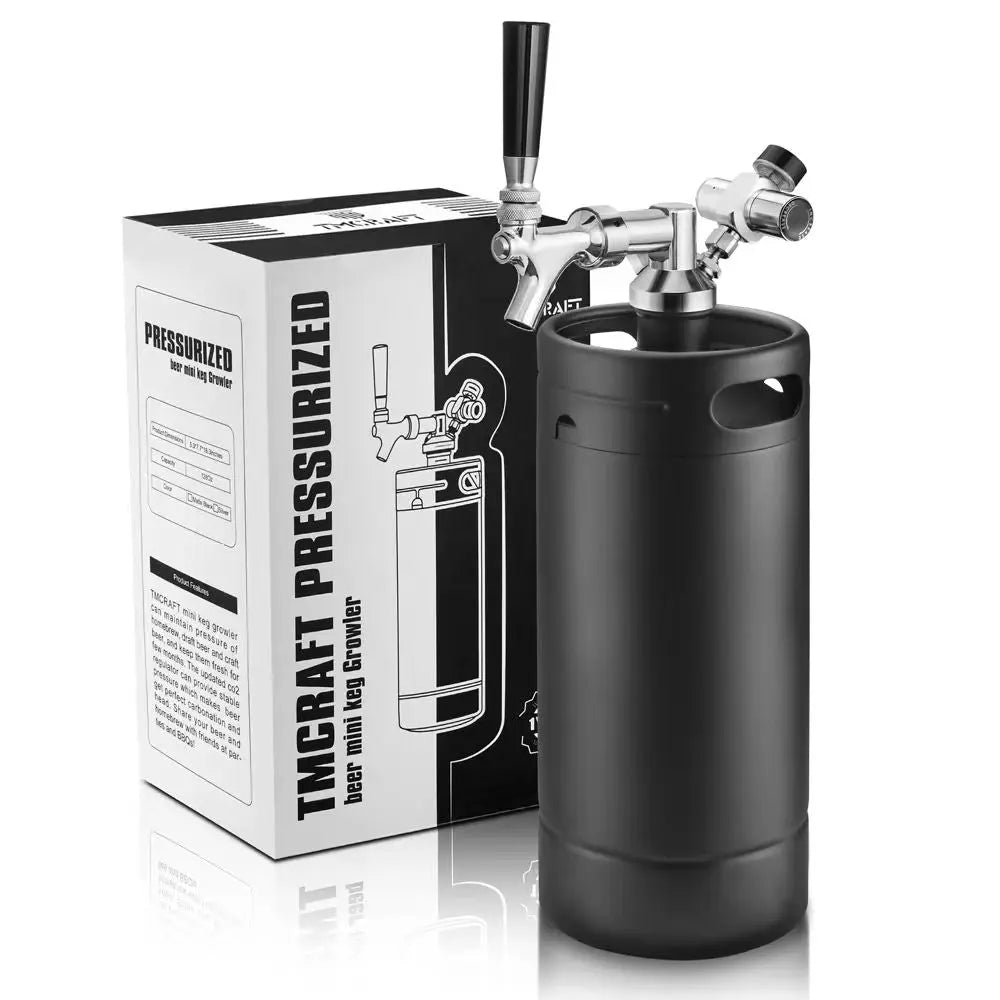


Mini Kegs Explained: The Smart Way to Store, Carbonate, and Serve Fresh Homebrew Anywhere
Keywords:
Mini Keg, Portable Beer Keg, Homebrew Storage, Carbonating Beer, TMCRAFT Mini Kegs
Introduction: Why Mini Kegs Are Replacing Bottles
For decades, bottling was the default for homebrewers. But today’s brewers want freshness, convenience, and flexibility—without sacrificing quality.
Mini kegs offer a modern solution. They allow brewers to store beer under pressure, control carbonation, and serve draft-quality pours without a full-sized keg system. Brands like TMCRAFT have refined the mini keg into a professional-grade tool suitable for both beginners and experienced brewers.
This guide explains how mini kegs work, how to use them correctly, and why they outperform bottles and growlers for small-batch beer.
What Is a Mini Keg?
A mini keg is a compact, stainless steel pressure vessel designed to hold beer under CO₂ pressure.
Common capacities include:
- 64 oz (2 L)
- 128 oz (1 gallon)
- 1.3 gallons
Unlike growlers, mini kegs:
- Seal completely from oxygen
- Maintain carbonation
- Dispense beer using controlled pressure
- Can be reused indefinitely
TMCRAFT Mini Kegs are built with food-grade stainless steel, ensuring durability and flavor neutrality.
Why Mini Kegs Keep Beer Fresher
Oxygen Control
Oxygen exposure is the leading cause of stale beer. Bottles introduce oxygen during filling and every time they are opened.
Mini kegs solve this by:
- Using CO₂ to push beer out
- Replacing dispensed liquid with gas—not air
- Remaining sealed from first pour to last
This dramatically extends shelf life and preserves hop aroma.
Carbonation Precision
With a mini keg, carbonation is adjustable.
You can:
- Force carbonate quickly
- Dial pressure to style
- Re-carbonate flat beer
- Avoid over-carbonation
TMCRAFT Mini Kegs are compatible with CO₂ cartridges and regulators, giving brewers precise control.
Carbonating Beer in a Mini Keg
Forced Carbonation (Recommended)
- Chill beer completely
- Set pressure to 20–25 PSI
- Hold for 24–48 hours
- Reduce to serving pressure (8–12 PSI)
This method produces consistent carbonation with minimal waiting.
Mini Kegs vs Bottles vs Growlers
| Feature | Mini Keg | Bottles | Growlers |
|---|---|---|---|
| Freshness | Weeks | Months (sealed) | 1–2 days |
| Carbonation | Adjustable | Fixed | None |
| Oxygen Exposure | None | Low | High |
| Portability | High | Medium | High |
| Draft Pour | Yes | No | No |
Portability: Where Mini Kegs Shine
Mini kegs are ideal for:
- Camping trips
- Backyard gatherings
- Apartment brewing
- Limited fridge space
- Small batch experimentation
TMCRAFT’s double-walled mini kegs also help maintain temperature during outdoor use.
Cleaning and Maintenance
Mini kegs are easier to clean than bottles:
- Rinse immediately after emptying
- Use PBW or brewery-safe cleaner
- Sanitize before refilling
- Replace seals as needed
TMCRAFT’s wide-mouth design simplifies cleaning.
Why Choose TMCRAFT Mini Kegs?
TMCRAFT Mini Kegs stand out because they are:
- Pressure-rated for safety
- Made from thick stainless steel
- Compatible with multiple tap systems
- Designed for long-term reuse
They are engineered for real homebrewers—not disposable novelty use.
Final Thoughts
Mini kegs are the perfect balance between bottling and full-sized kegging. For brewers who value fresh beer, controlled carbonation, and true portability, a TMCRAFT Mini Keg is one of the most practical upgrades available.
Link out to: Mini Keg Brewing & Serving Explained: The Complete Guide to Fresh, Portable Draft Beer