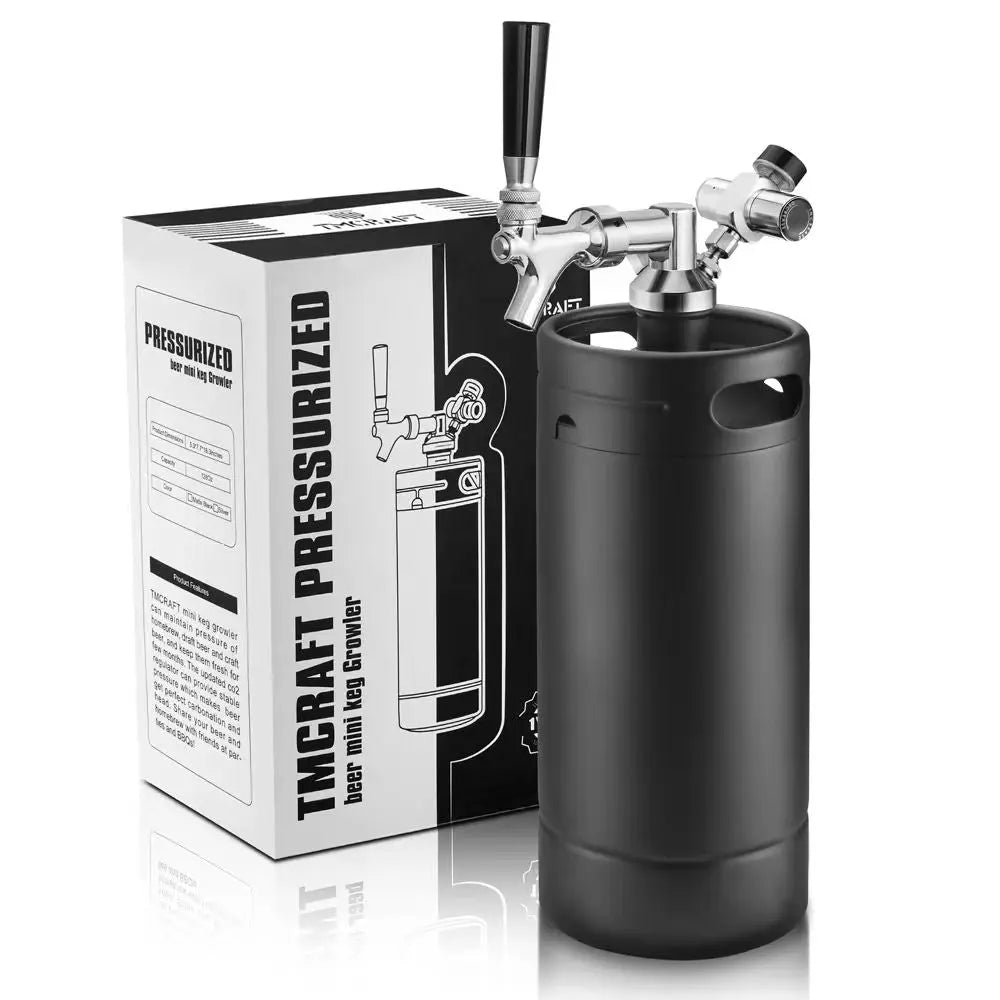


How to Carbonate Beer in a Mini Keg: A Beginner's Guide to Perfect Draft Beer at Home
Homebrewing is one of the most rewarding hobbies for beer enthusiasts, but even the best recipes can fall short if carbonation isn't handled correctly. Proper carbonation enhances aroma, improves mouthfeel, supports head retention, and gives every beer style the lively character it deserves.
Many beginners assume that only large draft systems can produce professional-quality results. In reality, learning how to carbonate beer in a mini keg is straightforward and allows homebrewers to enjoy fresh draft beer without investing in a full-size commercial setup.
A mini keg paired with a CO₂ dispensing system offers an easy way to control carbonation, preserve freshness, and enjoy consistent pours from the comfort of your home.
This guide explains how force carbonation works, how to achieve the right carbonation level, and how to avoid common mistakes when using a stainless steel mini keg.
Why Carbonation Matters
Carbon dioxide does much more than create bubbles.
Proper carbonation influences:
- Aroma release
- Flavor perception
- Mouthfeel
- Foam stability
- Overall drinking experience
Different beer styles require different carbonation levels. For example:
- Stouts generally use lower carbonation.
- Pale ales and lagers require moderate carbonation.
- Wheat beers and Belgian ales often need higher carbonation.
Learning how to carbonate beer in a mini keg gives you precise control over these characteristics.
What Is Force Carbonation?
Unlike bottle conditioning, force carbonation uses compressed CO₂ to dissolve carbon dioxide directly into the beer.
The process offers several advantages:
- Faster carbonation
- Consistent results
- Adjustable pressure
- No additional priming sugar
- Cleaner beer with less sediment
For many homebrewers, this method is the easiest way to produce draft beer at home.
Equipment You'll Need
To carbonate beer successfully, gather the following:
- TMCRAFT mini keg
- CO₂ cartridge or CO₂ cylinder
- Pressure regulator
- Dispensing tap
- Chilled beer
- Refrigerator or kegerator
Starting with a properly chilled stainless steel mini keg improves carbonation efficiency.
Step 1: Chill the Beer
Carbon dioxide dissolves into cold liquid more effectively than warm liquid.
For best results:
- Chill the beer to serving temperature (34–40°F / 1–4°C).
- Chill the keg before filling if possible.
- Avoid carbonating warm beer.
Lower temperatures help CO₂ absorb more quickly and consistently.
Step 2: Fill the Mini Keg
Transfer your finished beer into the mini keg carefully.
Tips:
- Sanitize all equipment thoroughly.
- Minimize splashing to reduce oxygen exposure.
- Leave adequate headspace according to your keg's capacity.
Once filled, seal the keg securely.
Step 3: Connect the CO₂ System
Attach the gas line or CO₂ cartridge to the keg.
Before adding pressure:
- Check all fittings.
- Ensure O-rings are seated correctly.
- Confirm the regulator is securely attached.
A leak-free setup is essential for successful mini keg carbonation.
Step 4: Apply Pressure
The correct pressure depends on:
- Beer style
- Temperature
- Desired carbonation level
As a general guide:
| Beer Style | Typical Pressure* |
|---|---|
| Stouts | Lower |
| Pale Ales | Medium |
| Lagers | Medium |
| Wheat Beers | Higher |
*Always consult a carbonation chart based on your serving temperature.
Allow the keg to remain under pressure until the desired carbonation level is reached.
Step 5: Test the Carbonation
Before serving guests, pour a small sample.
Check for:
- Smooth mouthfeel
- Proper foam
- Balanced carbonation
- Fresh aroma
If carbonation is too low, allow additional time under pressure.
If it's too high, reduce pressure and vent the keg carefully.
Common Mistakes to Avoid
Carbonating Warm Beer
Warm beer absorbs CO₂ less efficiently.
Skipping Leak Checks
Even small gas leaks reduce carbonation and waste CO₂.
Using Too Much Pressure
Excessive pressure can over-carbonate the beer and create foamy pours.
Serving Immediately
Allow the beer time to stabilize before the first pour.
Ignoring Temperature
Pressure and temperature work together to determine carbonation levels.
Why Mini Kegs Are Great for Homebrewers
Compared with bottling, a homebrew mini keg offers several advantages.
Faster Packaging
No need to fill dozens of bottles.
Better Freshness
The sealed environment reduces oxygen exposure.
Easy Serving
Enjoy portable draft beer from a tap instead of opening individual bottles.
More Consistent Carbonation
Pressure-controlled systems provide repeatable results.
Tips for Maintaining Carbonation
To keep beer fresh after carbonation:
- Store the keg upright.
- Keep it refrigerated.
- Avoid unnecessary pressure release.
- Clean the dispensing tap regularly.
- Inspect seals before each use.
These simple habits help maintain beer quality over time.
Why Choose TMCRAFT Mini Kegs?
TMCRAFT mini kegs are designed for homebrewers who want professional-quality results in a compact format.
Features include:
- Food-grade 304 stainless steel construction
- Durable pressure-resistant design
- Compatible CO₂ dispensing accessories
- Portable sizes for travel and home use
- Easy cleaning and maintenance
Whether you're brewing your first batch or refining an established recipe, TMCRAFT helps make draft beer at home simple and enjoyable.
Frequently Asked Questions
How long does it take to carbonate beer in a mini keg?
The exact time depends on temperature, pressure, and beer style, but force carbonation is generally much faster than bottle conditioning.
Can I use a mini keg without CO₂?
Yes, but adding CO₂ provides better carbonation control and improves dispensing performance.
Does beer need to be cold before carbonation?
Yes. Chilled beer absorbs carbon dioxide more efficiently than warm beer.
Can I over-carbonate beer?
Yes. Applying too much pressure or carbonating for too long may produce excessive foam and an overly fizzy beer.
Is a mini keg better than bottling?
For many homebrewers, a mini keg offers easier packaging, more consistent carbonation, and greater convenience than traditional bottling.
Conclusion
Learning how to carbonate beer in a mini keg is one of the easiest ways to improve the quality of your homebrew. With proper temperature control, the right CO₂ pressure, and a well-maintained keg, you can achieve fresh, flavorful draft beer that rivals your favorite brewery.
A stainless steel mini keg not only simplifies carbonation but also helps preserve freshness and makes serving more enjoyable. Whether you're brewing for yourself or sharing with friends, TMCRAFT mini kegs provide a reliable, portable solution for creating exceptional draft beer at home.
Link to: 7 Reasons a Mini Keg Is Better Than a Traditional Growler for Fresh Draft Beer