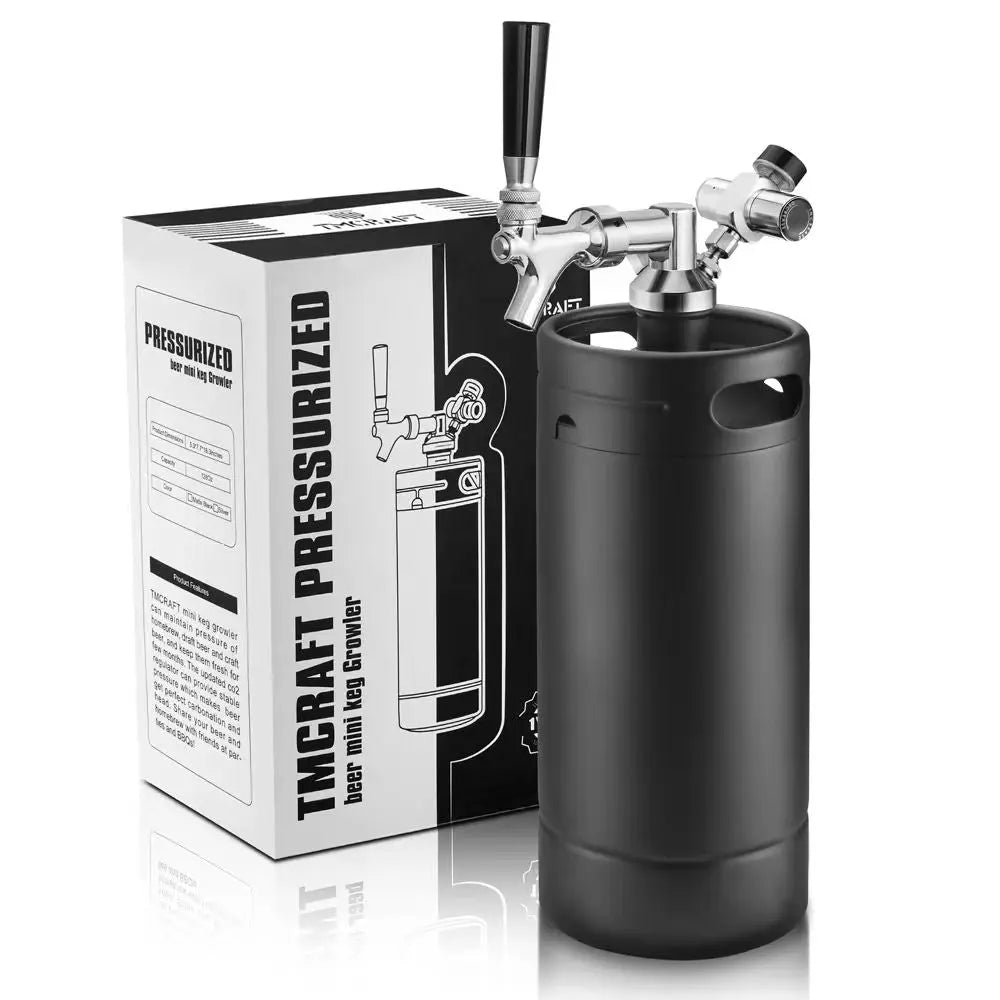


How to Balance a Ball Lock Keg System: Line Length, Pressure and Perfect Pour Guide
Primary Keywords:
ball lock keg, balance ball lock keg system, ball lock keg pressure, stainless steel ball lock keg
Secondary Keywords:
beer line length keg, keg system balancing, homebrew draft setup, keg pouring guide, TMCRAFT ball lock keg
A perfectly carbonated beer can still pour badly if your system isn’t balanced.
Foam explosions, slow pours, or flat beer are rarely caused by the recipe—they’re usually caused by improper setup. The key to consistent, smooth draft beer is learning how to balance a ball lock keg system.
Balancing means matching pressure, temperature, and line resistance so beer flows smoothly from keg to glass without excess foam or loss of carbonation.
In this guide, you’ll learn exactly how to balance your ball lock keg, how line length affects pouring, what PSI to use, and how to optimize your TMCRAFT setup for professional-level results.
What Does “Balancing a Ball Lock Keg” Mean?
Balancing a ball lock keg system means controlling three key variables:
- CO2 pressure (PSI)
- Beer line length and diameter
- Temperature
When these factors are aligned, beer pours smoothly with:
- Minimal foam
- Stable carbonation
- Consistent flow rate
- Better flavor experience
If one factor is off, the entire system becomes unstable.
Why Proper Balancing Matters
An unbalanced system can cause:
- Excess foam
- Flat beer
- Slow or inconsistent pours
- Wasted CO2
- Poor drinking experience
A balanced stainless steel ball lock keg setup ensures every pour is predictable and high quality.
The Three Core Factors of Keg Balance
1. CO2 Pressure (PSI)
Pressure controls carbonation and push force.
Typical range:
- 10–12 PSI for most beers at serving temperature
Higher pressure increases flow speed but can also cause foam if not balanced with line resistance.
2. Beer Line Length
Beer lines create resistance to control flow.
General guideline:
- 5 to 10 feet of line for most home systems
Longer lines = more resistance = smoother pours.
Short lines often cause foam problems.
3. Temperature
Ideal serving temperature:
- 36°F to 40°F (2°C to 4°C)
Warmer beer releases CO2 faster, causing foam.
Temperature must remain stable for consistent pouring.
How Line Resistance Works
Beer line resistance slows down the liquid as it travels from keg to tap.
This prevents:
- Sudden pressure drops
- CO2 breakout (foam formation)
- Fast, uncontrolled pours
Standard 3/16" beer lines provide about:
- 2–3 PSI resistance per foot
This is why line length is critical.
Basic Ball Lock Keg Balancing Formula
A simplified approach:
Total Resistance ≈ CO2 Pressure
Example:
- 10 PSI pressure
- 5 feet of line (~2 PSI per foot)
- Total resistance ≈ 10 PSI
This creates a balanced system.
Step-by-Step: How to Balance Your Ball Lock Keg System
Step 1: Set Your Temperature First
Always start with temperature.
- Chill keg to 36–40°F
- Keep temperature stable
Never adjust pressure before stabilizing temperature.
Step 2: Set Your CO2 Pressure
Start with:
- 10–12 PSI for most beers
Adjust based on:
- Beer style
- Carbonation level
- Personal preference
Step 3: Check Your Line Length
If you experience foam:
- Increase line length
- Avoid shortening lines too much
A longer line is usually safer than a short one.
Step 4: Test Your Pour
Pour a full glass and observe:
- Foam level
- Flow speed
- Head retention
Make small adjustments rather than large changes.
Step 5: Fine-Tune the System
Adjust one variable at a time:
- Slight PSI changes
- Line length modifications
- Temperature adjustments
This helps identify what’s affecting performance.
Common Ball Lock Keg Problems and Fixes
Problem: Too Much Foam
Causes:
- Short beer line
- High pressure
- Warm beer
Fix:
- Increase line length
- Lower PSI slightly
- Chill keg fully
Problem: Slow Pour
Causes:
- Line too long
- Pressure too low
Fix:
- Increase PSI slightly
- Shorten line if excessive
Problem: Flat Beer
Causes:
- Low pressure
- Gas leaks
- Poor sealing
Fix:
- Check O-rings
- Increase PSI
- Inspect connections
Problem: Inconsistent Pouring
Causes:
- Temperature fluctuations
- Dirty lines
- Pressure instability
Fix:
- Stabilize temperature
- Clean system
- Check regulator
Recommended Setup for Beginners
For most homebrewers:
- Temperature: 38°F
- Pressure: 10–12 PSI
- Line: 6–8 feet (3/16")
This setup works well for a wide range of beer styles.
Ball Lock Keg vs Bottle Serving
| Feature | Ball Lock Keg | Bottles |
|---|---|---|
| Pour Control | Excellent | Limited |
| Carbonation Control | Precise | Fixed |
| Serving Speed | Fast | Slow |
| Cleanup | Easy | Time-consuming |
A balanced keg system provides far better serving consistency.
Why Stainless Steel Kegs Perform Better
A stainless steel ball lock keg improves system performance.
Strong Pressure Retention
Maintains stable carbonation.
Durable Construction
Handles repeated pressure cycles.
Easy Cleaning
Supports better hygiene and flavor.
Long-Term Reliability
Ideal for frequent use.
Why Choose TMCRAFT Ball Lock Kegs?
TMCRAFT kegs are designed for consistent performance and easy setup.
Benefits include:
- Food-grade stainless steel
- Reliable sealing system
- Standard ball lock compatibility
- Easy maintenance design
- Strong pressure stability
- Suitable for beer, kombucha, coffee, and more
Whether you're building your first system or upgrading an existing setup, TMCRAFT helps deliver consistent draft quality.
Best Use Cases for a Balanced Ball Lock Keg System
Perfect for:
- Homebrew beer
- Craft beer enthusiasts
- Small bars and tap setups
- Event serving
- Carbonated beverages
A properly balanced system improves every pour.
Final Verdict
Learning how to balance a ball lock keg system is essential for achieving perfect draft beer at home.
By matching pressure, line length, and temperature, you can eliminate foam problems, maintain carbonation, and enjoy smooth, consistent pours every time.
With a reliable TMCRAFT ball lock keg, balancing your system becomes easier, more predictable, and far more rewarding.
Link to: How to Clean a Ball Lock Keg Properly: Step-by-Step Guide for Better Beer Quality