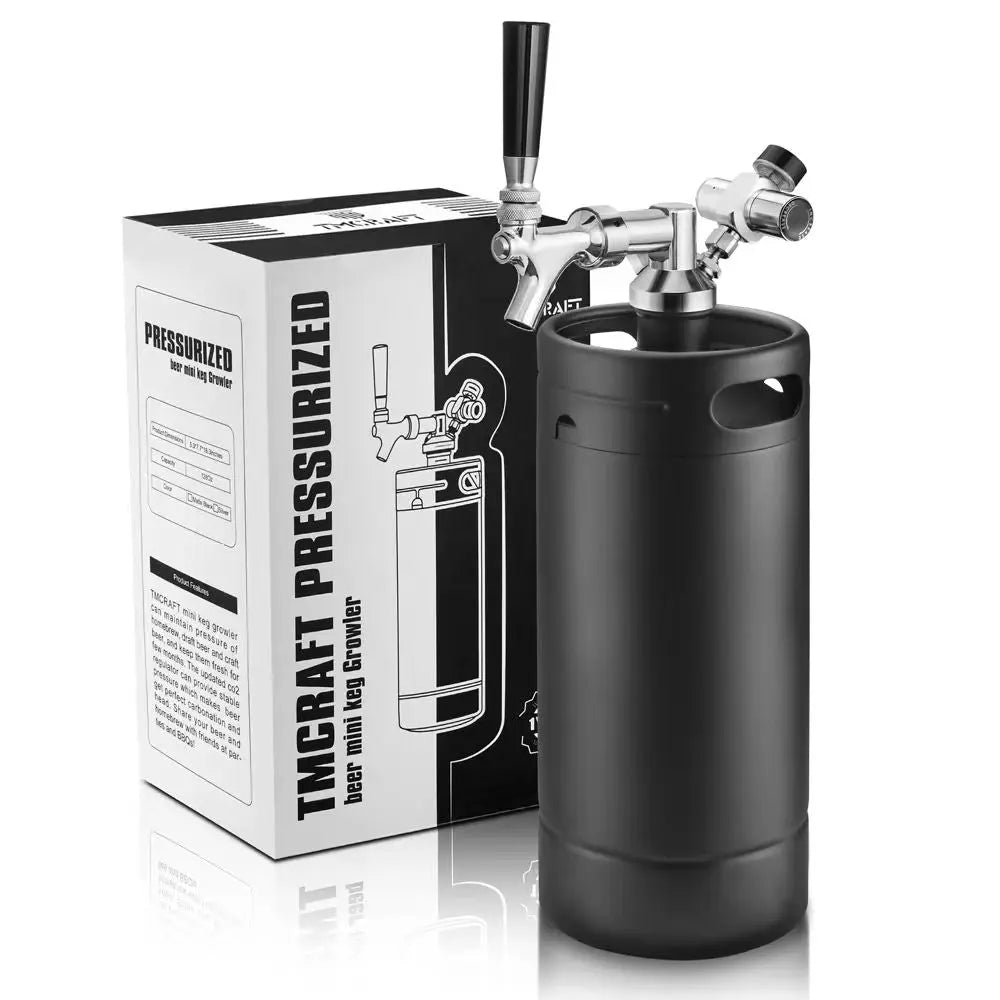


Cold Brew on Tap: What You Need to Know Before Using a Coffee Keg
Why Put Cold Brew on Tap?
Cold brew coffee has become a regular part of many people's coffee routines.
Unlike traditional hot coffee, cold brew is usually prepared in a larger batch and steeped for several hours. Once it is ready, the next question is how to store and serve it without making the process complicated.
A glass pitcher may be enough for occasional use. But if you drink cold brew every day, serve coffee to family and friends, or want to create a café-style experience at home, there is another option worth considering: a coffee keg.
A coffee keg allows cold brew to be stored in a sealed container and dispensed directly through a faucet. With the right setup, it can also be used to create nitro coffee.
Before building a draft coffee system, however, it helps to understand how it works and what equipment you actually need.
What Is a Coffee Keg?
A coffee keg is a reusable beverage container designed to store and dispense coffee.
Although kegs are often associated with beer, the same basic idea can be applied to cold brew and other beverages.
A typical system may include:
- Keg container
- Lid and sealing gasket
- Gas connection
- Beverage connection
- Beverage line
- Faucet
- CO₂ or nitrogen equipment, depending on the application
The coffee stays inside the keg while pressure helps move it through the beverage line and into your cup.
This creates a simple process:
Brew → filter → fill → chill → dispense.
Why Use a Keg Instead of a Pitcher?
A pitcher is simple, affordable, and useful for small batches.
However, it also requires you to open the container whenever you want to pour coffee. Repeated opening can expose the beverage to air.
A keg provides a different approach.
Once properly sealed, the coffee remains in a closed environment while you serve it through the tap.
This can help reduce unnecessary handling and make daily serving more convenient.
For people who prepare larger batches of cold brew, this difference can be significant.
The Importance of Cold Brew Storage
Good cold brew starts with good beans and a carefully controlled brewing process, but storage also matters.
Coffee can gradually change after brewing because of exposure to:
- Oxygen
- Temperature changes
- Light
- Contamination
Proper cold brew storage helps maintain the characteristics you want from the finished beverage.
Keeping the coffee cold is particularly important. A refrigerated keg can provide a convenient way to store a larger batch without transferring the coffee between multiple containers.
Why Stainless Keg Construction Can Be Useful
The material of your keg is an important consideration.
A stainless keg is commonly chosen for beverage storage because stainless steel is durable, reusable, and relatively easy to clean.
For coffee applications, these qualities are useful because coffee contains oils and compounds that can leave residue behind.
A stainless keg can provide:
- Durable construction
- Smooth interior surfaces
- Easy cleaning
- Long-term reusability
- A neutral environment for beverage storage
For anyone planning to use the same equipment regularly, choosing a quality stainless steel keg can make maintenance easier.
What Equipment Do You Need?
You do not necessarily need a complicated system to get started.
The basic equipment depends on how you want to serve your coffee.
1. Coffee Keg
The keg is the main storage container.
Choose a capacity based on how much cold brew you normally prepare and how much refrigerator space you have.
A smaller keg may be more practical for personal use, while a larger one can be useful for families, offices, or events.
2. Beverage Line
The beverage line carries coffee from the keg to the faucet.
It needs to be clean and properly connected.
Because the coffee passes through this line before reaching your cup, regular cleaning is important.
3. Faucet
The faucet controls dispensing.
Opening the faucet allows coffee to flow from the keg into your glass.
A quality faucet can make serving cleaner and easier, especially when the system is used frequently.
4. Gas System
Some coffee keg systems use gas pressure for dispensing.
CO₂ may be suitable for certain applications, while nitrogen is commonly used when making nitro coffee.
The appropriate gas depends on the beverage and desired result.
Always use equipment according to the manufacturer's specifications.
How to Prepare Cold Brew for a Keg
A good kegged coffee begins with a good cold brew recipe.
The basic process is simple.
Step 1: Choose Your Coffee
Experiment with different beans and roast levels to find the flavor profile you prefer.
Step 2: Grind the Beans
A coarse grind is commonly used for cold brew.
Step 3: Brew
Combine coffee and water and allow the mixture to steep according to your recipe.
Step 4: Filter
Remove the coffee grounds carefully.
Filtering is especially important before transferring coffee into a keg because loose particles can enter the beverage system.
Step 5: Chill
Cool the finished coffee before serving or storing.
Step 6: Transfer to the Keg
Make sure the keg and all beverage-contact components are properly cleaned before filling.
How Does Cold Brew on Tap Work?
Once the keg is filled and chilled, the dispensing process is straightforward.
The keg is connected to the beverage line, which leads to the faucet.
When you open the faucet, pressure inside the keg pushes coffee through the line.
The result is cold brew on tap.
This can be particularly convenient in a home coffee station because you do not need to take a pitcher out of the refrigerator and pour every time you want a drink.
What Is Nitro Coffee?
Nitro coffee is cold brew coffee infused with nitrogen.
The nitrogen creates a distinctive drinking experience with:
- Fine bubbles
- Smooth texture
- Creamy mouthfeel
- Attractive appearance
Nitro coffee is commonly served from a tap, making a keg system a natural choice for this type of beverage.
However, nitro coffee requires the appropriate nitrogen-compatible equipment. It is important not to assume that every coffee keg setup automatically produces nitro coffee.
The gas, pressure, temperature, and dispensing equipment all need to work together.
Coffee Keg vs. Traditional Cold Brew Storage
Both storage methods can be useful depending on your needs.
| Feature | Coffee Keg | Pitcher |
|---|---|---|
| Storage | Sealed system | Usually opened repeatedly |
| Serving | Faucet | Manual pouring |
| Large batches | Convenient | Can take more refrigerator space |
| Draft service | Yes | No |
| Nitro applications | Possible with proper equipment | Not designed for it |
| Reusable | Yes | Yes |
| Best for | Frequent cold brew drinkers | Occasional use |
If you only make a small amount of coffee occasionally, a pitcher may be all you need.
If you regularly prepare cold brew and want convenient serving, a keg can offer additional benefits.
Common Mistakes When Using a Coffee Keg
Not Cleaning the Beverage Line
Many beginners focus on cleaning the keg but forget the beverage line and faucet.
Coffee residue can build up in these areas and affect flavor.
Filling With Unfiltered Coffee
Coffee grounds and sediment can cause problems in the dispensing system.
Always filter cold brew carefully before transferring it.
Ignoring Temperature
Cold brew should be kept properly chilled.
Temperature affects both freshness and dispensing performance.
Using the Wrong Gas
CO₂ and nitrogen serve different purposes.
If your goal is nitro coffee, use equipment specifically designed for nitrogen service and follow the manufacturer's instructions.
How to Keep Your Coffee Keg Clean
Cleaning is one of the most important parts of maintaining a keg system.
After each batch:
- Empty the remaining coffee.
- Rinse the keg.
- Clean the interior.
- Clean the beverage line.
- Clean the faucet.
- Rinse thoroughly.
- Sanitize according to your equipment requirements.
Also inspect the lid gasket, O-rings, and connections regularly.
A clean system helps prevent old coffee flavors from affecting your next batch.
Who Should Consider a Coffee Keg?
A coffee keg can be useful for several types of users.
Home Coffee Drinkers
If you drink cold brew regularly, preparing a batch ahead of time can make your morning routine easier.
Home Offices
A draft coffee setup provides convenient access to cold brew throughout the workday.
Coffee Enthusiasts
People who enjoy experimenting with different beans, recipes, and nitro coffee can use a keg as part of a larger home coffee station.
Cafés and Small Businesses
A keg system can help businesses prepare and serve cold brew efficiently.
Final Thoughts: Is a Coffee Keg Right for You?
A coffee keg is not necessary for everyone.
If you make a small amount of cold brew occasionally, a pitcher may be the simplest solution.
But if you regularly prepare larger batches, want cold brew on tap, or want to experiment with nitro coffee, a keg system can make the process more convenient.
A quality stainless keg provides a durable and reusable option for beverage storage, while the right dispensing equipment can turn homemade cold brew into a draft-style experience.
The most important thing is to choose equipment that matches your beverage, capacity, and serving needs.
With proper preparation, temperature control, cleaning, and dispensing, a coffee keg can turn a simple batch of cold brew into an easy everyday coffee experience.
Link to: How to Build a Cold Brew Coffee Station at Home With a Coffee Keg System