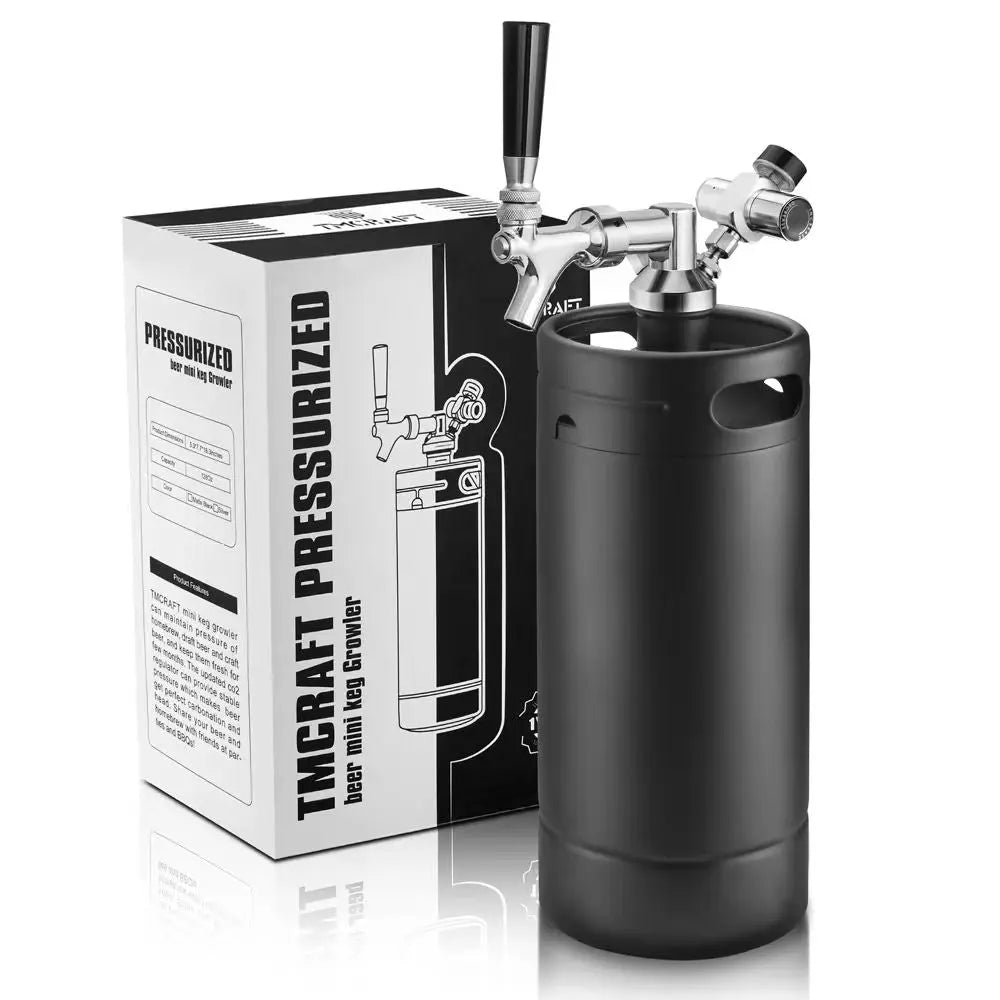


Ball Lock Kegs Decoded: How to Build a Professional-Quality Home Draft System
Keywords:
ball lock keg, homebrew kegging system, CO₂ draft system, keg setup guide, TMCRAFT ball lock kegs
Introduction: The Backbone of Home Draft Systems
If mini kegs are about portability, ball lock kegs are about control and scalability.
Used by thousands of homebrewers worldwide, ball lock kegs form the foundation of most home draft systems. They’re reliable, modular, and easy to maintain—especially when built with quality components like TMCRAFT Ball Lock Kegs.
This guide explains how ball lock kegs work, how to set them up correctly, and how to avoid the most common mistakes new keggers make.
What Is a Ball Lock Keg?
A ball lock keg is a stainless steel keg with:
- One gas post (CO₂ in)
- One liquid post (beer out)
- Quick-disconnect fittings
- A removable lid with pressure relief valve
The “ball lock” mechanism uses spring-loaded ball bearings to secure connections tightly, preventing accidental disconnection.
Why Ball Lock Kegs Are Preferred Over Pin Lock
- Easier to find parts
- More universal compatibility
- Slimmer profile
- Safer connection system
TMCRAFT exclusively supports ball lock standards, making integration easy with regulators, faucets, and manifolds.
Core Components of a Ball Lock System
A complete system includes:
- Ball lock keg
- CO₂ tank
- Regulator
- Gas & beer lines
- Faucet or tap
Each component affects pour quality.
Setting the Right Pressure
Typical Serving Pressures:
- Ales: 10–12 PSI
- Lagers: 12–14 PSI
- Wheat beers: 12–16 PSI
Pressure must match:
- Beer temperature
- Line length
- Carbonation level
TMCRAFT ball lock kegs are pressure-tested to maintain stability over time.
Line Balancing: The Key to Foam Control
Most foam problems come from incorrect line length.
General rule:
- 8–10 feet of 3/16" beer line for home systems
Balanced lines ensure smooth pours without over-foaming.
Cleaning & Maintenance Best Practices
Ball lock kegs are easier to clean than bottles, but they still require routine care.
Recommended Routine:
- Rinse immediately after emptying
- Deep clean every batch
- Replace O-rings annually
- Lubricate seals lightly
TMCRAFT’s stainless steel interior resists residue buildup and odors.
Common Mistakes (And How to Avoid Them)
- ❌ Not purging oxygen
- ❌ Over-carbonating
- ❌ Ignoring worn seals
- ❌ Using short beer lines
Correct setup prevents 90% of kegging problems.
Why TMCRAFT Ball Lock Kegs Are a Smart Investment
TMCRAFT Ball Lock Kegs feature:
- Heavy-duty stainless steel
- Precision-machined posts
- Leak-resistant seals
- Multiple size options (2.5–5 gallons)
They’re designed for both homebrewers and light commercial use.
Final Thoughts
A ball lock keg system offers unmatched control, consistency, and efficiency.
With proper setup and TMCRAFT Ball Lock Kegs, you can build a draft system that rivals professional bars—right at home.